Intelligence Agency Intervention in Nationality Applications
The National Intelligence Center (CNI) of Spain frequently submits reports to the National Court advocating against granting Spanish nationality to Moroccan officials stationed in Spain or to regular immigrants, citing suspicions of espionage or collaboration with Moroccan intelligence services. Judges often heed these recommendations, shaping the landscape of nationality applications. Recently, the CNI has shifted focus, collaborating with the Ministry of the Interior to persuade the Ministry of Justice not to grant citizenship to a prominent Moroccan Islamist intellectual residing in Granada since 1998, who has been vocally critical of the Moroccan monarchy.
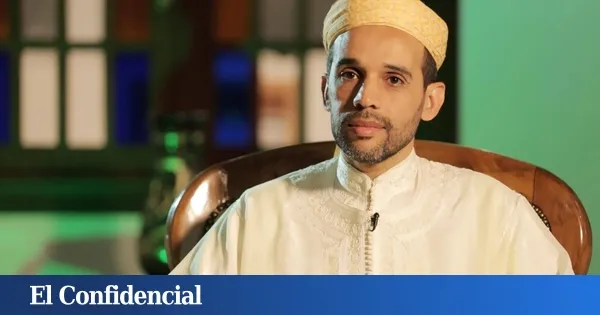
Denial of Nationality to Rachid Boutarbouch
A resolution from the Directorate General of Legal Security of the Ministry of Justice, dated April 25, has denied Spanish nationality to Rachid Boutarbouch, a 54-year-old identified by the CNI as a "prominent leader of the radical Islamist movement Justice and Charity" in Spain. The CNI argues that Boutarbouch's aim is to establish a theocratic regime governed by Islamic law in Morocco. The Ministry of the Interior further states that his influence among the Muslim community in Spain poses a risk of radicalization and complicates the integration of Muslims into Spanish society. As a result, granting him Spanish nationality is deemed a potential threat to national security.
Upon reading the resolution prompted by the CNI and the Interior Ministry, Boutarbouch remarked that the conclusions were "written by Abdellatif Hammouchi," the head of Morocco's National Security and also of the General Directorate of Territorial Surveillance, which operates both as a secret police and counterintelligence agency. Hammouchi has received multiple accolades from the Ministry of the Interior for his work.
Boutarbouch contends that he has been unfairly categorized based on superficial assessments lacking evidence or substantiation. He stated his intention to appeal this decision, although the National Court had previously upheld a similar denial of nationality in 2012.
Justice and Charity (Al Adl wal Ihsane in Arabic), the organization with which Boutarbouch is affiliated, is viewed as a significant adversary by Hammouchi in Morocco. Established in 1973 by Abdessalam Yassine, the movement is non-violent and incorporates elements of Sufi spirituality into its doctrine. Although it has occasionally been tolerated, it has never been legalized due to its refusal to recognize the Moroccan king as both the head of state and the Commander of the Faithful, or spiritual leader of Moroccan Muslims.
Initially inspired by an Iranian model of an Islamic Republic, the movement has evolved over time, recently advocating for pluralistic democracy and the separation of powers in a document approved in February 2024. Boutarbouch is academically accomplished, holding degrees in Arabic and Islamic Studies, and has established himself as a theological reference through organizations like the League of Imams of Spain and the International Union of Muslim Scholars. He has authored two books in Spanish, contributing to the discourse on Moroccan Islamism and political participation.
Justice and Charity maintains a presence in Spain, asserting its autonomy from its Moroccan parent organization, which reportedly has over 100,000 members. Local representatives in Spain claim to have prevented the radicalization of many young Muslims attracted to Salafism, a movement fundamentally opposed to Justice and Charity.
In Spain, the organization operates under the name National Organization for Dialogue and Participation, based in Villaverde (Madrid), and has established a religious training center in San Sebastián that calls itself a university, issuing diplomas from an Islamic university in Minnesota.
Experts highlight that in Spain, where there is a significant Moroccan immigrant population of over one million, this anti-monarchist Islamist movement serves as a counterbalance to Moroccan intelligence's attempts to influence or control fellow citizens. The CNI operates with a dual approach: it blocks citizenship applications from Moroccan espionage agents while simultaneously working to prevent initiatives that might provoke Moroccan authorities, such as granting Spanish nationality to Boutarbouch.
In October 2024, the CNI, alongside Moroccan intelligence, attempted to persuade former Moroccan spy Mehdi Hijaouy to return to Morocco, where he faced extradition demands. Hijaouy ultimately chose to flee Spain instead.
There are also perplexing instances of Spanish nationality being granted where the CNI has refrained from intervening. For instance, journalist Fatima Zahra Rajmi received citizenship in early 2021, despite her ties to Chouf TV, a media outlet linked to Moroccan security services, known for spreading disinformation. Rajmi's reporting during a crisis in Ceuta was criticized for its inaccuracies and sensationalism.
In November 2022, CNI director Esperanza Casteleiro was summoned by a European Parliament committee investigating the hacking of thousands of phones using the Pegasus spyware. During her testimony, she delivered her statement online but avoided answering questions that could implicate Morocco, whose counterintelligence agency is believed to be behind the hacking incidents.
As reported by elconfidencial.com.