The recent migratory crisis in Ceuta has prompted a swift diplomatic and security response from both Spain and Morocco, focusing on the immediate repatriation of all migrants who have illegally entered Ceuta. This initiative is part of the existing collaborative mechanisms between the two nations and will similarly apply to Melilla. In light of the increasing number of irregular entries, both governments have ramped up their coordination efforts to manage the situation at the border and contain the migratory flows, particularly those arriving by sea or on foot.
Spanish and Moroccan authorities attribute this surge in migration to human trafficking networks that have exploited a recent Supreme Court ruling to encourage illegal crossings into Ceuta and Melilla. Amid this tense backdrop, Brussels has extended its support to Spain through Frontex in Ceuta and has urged Morocco to take immediate action, emphasizing the EU's commitment to bolster assistance in the face of mounting migratory pressure to "control the situation" within the city. The EU is maintaining continuous contact with Moroccan authorities to ensure that immediate measures are implemented to curb perilous crossings into Ceuta and prevent further attempts at irregular entry.
In response to the massive influx of migrants that Ceuta is currently experiencing, which has seen several thousand individuals arriving via the Tarajal border crossing, Spain and Morocco have agreed to enhance their bilateral cooperation and to proceed with the prompt return of all migrants who have illegally accessed Ceuta, in accordance with existing collaboration frameworks. The Spanish Minister of the Interior, Fernando Grande-Marlaska, plans to visit Ceuta to oversee the crisis management efforts on-site and remains in constant communication with his Moroccan counterpart, Abdelouafi Laftit, to strengthen their collaborative response to this unexpected crisis.
Informed sources within the Moroccan Ministry of the Interior have reported feelings of unease and dissatisfaction resulting from this event, which threatens to undermine the cooperation between the two countries and casts doubt on the security within key elements of the strategic triangle involving Morocco, Spain, and the European Union. Concurrently, the Spanish government has dismissed any notion that this increase in migration is related to President Pedro Sánchez's recent visit to Algeria on July 20, asserting that there is no link between these two events and affirming that "cooperation with Morocco on migration continues to develop within the framework of the strategic partnership binding the two countries."
President Sánchez further affirmed that the government is working tirelessly to restore normalcy in Ceuta in light of the massive influx of irregular migrants. He explained that the government is mobilizing all available resources and coordinating with Moroccan authorities and international partners to address the situation effectively. In a message shared on social media platform X, Sánchez assured that the executive is preparing "the necessary measures" to restore normalcy "as soon as possible," highlighting that close cooperation with Morocco is a cornerstone for managing the current migratory pressure in Ceuta.
The Spanish government, through the Ministry of the Interior, along with Moroccan authorities, attributes this migratory crisis to human trafficking networks that have capitalized on the implications of a recent Supreme Court ruling prohibiting immediate deportations of migrants entering Ceuta and Melilla by swimming. This judicial decision is reportedly being exploited by human trafficking organizations to encourage attempts at irregular crossings.
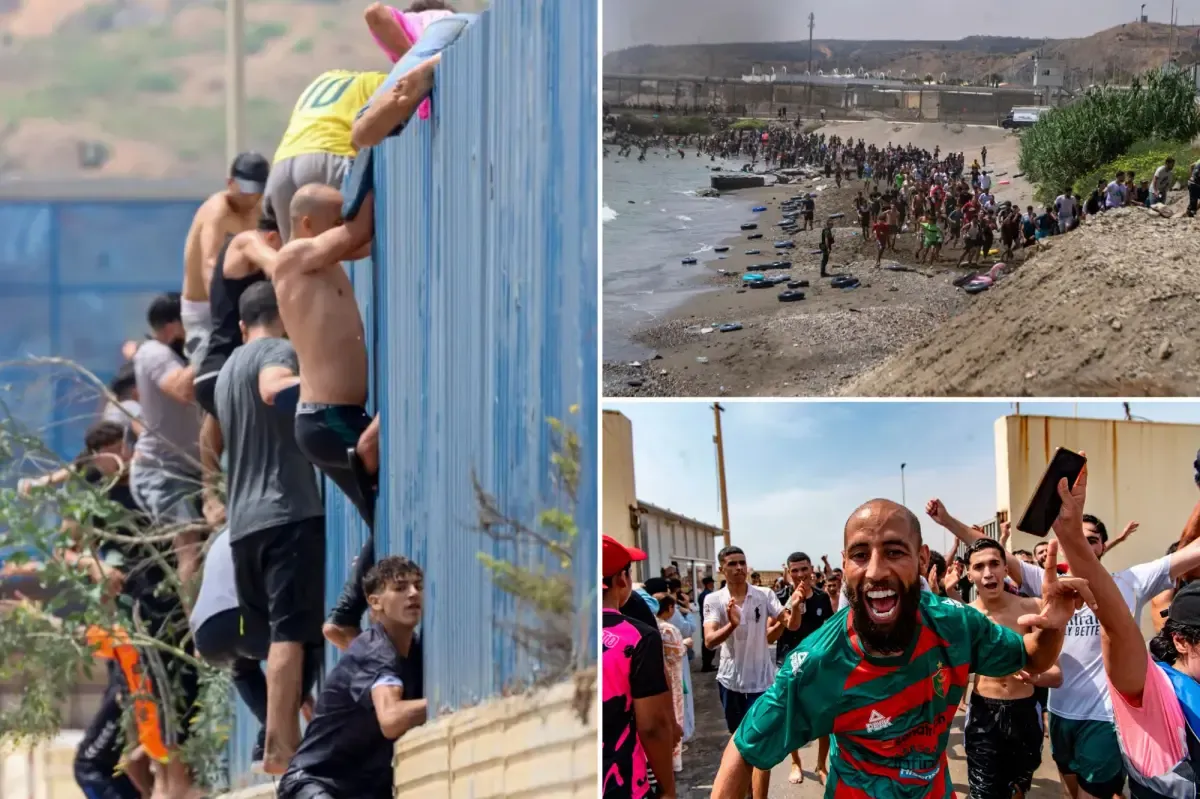
After experiencing a massive migratory crisis in May 2021, Ceuta is now facing unprecedented migratory pressure once again, with hundreds of migrants arriving and the recent recovery of eleven bodies of young individuals who drowned at sea. While awaiting official figures from Spanish and Moroccan authorities, irregular entries of individuals from Morocco to Ceuta continue massively, both by swimming and through the Tarajal border area, putting emergency and security services under significant strain.
As attempts to enter Ceuta by swimming persisted through the night from Wednesday to Thursday, the situation has overwhelmed the Civil Guard's capacity to respond effectively. Amid the arrival of hundreds of people, including several minors, a new body was discovered, according to reports from El Faro de Ceuta. The ongoing migratory crisis in Ceuta is now deemed the most concerning since 2021.
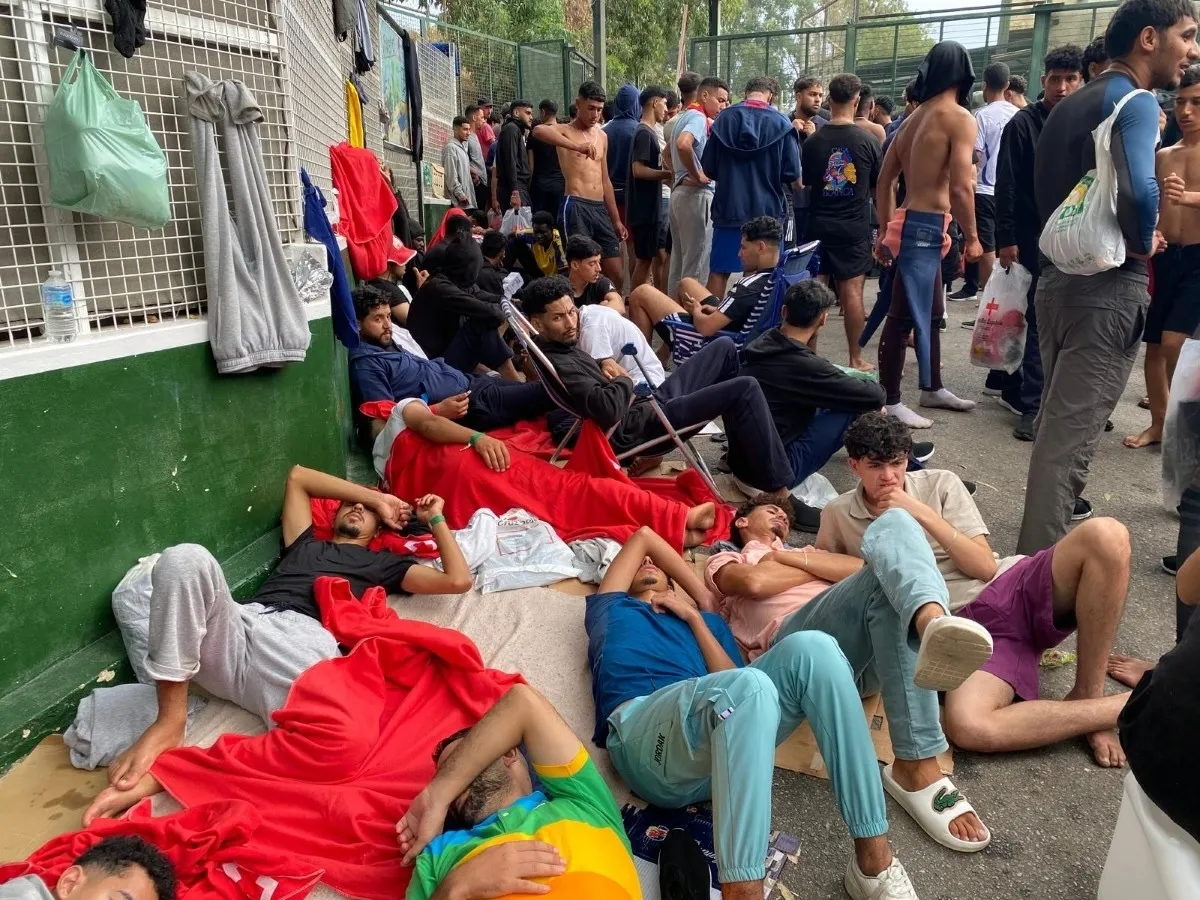
Local authorities in Ceuta have called for a state of emergency, which has been rejected by Sánchez's government, along with demands for increased police resources and the mobilization of the military to regain control of the situation in the city, where the security forces stationed on the barrier separating Ceuta from Morocco are at their limit and unable to cope. Additionally, the capacity of reception centers is completely overwhelmed.
The waves of migration toward Ceuta exacerbate the situation, presenting a human caravan of migrants seeking to reach Spanish territory by crossing the fence, despite the efforts of Moroccan police to block routes leading to the city. Driven by misinformation on social media, more individuals are attempting to access the city each hour in search of a "better life" in Spain. Many of those who have arrived in Ceuta have set up makeshift camps while awaiting accommodation in one of the assistance centers.
The crisis in Ceuta, marked by the massive influx of predominantly young individuals, opens a debate about Morocco's capacity to contain the unrest of these fleeing migrants. Both Moroccan and Spanish media highlight the issues of unemployment and precarious living conditions driving them to seek a better future across the Mediterranean, calling for a reevaluation of social integration programs for these desperate youths.
New arrivals in the autonomous city of Ceuta celebrate their entry into Spanish territory, cheering as if crossing the finish line of a lengthy marathon. Shouting phrases like "viva España" and other expressions in Spanish such as "amigo, vamos, vamos," irregular migrants appear to embrace a lost paradise where they hope to find dignity and the future they have longed for. When death at sea seems preferable to continued existence in one’s home country, it becomes imperative and urgent to evaluate the situation, which cannot simply lay blame on those who leave. This raises a legitimate question: are these youths merely seeking rights (employment, dignity, future) without a willingness to assume the efforts or obligations required to build a country? Or is it the lack of authentic opportunities to exert such effort that drives them to leave?
This situation, described by many as a "collective flight," is not a mere marginal phenomenon but an unprecedented tragedy that transcends individual attitudes and idealized expectations concerning a golden Europe. It is rooted in structural causes such as youth unemployment, regional inequalities, and distrust in institutions. This leads to the fundamental question: what should change in Morocco for staying to no longer seem the worst option and for individuals to be able to construct a future within their own borders? Given the numerous forces mobilized to ensure security for the celebrations of the Throne Day, the first under King Mohamed VI, the regional authorities’ lack of diligence in detecting, controlling, and preventing gatherings before their arrival at the border with Ceuta is notable. The involvement of Algerians and Sub-Saharan individuals highlights that the instigators of this massive initiative to enter Ceuta have means and funding that far exceed any potential local discontent, aiming externally to destabilize Morocco and its relations with Spain and the European Union. Above all, they seek to disrupt the Throne Day celebrations and question the accomplishments mentioned in King Mohamed VI's speech, which positively assesses the situation in Morocco.
Behind every person who successfully reaches the autonomous city, many others fail in their attempts, risking or losing their lives at sea, out of the media spotlight. In light of the reality of migration marked by despair, vulnerability, and the high human cost hidden behind these perilous crossings, seeing so many youths raise their victory signs upon arriving in Ceuta is worth more than a thousand comments and raises a myriad of other questions that Morocco must not evade.
As reported by atalayar.com.