
Skepticism Reigns Ahead of Morocco's Legislative Elections
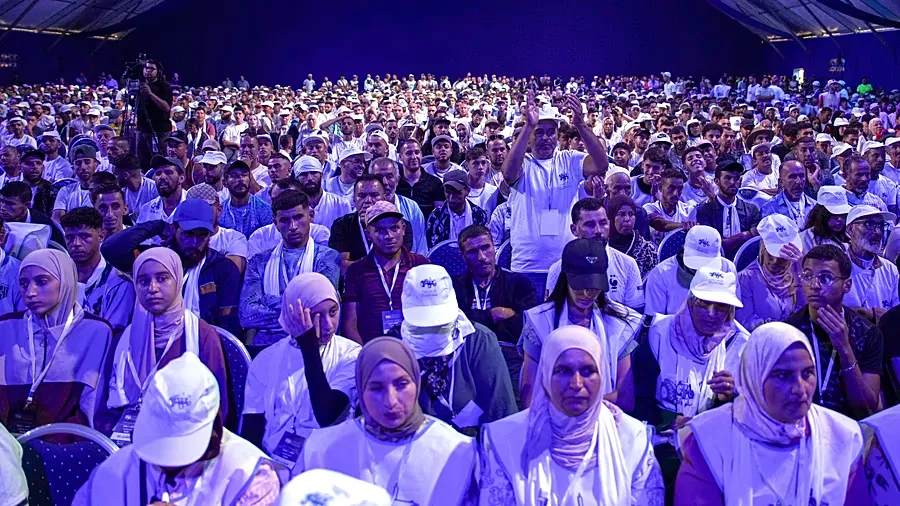
As Morocco approaches its legislative elections scheduled for September 23, 2026, a prevailing sense of skepticism looms over the electoral landscape. Following more than ten days of political campaigning, a significant portion of the electorate remains unconvinced by the promises made by various political parties, questioning their ability to address pressing everyday challenges. Approximately 15.8 million voters are registered for the upcoming elections, tasked with choosing from a staggering 7,288 candidates competing for 395 seats in the House of Representatives. The election will see participation from 28 political parties, including a newly formed coalition specifically for this event, alongside two independent candidate lists.
In the streets of Morocco, a chorus of disillusioned voters expresses their frustrations regarding electoral commitments that seem disconnected from their daily realities. Youssef Guennoun, a local florist, articulates a common sentiment, asserting that political parties are failing to adequately serve the citizens. He critiques their heavy reliance on public funding and calls for stricter regulations concerning their representational efficacy. These elections come nearly a year after the Generation Z protests, which demanded enhanced public services, particularly in sectors such as healthcare and education, as well as increased opportunities for the youth.
Unemployment rates among the youth aged 15 to 24 soared to a staggering 37% in 2025, starkly contrasting with the overall national unemployment rate of 13%, as reported by the Associated Press. Throughout the summer, thousands of young Moroccans attempted perilous journeys to the Spanish enclave of Ceuta, driven by the pursuit of better prospects. However, this demographic remains notably underrepresented in the electoral process; while individuals aged 18 to 24 make up about 12% of the population, they account for only 4% of registered voters. Mohamed Benhamou, president of the Moroccan Institute for Strategic Studies, emphasizes that the evolving societal landscape mandates a shift in how political parties operate. He states, "Political parties are a crucial mechanism, essential actors in political and public life. They must adapt their culture, methods, and approaches, evolving as elites to meet the expectations of a society undergoing significant transformation."
Benhamou further underscores that the current challenge extends beyond merely devising new strategies; it also involves the effective execution of existing plans. He asserts, "Today, it is imperative not only to conceptualize new strategies but also to implement and execute those already in place." The forthcoming elections will serve as a litmus test for political parties in their ability to engage a youthful electorate, amidst a backdrop of profound distrust towards the political elite, which remains a significant issue throughout this election cycle.
As reported by fr.africanews.com.