Sudan's Historic Return to Women's Soccer
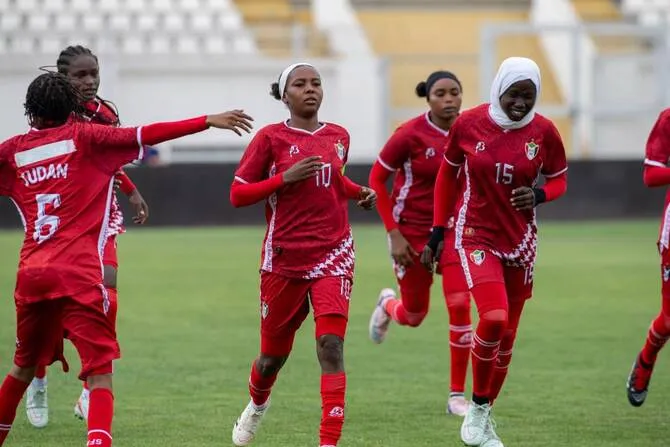
In a remarkable display of resilience and hope, a group of teenage girls clad in vibrant red jerseys recently showcased their passion for soccer on the green pitch of Larbi Zaouli Stadium in Casablanca, Morocco. This marked a historic moment as it was Sudan's first foray into international women's soccer since the outbreak of civil war in their homeland, where participation of women in sports has been fraught with challenges. The captain of the team, Nura Mohamed, just 17 years old, expressed her aspirations, stating, "My goal is to lift up soccer in my country. It's a beautiful, unique feeling because, at the end of the day, I just love playing." Despite the ongoing men's World Cup capturing global attention, Sudan's under-17 women's national team embarked on a journey to Morocco for qualifying matches leading up to the 2028 Los Angeles Olympics.
However, the inexperienced squad faced daunting challenges, suffering significant defeats against a more seasoned Comoros team, conceding an astounding 30 goals over two matches. The emotional toll was evident as many players were seen in tears post-match, overwhelmed by the experience despite the support of a dozen cheering fans. The disparity in skill and fitness levels was stark; Sudan's soccer federation had no option but to field a younger team, as they were unable to arrange a senior squad in time for the qualifiers. Their preparations were rushed, having only begun training a few weeks prior to the tournament.
Hope Amidst Adversity
Sudan's women's soccer scene has been in turmoil since the civil war erupted in 2023, leading to the collapse of the women's league established after the 2019 revolution that ousted former President Omar Al-Bashir. For the officials involved, presenting this young team in Casablanca symbolizes a crucial step toward reviving women’s soccer in Sudan. Manal Ali Bushra, head of the women's soccer committee, highlighted the determination of the players, many of whom traveled great distances for training sessions while being separated from their families. She emphasized the federation's commitment to developing the necessary infrastructure, including plans for a sports city and renovations of key stadiums in safer regions of the country.
Burhan Tia, a seasoned Sudanese coach, recognized the immense challenge ahead when he took on the role of rebuilding a fractured team. Scouting for players became a formidable task as he sought out girls who not only had a passion for soccer but also met the age requirements set by international regulations. Many potential players had lost their identification documents due to the ongoing conflict, complicating the recruitment process further. The war has decimated transportation networks, making what were once short trips between cities perilous and time-consuming.
On the field, the players' lack of experience was apparent, with several struggling with basic positioning and tactical discipline, often looking to their coach for guidance. The United Nations has categorized the situation in Sudan as the world’s most severe humanitarian crisis, with the war resulting in mass casualties and displacements, significantly impacting all forms of sports, including women's soccer.
As the girls strive to carve a niche for themselves in the sporting world, they confront not only the challenges posed by the current political landscape but also a wave of societal skepticism. The military government has allowed international trips for the girls, but this has not come without scrutiny. Activists like Hala Al-Karib emphasize the need for reform within the soccer federation, pointing to the lack of investment in women's athletics as a significant barrier. Nevertheless, on that soccer field in Casablanca, the weight of politics and conflict faded, leaving behind a determined group of young athletes united in their pursuit of a common dream.
As reported by arabnews.pk.