
Historic Low Voter Participation in Morocco's Elections
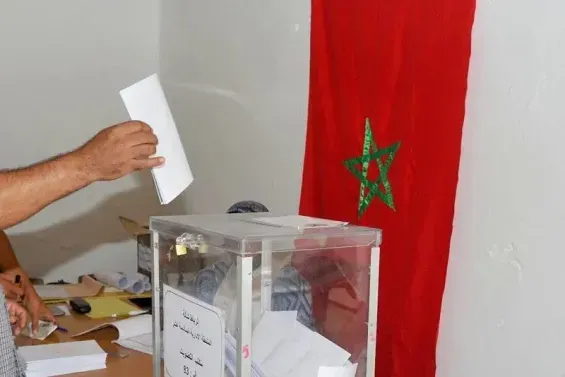
On September 23, Morocco held its legislative elections, which concluded with a remarkable voter turnout of only 38.02%. This figure marks an unprecedented abstention rate of 61.98%, the highest in 20 years and the second highest during King Mohammed VI's reign, as reported by the Moroccan Interior Ministry. This recent turnout is the lowest since 2007, when merely 37% of eligible voters participated, resulting in a 63% abstention rate.
The election day proceeded smoothly, with the exception of a single incident in Tangier, where police apprehended an individual for an alleged attempt to manipulate votes at a polling station. The Moroccan Public Prosecutor's Office revealed that the suspect was caught at a school plaza, which housed a voting booth, possessing a bag filled with ballots that, according to local media images, were linked to one of the parties currently in the ruling coalition. Additionally, authorities are investigating a video circulating on social media showing a ballot box containing numerous ballots that, according to testimonies collected, may have been inserted prior to the voting to benefit a specific party.
After a low-profile campaign, Moroccans cast their votes to elect 395 members of Parliament. The election day was also marked by heightened security along the borders with the Spanish cities of Ceuta and Melilla in response to calls for new irregular crossings, reminiscent of the significant incident on July 30, when approximately 70,000 individuals entered Ceuta, leading to the most severe migration crisis recorded between Morocco and Spain.
To vote, individuals must register on the electoral roll, which this time included 15.8 million people out of a population of around 38 million. Alarmingly, young voters aged between 18 and 24 represented a mere 4% of the registered electorate. However, estimates suggest that nearly 28 million Moroccans are eligible to vote, indicating a significant disinterest in electoral participation. This trend of high abstention rates has been a recurring phenomenon in successive elections over the past 25 years.
In the last election held in 2021, abstention reached 49.6%, a high figure that still represented the largest participation in 20 years, slightly surpassing the 50% mark. Historically, the highest abstention rate recorded since King Mohammed VI ascended to the throne was 63% in 2007, followed by 57% in 2016. As the electoral authorities proceed with the counting of votes, the results are expected to be publicly announced well into the Moroccan night.
The distribution of seats in Parliament is determined not by the number of valid votes but by the number of registered voters in each constituency, a system that promotes fragmentation and hinders absolute majorities. After the final official results are disclosed, King Mohammed VI will appoint a new Prime Minister from the party that secures the most votes, which will then need to negotiate a coalition with other political entities. The outgoing government, led by businessman Aziz Akhannouch, comprises the National Rally of Independents (RNI), the Authenticity and Modernity Party (PAM), and the Istiqlal Party, representing liberal, conservative, and nationalist ideologies, respectively.
As reported by swissinfo.ch.