Exploration Efforts Continue Amidst Mixed Results
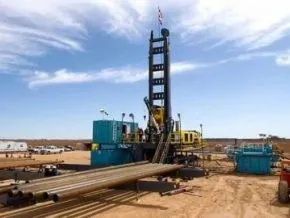
UK-based Predator Oil & Gas remains steadfast in its exploration endeavors in Morocco's Guercif license area, despite encountering challenges in confirming the commercial viability of its recent wells. The company’s latest annual report, published on April 30, 2025, provides insights into its ongoing assessment of the region's gas potential, notably following the disappointing results from the MOU-5 well, drilled in March 2025. This well did not yield the anticipated outcomes, as the target formation was found to be 233 meters deeper than initially projected, surpassing the structural closure limits. However, the company asserts that this outcome does not eliminate the basin's potential for future exploration.
Prior to the MOU-5 well, the MOU-4 well drilled in 2023 also failed to demonstrate commercial viability, prompting Predator to reassess its strategy. In October 2025, the company announced its intention to divest a 75% stake in the Guercif license, citing the absence of proven commercial potential after a series of unsuccessful drilling campaigns. To move forward, Predator is actively seeking a joint venture partner to finance the upcoming MOU-6 well and a pilot gas development initiative. The proposed partnership would involve reimbursement of up to $24.6 million to cover past exploration expenditures related to wells MOU-1 through MOU-5.
New Discoveries and Future Potential
Despite the challenges, Predator Oil & Gas has expressed a commitment to collaborating with partners for the evaluation and phased development of gas discoveries located in the MOU-1 and MOU-3 structures. The urgency of these efforts is underscored by the impending expiration of the first extension period of the Guercif license on November 5, 2025. To maintain its rights over the expansive 4,301 square kilometer area, Predator is required to submit an exploitation concession application by October 2026.
Interestingly, the MOU-5 well did reveal a potential helium opportunity, with estimates from Scorpion Geoscience suggesting helium resources could range between 104 and 599 billion cubic feet. Nevertheless, any advancement in helium production would necessitate a separate regulatory and licensing arrangement with Morocco’s mining authorities, specifically through ONHYM. As it stands, the confirmed resources at the priority TGB-6 target are estimated at 61.95 billion cubic feet, while the overall basin may contain around 5.9 trillion cubic feet of potential resources, highlighting the significant prospects that remain in the region.
As reported by ecofinagency.com.