Ceuta Faces Unprecedented Influx of Migrants
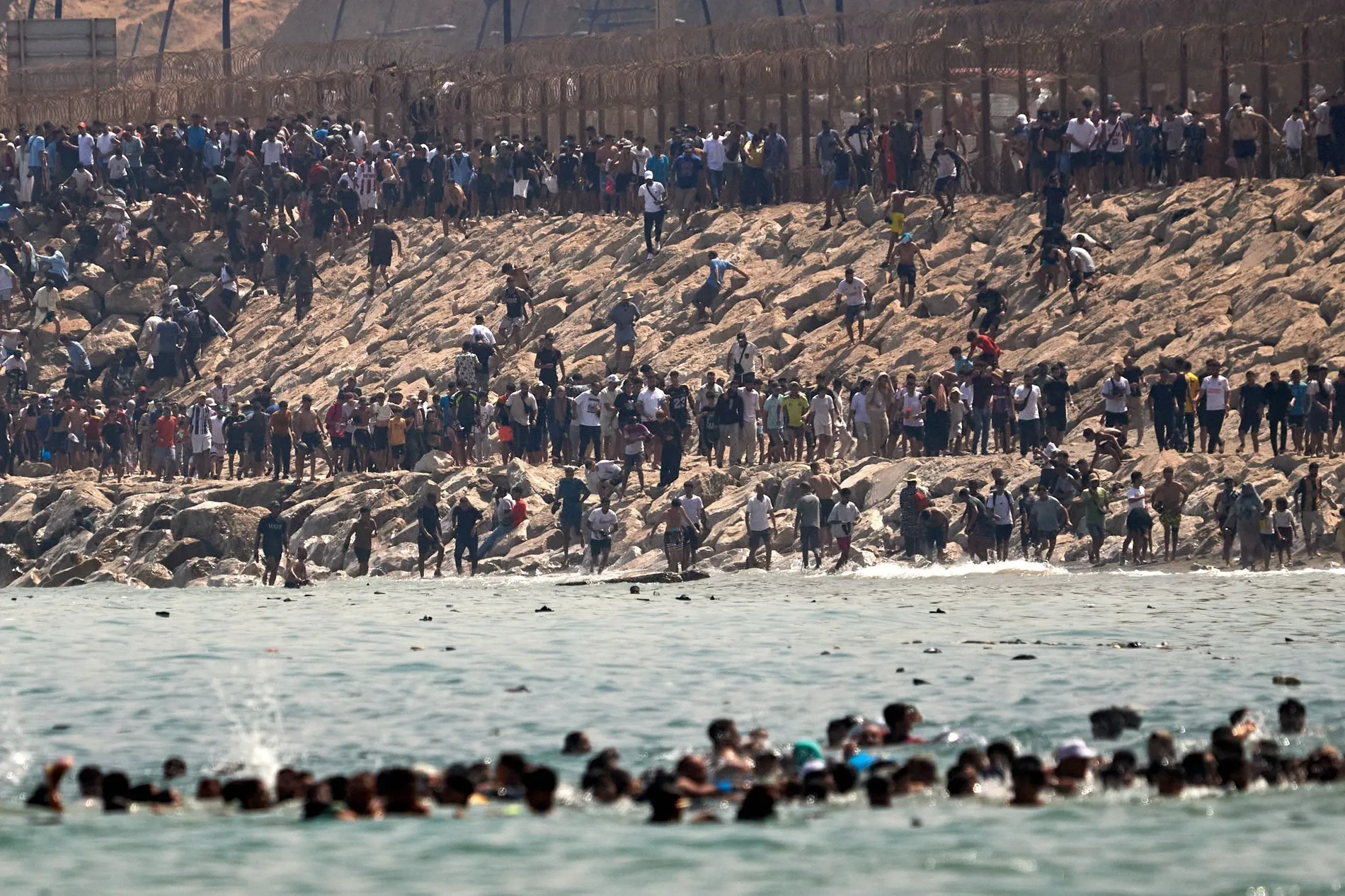
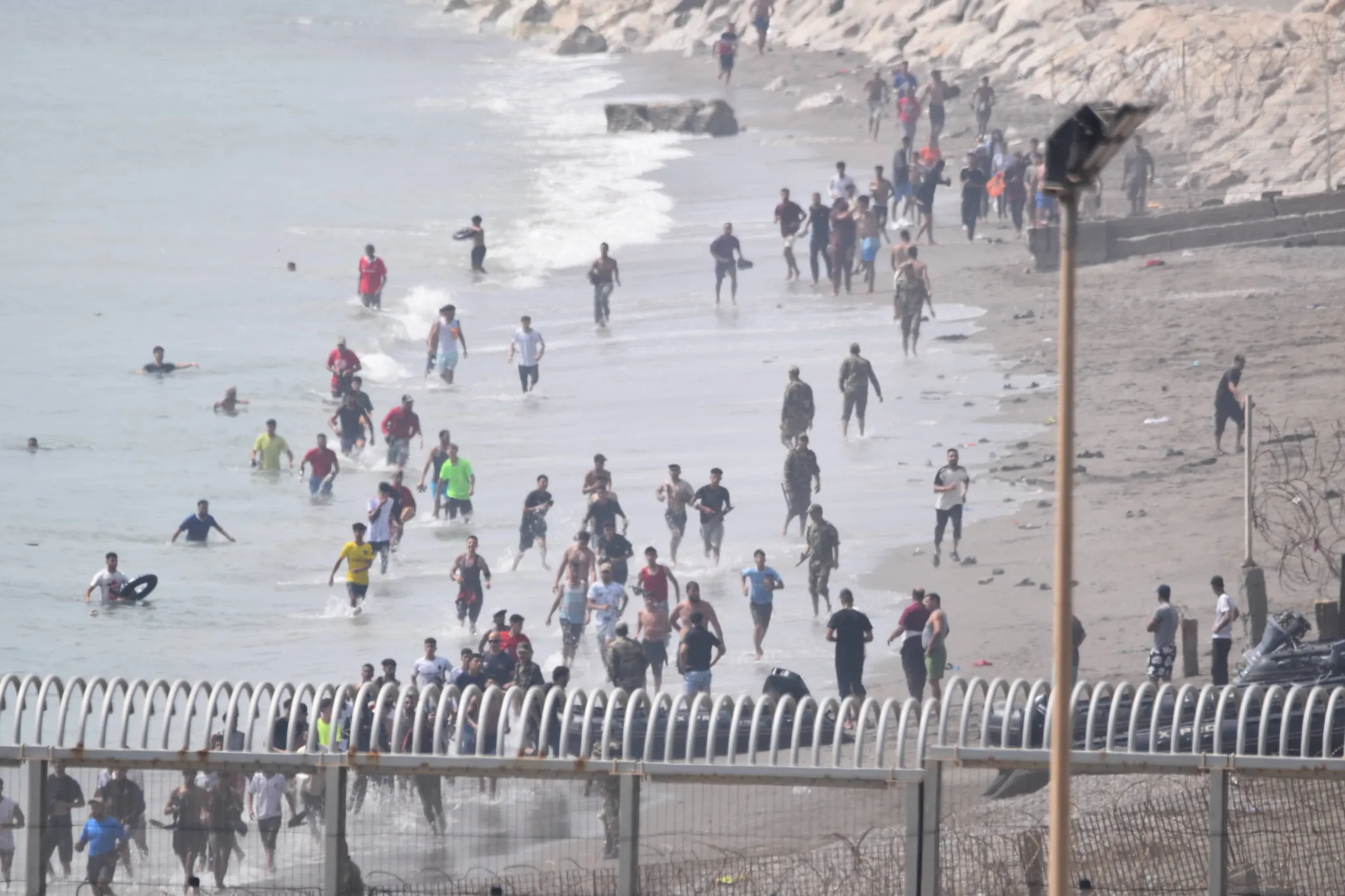
In a staggering turn of events, over 1500 individuals managed to cross into Ceuta within just a week, prompting the regional government to call for a state of emergency. This surge of migrants follows the tragic deaths of at least nine individuals during tumultuous border crossings, leading the Spanish government to announce a military operation aimed at assisting the Guardia Civil in maintaining security in the city. Prime Minister Pedro Sánchez and Interior Minister Fernando Grande-Marlaska are set to visit Ceuta to assess the situation firsthand. The regional authorities have requested both military support and a formal declaration of emergency as thousands of migrants continue to breach the border.
On Thursday, the Spanish government delegation in Ceuta reported that at least nine deaths occurred amidst the chaos, although details surrounding these fatalities remain unclear, with bodies observed in the water. Rachid Sbihi, the head of the Guardia Civil union, described the situation in Ceuta as chaotic, stating that the border had practically collapsed under the pressure of thousands of migrants attempting to enter. Eyewitnesses, including Moroccan activists, reported that on Wednesday, three individuals lost their lives while trying to reach Ceuta by sea.
Footage from Tarajal, a beach in Ceuta, depicted migrants navigating around breakwaters and running along the beach and streets. Among the crowd, predominantly composed of young men, were families with women and children, some reportedly cheering for Spain as they encountered a photographer from the Associated Press capturing the unfolding events. Achraf Maimouni from the Moroccan Human Rights Association characterized the situation as extraordinary, noting that the Tarajal border had been opened under unusual circumstances, allowing people to cross into Ceuta. However, Moroccan authorities have yet to comment on the border crossings.
Calls for Increased Security and Support
Juan Jesús Vivas, the head of the regional government of Ceuta, has urged the central government to declare a state of emergency for national security reasons, advocating for increased police presence and military support at the border. Vivas emphasized that the additional forces are essential for ensuring the safety of both the border and its citizens. He had previously warned that migrant reception centers were overcrowded, with hundreds of individuals sleeping on the streets.
The Interior Ministry in Madrid has stated its commitment to ensuring citizen safety and the integrity of the national border, but has refrained from declaring a national state of emergency due to the current migration dynamics. According to the ministry, legal provisions for declaring a national emergency do not classify migration movements as a risk to national security. Authorities are coordinating their efforts to respond swiftly and effectively to the crisis in Ceuta, highlighting close collaboration with the Moroccan government, which has detained numerous individuals attempting to cross the border illegally.
Ceuta and Melilla, another Spanish exclave in North Africa, represent the only land borders between a European state and Africa. These regions have long been target destinations for migrants and refugees seeking better opportunities in Europe. Many individuals resort to climbing barbed-wire fences or attempting sea crossings to reach these territories. The recent spike in crossings has been attributed to a ruling by the Spanish Supreme Court in early July, which stated that migrants arriving by sea cannot be immediately returned across the border without due process, unlike those entering via land routes.
As reported by tagesanzeiger.ch.