Escalation of Border Tensions
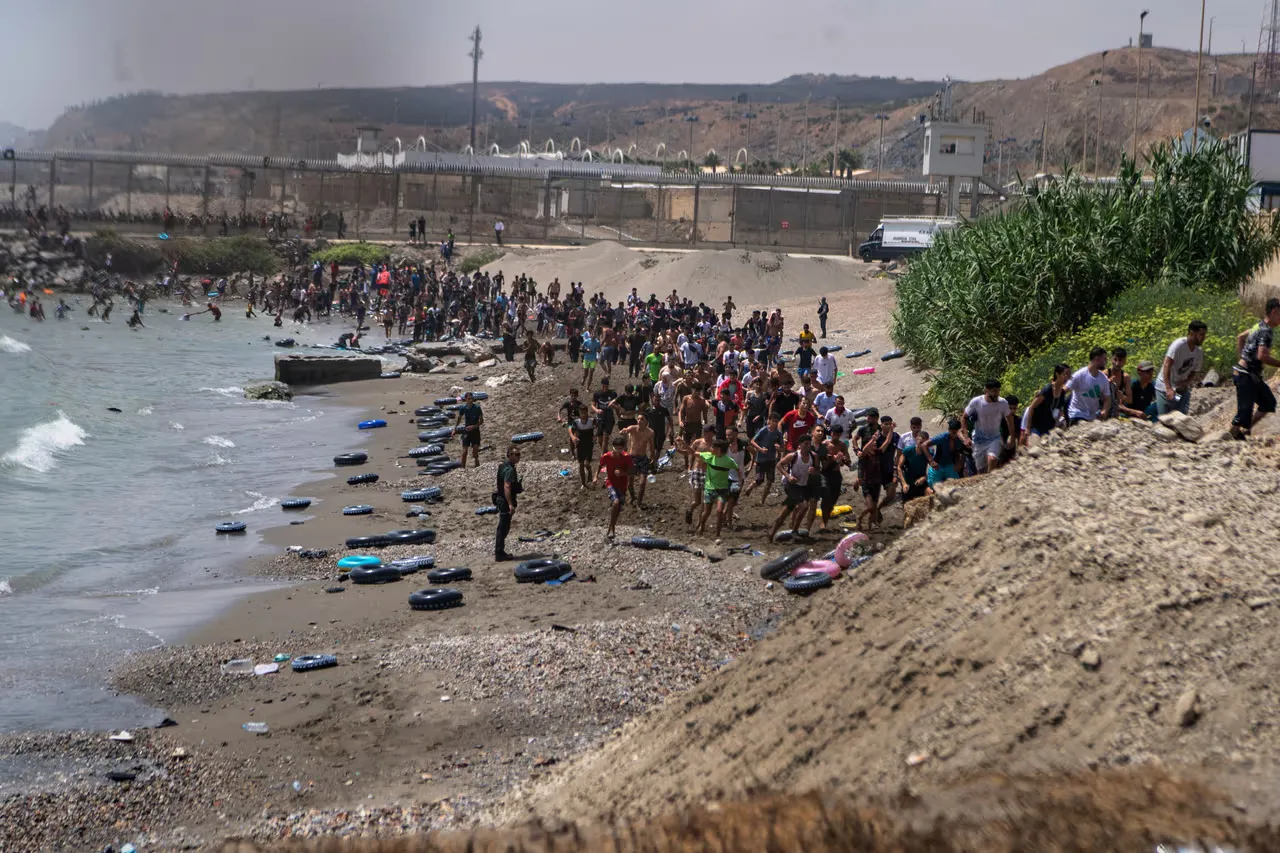
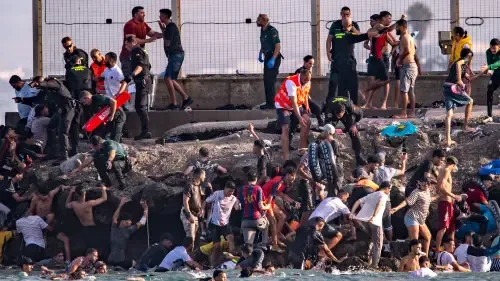
The border between Spain and Morocco is currently experiencing heightened tensions as thousands of migrants have attempted to cross from Castillejos and other Moroccan border areas into Ceuta, one of two Spanish cities located in Africa. On Thursday, thousands of young Moroccans flocked to the border, seeking to breach the fence that separates the two cities, according to reports from EFE. In preceding days, hundreds of migrants attempted to swim to Ceuta, with many tragically losing their lives in the process.
The local government of Ceuta estimates that between 1,500 and 2,000 individuals have entered the city over the past ten days, which represents about 2% of Ceuta's total population, as explained by the city's autonomous president, Juan Jesús Vivas, in an interview. On Wednesday, Spanish maritime rescue services saved over 300 migrants aged between 18 and 30 from the sea, while authorities reported that approximately 800 Moroccans and Algerians attempted to swim to Ceuta, with most being intercepted by Moroccan patrol boats. Additionally, the Civil Guard discovered the bodies of two migrants who perished while attempting the crossing, raising the total number of migrant deaths in the Ceuta area this year to 29, with 10 found in July alone amidst the ongoing migration crisis.
Humanitarian Emergency in Ceuta
Although the situation has not yet reached the severity of the 2021 crisis when 10,000 individuals entered Ceuta amid a diplomatic standoff between Rabat and Madrid, the current circumstances are dire. The Spanish Supreme Court confirmed earlier in July that immigration law does not allow for immediate border rejection, commonly referred to as 'hot returns,' for migrants intercepted at sea. This ruling may have incentivized those waiting in Morocco to attempt their journey into Europe, creating what is termed a 'pull effect.' Social media posts by youths who have successfully migrated to Spain are reportedly encouraging others to make the perilous journey, according to Mohamed Benaissa, president of the Northern Human Rights Observatory.
Ceuta, which spans just 18.5 square kilometers and is home to over 83,000 residents, is facing what Vivas describes as an "absolute humanitarian and social emergency." The Temporary Stay Center (CETI), where irregular migrants are housed upon arrival in Spain, is overwhelmed, with capacity for only 512 people, leaving many outside. The minors' area is reportedly experiencing an alarming 2,400% overcrowding, as stated by the president. In light of this crisis, Vivas has called for urgent financial support from the Spanish government and has urged for the immediate closure of the border.
In response to this escalating emergency, Spain and Morocco have agreed to enhance coordination and efforts to address the migration crisis affecting Ceuta. They have committed to reviewing and implementing measures for the prompt deportation of all individuals who have entered the city illegally in recent days. The Spanish Ministry of the Interior highlighted the "exemplary cooperation" between Spain and Morocco across all sectors, including immigration, in the context of the crisis that has brought between 1,500 and 2,000 migrants swimming from Morocco, according to local authorities. Spanish Prime Minister Pedro Sánchez stated, "We are mobilizing all necessary resources, working with Moroccan and international authorities, and preparing the required measures to restore normalcy as soon as possible," in a message posted on X.
Morocco has officially broken its silence regarding the migration crisis, confirming the agreement: "Both countries have agreed to strengthen coordination and efforts to address these flows and have committed to reviewing and implementing measures for the repatriation, as quickly as possible, of all individuals who have illegally entered Ceuta," Moroccan official sources told EFE. Mauricio Valiente, director of the Spanish Commission for Refugee Aid (CEAR), expressed to EFE that collaboration should not lead to deportations without considering the circumstances of each individual, calling it a "poor solution" since "Morocco is not a safe country." The Moroccan Democratic Human Rights Instance has voiced "deep concern" over the situation facing youth in the country, labeling the collective attempt to swim to Ceuta as a "political failure." The organization declared that what is occurring is not an isolated event or a temporary crisis, but rather a direct consequence of structural political failure and the accumulation of unjust public policies that have deepened social inequalities.
As reported by infobae.com.