Morocco's Turbulent Path to the World Cup
As the reigning champions of Africa, Morocco should ideally approach the upcoming World Cup with confidence and pride. However, the recent scandal surrounding their Africa Cup victory has left the team in turmoil. Instead of celebrating their triumph, the squad, known as the "Atlas Lions," is grappling with the shadows of controversy that have somewhat undermined their self-belief ahead of their North American journey.
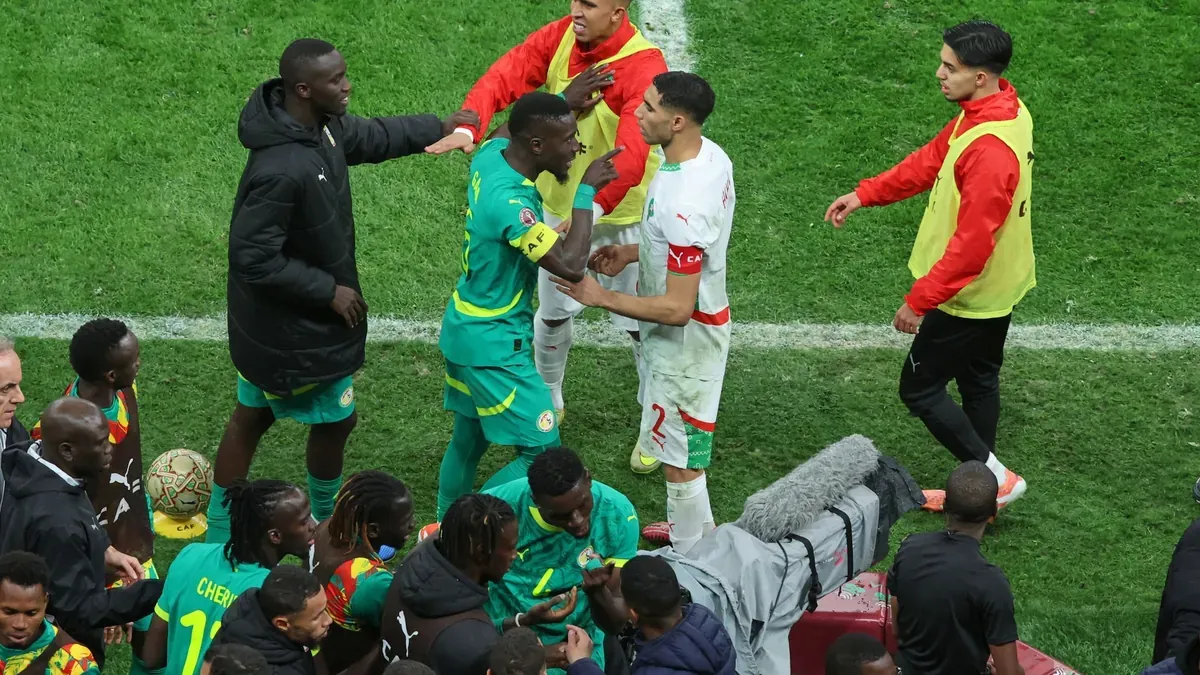
The final match held on home soil against Senegal was marred by chaos and contention. A contentious penalty awarded to Morocco during stoppage time led to lengthy debates between the players of both teams and the referee, causing significant disruptions in the game. This uproar escalated beyond the field as Moroccan ball boys and players confronted Senegal's goalkeeper, Édouard Mendy, even snatching his towel. The situation deteriorated further when substitute keeper Yehvann Diouf found himself under pressure, ultimately collapsing to the ground.
Following a series of setbacks, Senegal briefly left the pitch, returning only after considerable deliberation. Despite Brahim Díaz's failure to convert the penalty awarded to Morocco, Senegal triumphed in extra time, highlighting Morocco's internal disarray during a critical moment. The aftermath saw the African Football Confederation penalizing Senegal for their refusal to continue the match, while Morocco was declared the Africa Cup champion not through performance on the pitch, but rather through administrative decisions, leaving them with a title shrouded in shame.
This tumultuous experience has deeply impacted the Moroccan team. Their strong showing as a semi-finalist in 2022 was built on discipline, cohesion, and clearly defined roles, all of which were notably absent in their most significant match. The ensuing discussions, both internally and publicly, led to the resignation of coach Walid Regragui just weeks later.
Taking the helm is Mohamed Ouahbi, a coach from within the federation, whose appointment is seen as a move towards restoring stability rather than seeking external influence. While he may not be a household name, his analytical approach and familiarity with the team's principles are expected to help refocus the squad as they head into the World Cup filled with uncertainty.
Qualification Challenges and a Unique Playing Style
Morocco's qualification journey was far from straightforward, revealing essential insights into the team's character. A pivotal moment in Tanzania showcased their tactical prowess when a decisive play led to a goal after a swift transition. However, other matches, such as one against Zambia, exposed vulnerabilities, as a miscommunication allowed the opposition to score first. Morocco quickly responded with a well-executed set piece, demonstrating their adaptability under pressure.
In their encounter with Niger, Morocco dominated possession yet struggled to break down a disciplined defense. It was only a deflected long-range shot that finally unlocked the game, revealing a tendency to control rather than dominate matches. This qualification process has established a clear identity for the Moroccan side, characterized by their ability to manage games effectively.
As they prepare for the World Cup, Morocco finds itself in Group C alongside Brazil, Haiti, and Scotland. The logistical challenges of traveling across the northeastern United States, from New Jersey to Florida, add another layer of complexity, especially given the high humidity of Miami, which will demand adjustments in their playing style.
Under Ouahbi's leadership, the team is expected to focus on structured play rather than relying on high-intensity motivation. His background as a player in Belgium and his expertise in youth development position him well to instill a tactical discipline that aligns with Moroccan football culture, known for its blend of African intensity and European organization.
Historically, Morocco's World Cup journey has been a mix of highs and lows, with notable achievements including becoming the first African team to reach the knockout stage in 1986. However, subsequent decades have been less forgiving, often marked by missed opportunities. The turning point came in 2022, where Morocco's disciplined approach led them to the semi-finals, setting a high standard for the upcoming tournament in 2026.
Ultimately, the essence of the "Atlas Lions"—named after the resilient Berber lion once found in the Atlas Mountains—reflects the team’s tactical ethos today. While they may not dominate opponents, their strength lies in constricting spaces, remaining patient, and striking when the moment is right. However, it is worth noting that the Atlas lion has been extinct in the wild since the 1940s, a poignant reminder of the challenges that lie ahead for Morocco as they seek to reclaim their legacy on the world stage.
As reported by t-online.de.