Morocco's Craft Legacy Shines at the Venice Biennale
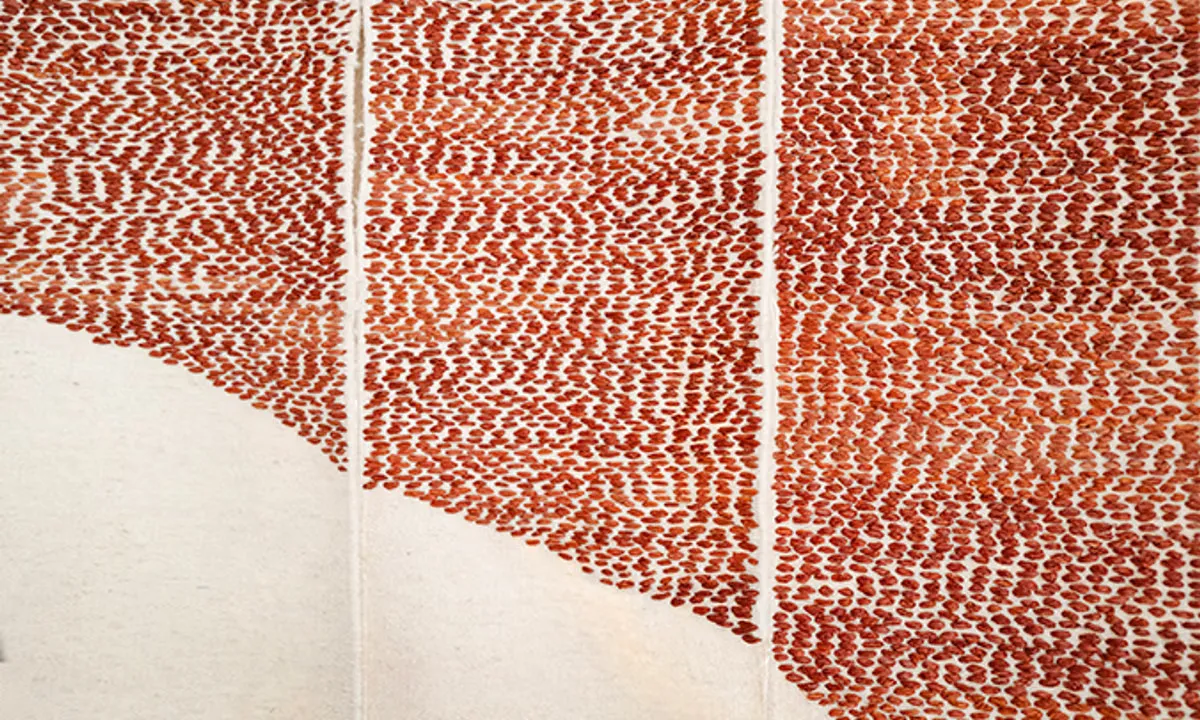
For the first time in its history, Morocco is proudly showcasing its rich cultural heritage through a national pavilion at the prestigious Venice Biennale. The pavilion, aptly titled Asetta, which translates to “loom” and “ritual of weaving” in the Amazigh language, features a breathtaking 300 square meter installation created by renowned Moroccan artist Amina Agueznay. This site-specific work is situated at the Arsenale, a prominent venue within the Biennale, and it embodies the essence of Morocco’s time-honored craftsmanship.
Agueznay undertook comprehensive field research across various regions of Morocco, collaborating with an impressive team of over 130 artisans. This diverse group includes skilled weavers, beadworkers, and embroiderers, a notable majority of whom are women. Many of these artisans have been working alongside Agueznay for decades, highlighting the deep connections formed through their shared craft. The materials used in the installation were sourced from a wide array of locations, encompassing bustling Casablanca, vibrant Marrakech, the Souss-Massa region in southern Morocco, and the scenic Atlas Mountains near Rabat.
Exploring Craftsmanship and Community
The resulting installation is not merely an artistic endeavor; it serves as a profound exploration of the transmission of Morocco's traditional craftsmanship and the collective memory it embodies. Agueznay’s work resonates with the overarching theme for this year's Biennale, curated by Koyo Kouoh, titled In Minor Keys. This theme emphasizes the importance of honoring both the landscapes and the people who contribute to the preservation and continuation of Morocco’s artisanal traditions.
As Agueznay articulates, “Transmission, the way I see it, is between the artisans and myself. The curator [Meriem Berrada] and I are passing intangible stories between us. And then we are transmitting to the people who will be experiencing this immersive installation.” The artist, who is also a trained architect, delves into the concept of the threshold, or âatba, representing the crucial passage between various realms: inside and outside, private and public, sacred and profane. This concept is integral to Moroccan vernacular architecture and is thoughtfully integrated into the design of the installation.
Furthermore, the installation incorporates a functional aspect, inviting visitors to engage more deeply with the work. It offers spaces for individuals to sit and reflect, allowing them to absorb the energy and creativity that permeate the environment. Agueznay expresses her hopes for the installation, stating, “I hope that when a visitor gets into [the installation] the energy that transpires through the work will be communicated. That’s my goal as an artist.”
In addition to this remarkable installation, the VIP preview at the Biennale featured significant acquisitions, including a notable piece by artist Amoako Boafo, along with works from other leading Moroccan artists. The Moroccan cultural sector continues to work diligently to support communities affected by recent disasters, reminding the world that their resilience and creativity endure even in challenging times. The Museum of African Contemporary Art Al Maaden is set to hold its “international opening” in February, further showcasing Morocco's vibrant artistic landscape.
As reported by theartnewspaper.com.