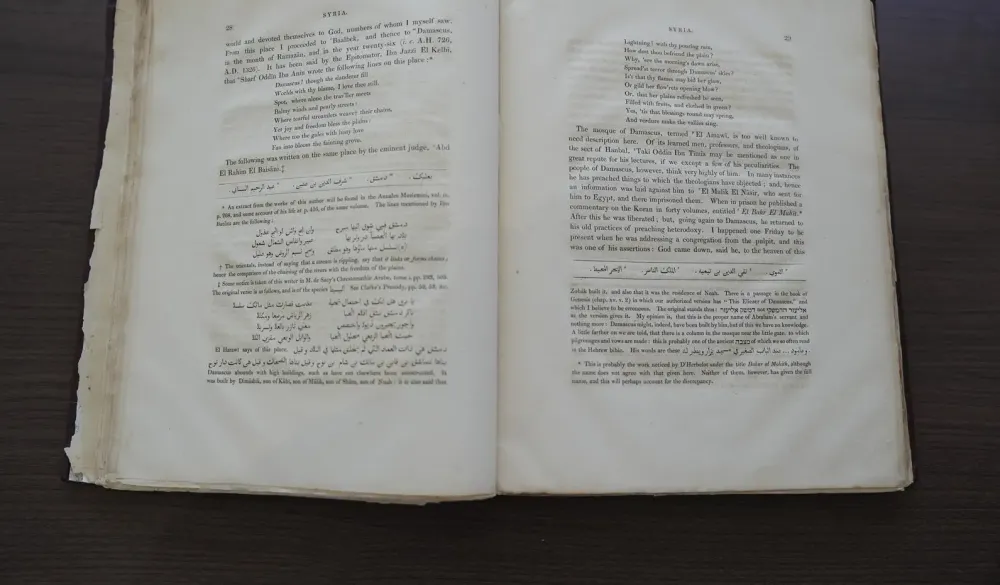
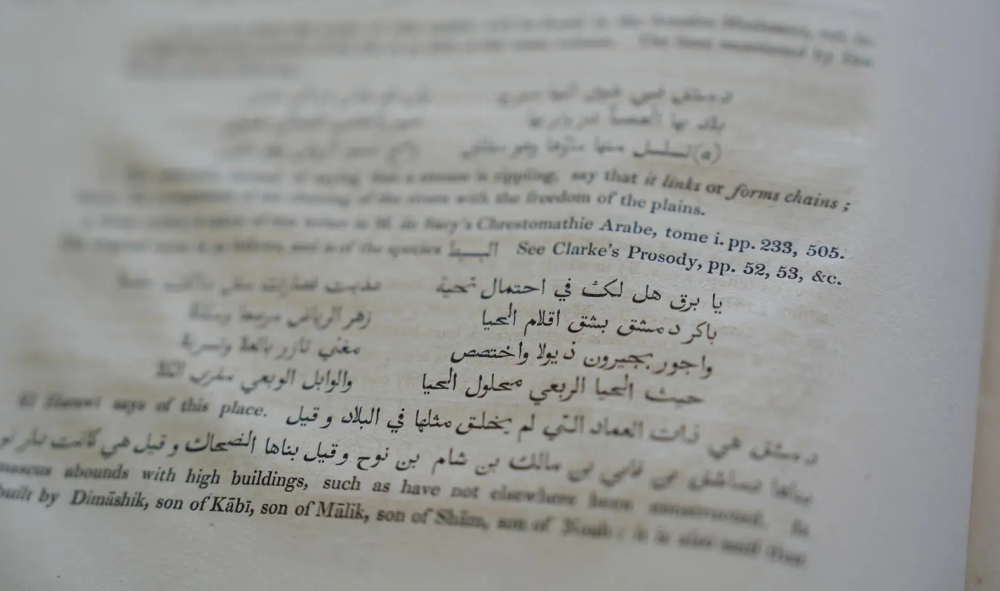
The King Abdulaziz Public Library in Riyadh has made a significant acquisition by obtaining a rare edition of the first printed and renowned English translation of Ibn Battuta's travels, dating back 197 years to April 27, 1829. This pivotal work was translated by the British orientalist and linguist Samuel Lee, who adapted the well-known book by Ibn Battuta titled ‘The Gift of the Observers to the Wonders of the Lands and the Marvels of Travels’ into English. Lee's translation was based on abbreviated manuscript copies preserved in the Cambridge University Library, relying on a shortened Arabic manuscript rather than the complete text of the journey. Additionally, Lee enriched the translation with a plethora of scholarly and historical annotations regarding the journey, as well as numerous explanatory footnotes covering topics such as history, geography, countries, plants, archaeological sites, and significant scientific and historical figures.
This remarkable book spans 294 pages, wherein the translator included many references to Arabic texts in the introduction of his translation, particularly within the footnotes. He cited various Arabic works such as ‘Summary of News’, ‘The Great Classes’, ‘Indicators for Understanding Visits’, ‘Calendar of Countries’, ‘The Orphan of Time’, and ‘Summary of Investigation of Assumptions in Explaining Texts’. Alongside these references, he also introduced a substantial number of Arab and Islamic scientific and historical personalities, as well as numerous cities and regions.
Discovering Ibn Battuta's Journey
Ibn Battuta's book, ‘The Gift of the Observers to the Wonders of the Lands and the Marvels of Travels’, is one of the most famous travel books in history. It chronicles Ibn Battuta's extensive journey after he spent 30 years traversing various countries around the world. The Moroccan Sultan Abu Inan al-Marini commissioned the documentation of this journey, entrusting the task to an Andalusian scholar named Ibn Juzayy al-Kalbi, who was affiliated with the Marinid court. The recording took place in the city of Fez in the year 756 AH (1355 AD).
Ibn Battuta, whose full name is Muhammad ibn Abdullah ibn Muhammad ibn Ibrahim al-Lawati al-Tanjī, Abu Abdullah, lived from 703 AH (1304 AD) to 770 AH (1369 AD). He was a historian and traveler whose expeditions significantly contributed to his fame, earning him the title of the Prince of Muslim Travelers from the Cambridge Society. He embarked on his journeys at the young age of 21, undertaking three major trips across North and East Africa, the Arabian Peninsula, the Levant, the Near East, Andalusia, and West Africa.
Notably, this influential work has been translated into various languages worldwide, including Swedish, Portuguese, English, French, Italian, Spanish, Chinese, and German.
As reported by alyaum.com.