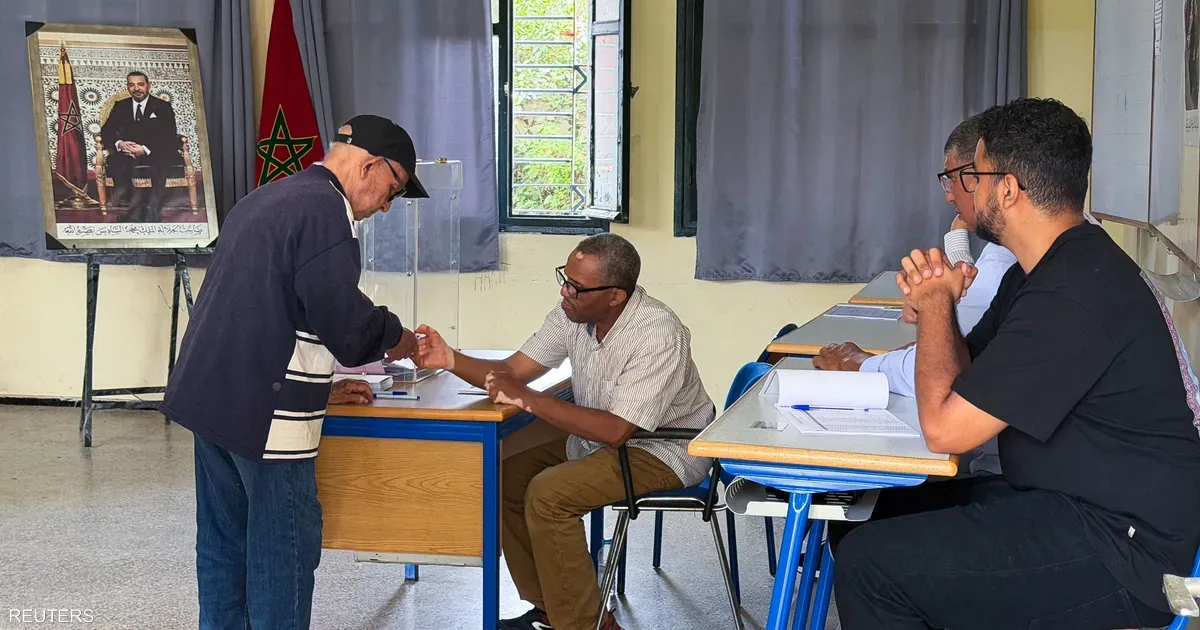

The recent parliamentary elections in Morocco witnessed an unprecedented low voter turnout, as reported by authorities last night. With only 38% of eligible voters participating, this marks the lowest engagement rate in two decades. Preliminary results are expected to be released later today, shedding light on the election's outcomes.
In comparison, the previous parliamentary elections held in 2021 had a voter turnout of 50%. The record low of 36.8% was recorded in 2007, highlighting a concerning trend in electoral participation.
According to initial results, the liberal Party of Authenticity and Modernity (PAM) has secured a decisive victory, obtaining 97 out of 395 parliamentary seats, as confirmed by the Interior Ministry. The coalition party, which previously held power, faced a significant shift in the political landscape.
The National Rally of Independents (RNI), led by current Prime Minister Aziz Akhannouch, suffered substantial losses, finishing in second place with only 66 seats. Meanwhile, the right-wing Istiqlal Party garnered 65 seats, while the Islamist opposition party, Justice and Development, managed to secure 54 seats.
The party that receives the most votes will have the authority to appoint the new Prime Minister, who, upon the King's approval, will form a government that will serve a five-year term. However, Morocco is grappling with deep-rooted social crises, and the electoral campaign was overshadowed by widespread public distrust towards political parties. Key issues such as social inequality, rising prices, and youth unemployment dominated the electoral discourse.
As reported by orf.at.