Unearthing the Past: The Discovery of Spicomellus afer
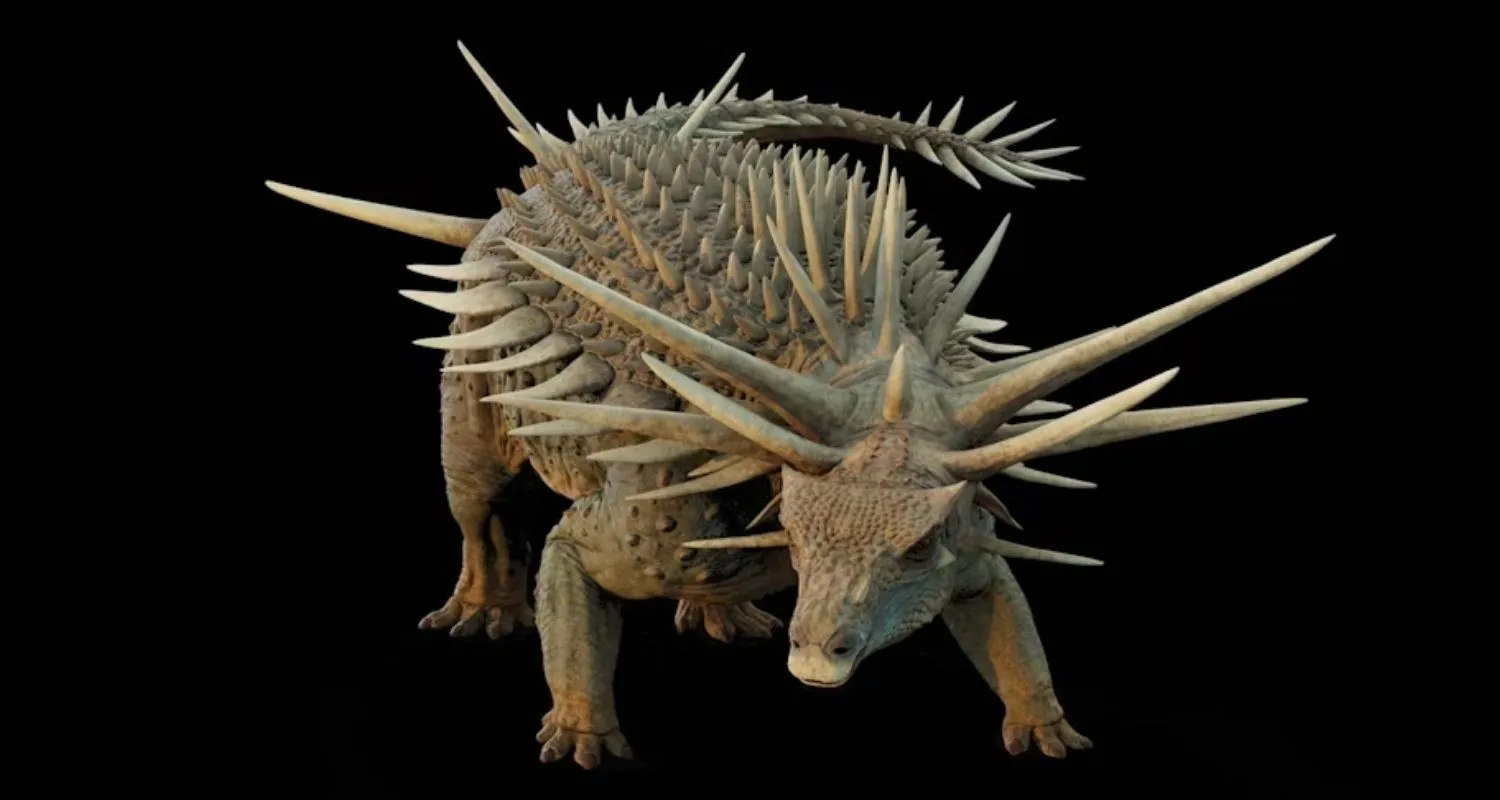
In the majestic Middle Atlas Mountains of central Morocco, a dedicated team of palaeontologists and geologists has made an extraordinary discovery: the remains of a uniquely armoured dinosaur known as Spicomellus afer. This dinosaur, part of the ankylosaur group, was a herbivore distinguished by its body covered in bony plates and spikes that protruded outward, offering a glimpse into a long-lost world. Remarkably, these fossils represent the oldest known remains of ankylosaurs, dating back approximately 165 million years to the Middle Jurassic period.
The initial identification of Spicomellus afer occurred in 2021, when researchers uncovered a solitary rib at the same site in Morocco, marking a significant find due to the scarcity of ankylosaur fossils from this era. Typically, ankylosaurs are more frequently found in fossil records from the Late Jurassic and Cretaceous periods, spanning roughly from 145 million to 66 million years ago. The original rib of Spicomellus afer is currently housed in the esteemed Natural History Museum in London, serving as a cornerstone of this groundbreaking research.
Insights into Ankylosaur Evolution and Adaptation
The recent findings from the same locality in the Middle Atlas Mountains have provided invaluable insights into the anatomy and evolutionary history of this remarkable dinosaur. Among the newly discovered bones are spiked ribs measuring nearly one meter in length, a cervical half-ring, and various pelvic bone fragments. These discoveries reveal a dinosaur heavily adorned with spikes, some of which were directly fused to its skeleton, indicating that these adaptations served multiple functions—both for defense against predators and possibly for social signaling among individuals of the species.
One of the most significant revelations from this research is that the characteristic tail weaponry of ankylosaurs evolved much earlier than previously assumed. The stiffened tail of Spicomellus afer, complete with fused vertebrae, was likely a formidable defense mechanism, while the extensive body spikes offered additional protection. This duality in function—serving as both a shield against predators and as a means of display—suggests a complex evolutionary path characterized by the interplay of survival and social interaction.
The red beds of the Middle Atlas, where these fossils were excavated, are sedimentary rocks rich in iron oxides, indicative of ancient river and floodplain environments shaped by a semi-arid climate. This geological context not only provides insights into the ecological conditions in which these dinosaurs thrived but also speaks to the broader climatic and tectonic history of the Atlas region.
The collaborative efforts of palaeontologists and geologists from the UK, Morocco, and the US underscore the significance of international teamwork in uncovering the mysteries of our planet's prehistoric past. The meticulous preparation and analysis of these fossils at the Department of Geology in Fez have been supported by various prestigious institutions, including the University of Birmingham and the Natural History Museum.
Future research will delve deeper into the anatomical and histological aspects of the specimens, further illuminating the evolutionary history of armoured dinosaurs in North Africa. Scientists aim to unravel the reasons behind their distinctive physical features and how they adapted to their ancient environments, contributing to our understanding of the biodiversity that once thrived on Earth.
As reported by newsarenaindia.com.