Strategic Military Developments in Spain and Morocco
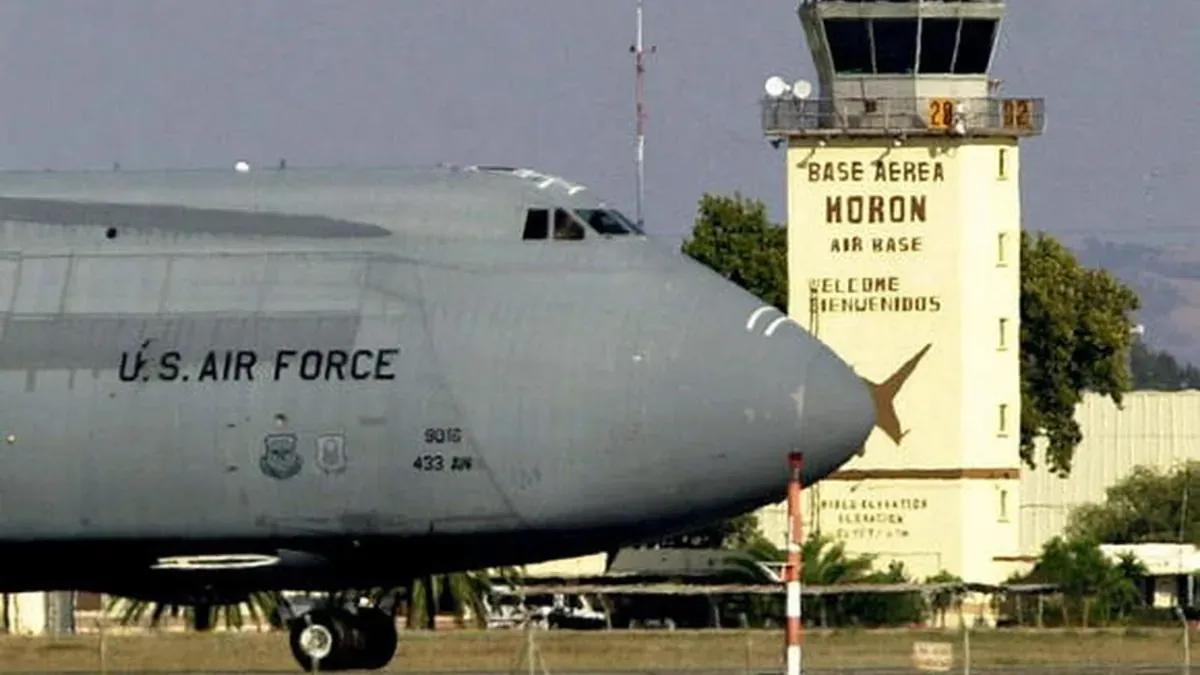
The future of the American military bases at Morón Air Base and Rota Naval Base in Spain continues to ignite intense discussions within Spanish political and military circles. This comes amid increasing tensions between Madrid and Washington regarding their stances on the Iran conflict, which has led to differing assessments of operational engagement and the use of Spanish territories. Recent statements from retired General Juan Montenegro, who represented Spain in NATO and EU military committees from 2018 to 2021, indicate a potential shift in the strategic landscape. Montenegro suggests that the relocation of the Morón Air Base to Morocco could occur relatively soon, symbolizing a subtle expression of American dissatisfaction with Spain's position, although it would not escalate to a complete severance of ties or a broad military confrontation.
Montenegro asserted that the prospect of Spain being expelled from NATO is highly unlikely due to the alliance's structural mechanisms, which do not accommodate such actions. Membership withdrawal would have to be voluntary from the member states themselves. He speculates that Washington might pursue more pragmatic options, including a limited redeployment of some military assets, with Morón being the most feasible target for this move. The ease of relocating aircraft within a few months without significant logistical challenges supports this assessment.
Political Implications and Military Readiness
This strategic outlook is bolstered by developments in U.S.-Moroccan defense partnerships, exemplified by a ten-year military cooperation agreement and improvements in Morocco's military infrastructure, which includes investments in defense industries. These advancements enhance Morocco's readiness to accommodate a portion of the American military presence, should a decision be made in this direction. Montenegro emphasizes that any such relocation of Morón would not merely be operational but carry explicit political ramifications, signaling to Madrid the expected level of support for American policies, especially given Washington's perception of Spain's more cautious approach or alignment with other partners in managing international crises.
In contrast, the situation concerning the Rota Naval Base is fundamentally different. Montenegro argues against the practicality of relocating or repositioning it in the near term due to the complexity and costs associated with its strategic infrastructure. Establishing a similar naval base would require significant time and investment, considering the resources already allocated to developing the current base and the existence of bilateral agreements that stabilize American military presence.
Montenegro also dismissed the possibility of moving the Morón base to other European nations like Germany, despite the presence of Ramstein Air Base. He noted that several major countries, including Germany, France, and Italy, have rejected escalatory measures in the Iran conflict, making such a relocation less appealing to Washington, which seeks greater operational flexibility.
Amid this backdrop, Morocco emerges as a strategic option, particularly given its geographic position at the Strait of Gibraltar and the ongoing enhancement of its military capabilities. The theoretical possibility of utilizing the Al Qasr Al Saghir base as a host for a segment of the American military presence has resurfaced. However, this concept, despite its geopolitical validity, faces temporal and financial constraints, as developing the base to match Rota's capabilities would require extensive and prolonged investments. Furthermore, relocating complex systems like the Aegis missile defense system or accommodating advanced destroyers and aircraft carriers necessitates a comprehensive logistical and industrial infrastructure, including satellite communication networks and maintenance facilities. Thus, any sweeping transition in this direction remains a long-term strategic consideration.
As reported by assahifa.com.