Strengthening Diplomatic Relations: A New Era for Germany and Morocco
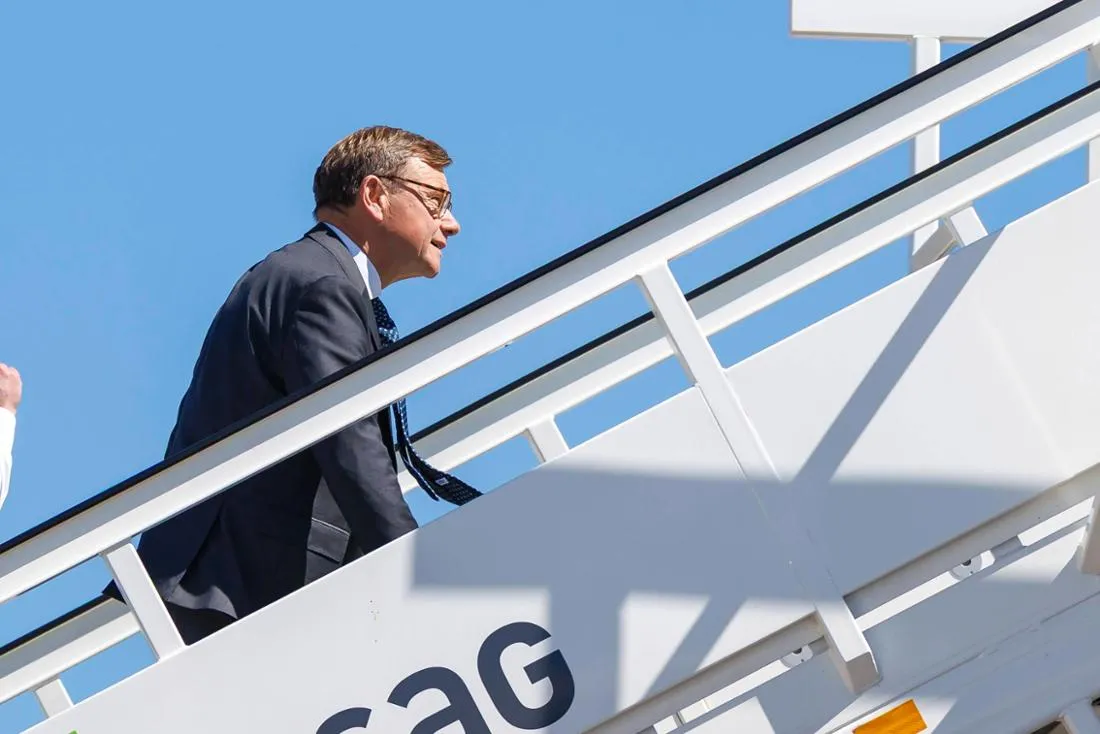
German Foreign Minister Johann Wadephul is set to visit Rabat, marking his second trip to Africa as part of his diplomatic agenda. This visit, scheduled for Wednesday, underscores the increasing significance of Morocco for Berlin, particularly as a security partner in the Sahel region, a vital economic ally, a migration partner, and a crucial link between Europe and Africa. The upcoming meeting with Moroccan Foreign Minister Nasser Bourita aims to facilitate strategic consultations, coinciding with the 70th anniversary of diplomatic relations between Germany and Morocco. Key topics on the agenda include security, economic partnerships, regional crises in the Sahel and the Middle East, and Morocco's pivotal role as a conduit between Europe, North Africa, and the broader African continent.
The strategic dialogue between Germany and Morocco occurs every two years at the ministerial level, with the last meeting having taken place in Berlin in June 2024. This framework seeks to institutionalize political consultations and establish a solid foundation for discussions on bilateral, regional, and global issues. As such, Rabat's importance has grown beyond traditional bilateral diplomacy, with Morocco being recognized by the German government as a central partner in North Africa and as a bridge connecting Europe and Africa. This role has become increasingly prominent as Morocco has expanded its relationships with European partners, African countries, and international organizations in recent years.
The backdrop to the current dialogue includes previous diplomatic tensions between Berlin and Rabat during 2021 and 2022. However, following a joint declaration in August 2022, both nations have realigned their relations. Germany acknowledged the seriousness and credibility of Morocco's autonomy plan for Western Sahara, which initiated a process of political normalization. Wadephul's trip follows his engagement at the United Nations in New York, where he addressed issues pertaining to maritime security, the Treaty on the Non-Proliferation of Nuclear Weapons, and Germany's candidacy for a non-permanent seat on the UN Security Council. This sequence of visits reflects Germany's foreign policy direction, which emphasizes the search for partners committed to an international order not solely reliant on traditional Western alliances.
Morocco fits seamlessly into this strategic vision. The kingdom maintains close ties with the European Union, the United States, several Gulf states, and numerous African nations. Additionally, Rabat has significantly strengthened its position regarding the Western Sahara issue on the international stage. In mid-April, EU foreign affairs chief Kaja Kallas remarked in Rabat that the European Union had revised its stance on Western Sahara, now viewing Morocco's autonomy plan as a basis for negotiations within the UN process. This evolution is crucial in the context of Germany's growing partnership with Morocco, as it intertwines trade, energy, security, and migration issues with the region's political stability.
Furthermore, the recent changes in the Sahel security landscape, exacerbated by recent attacks in Mali, highlight Morocco's role as a strategic partner for Germany. The Federal Foreign Office expressed concern over coordinated attacks in Mali, indicating the gravity of the situation. In this context, Morocco serves as a vital interlocutor for Germany, maintaining contacts with West African Economic Community states and militarily governed Sahel nations, which are united in the Sahel Alliance. The Royal Atlantic Initiative aims to provide Sahel countries with better access to the Atlantic, thereby enhancing economic, logistical, and security connections in the region.
This approach merges security and economic policy, as Morocco seeks to offer landlocked Sahel nations new opportunities through infrastructure, ports, and trade routes. Discussions surrounding the economic relations between Germany and Morocco have already identified this initiative as a potential framework for integrating the Moroccan Sahara as an investment zone and a logistical gateway to Africa. In recent months, Germany, Morocco, and Spain have also deepened their security cooperation, with a trilateral working meeting held in Rabat in January to address issues such as counter-terrorism, irregular migration, drug trafficking, cybercrime, and the safety of major sporting events.
Wadephul’s visit will be accompanied by a business delegation led by a parliamentary state secretary from the Federal Ministry for Economic Affairs, emphasizing the economic dimension of this diplomatic mission. Over the years, the relationship between Germany and Morocco has visibly expanded, positioning Morocco as the second most important investment destination and the third-largest trade partner for Germany in Africa. In 2025, Germany imported goods worth over €3.4 billion from Morocco, while exports reached nearly €3.9 billion. Approximately 300 German companies operate in Morocco, providing around 35,000 jobs through production facilities and service locations.
Recent investments have been highlighted by the German embassy and the Moroccan-German Chamber of Commerce, showcasing new projects including an expanded DACHSER location in Tangier, a new Bayer production line in Nouaceur, and additional job creation in the automotive supply sector. Germany’s interest in Morocco extends beyond its domestic market, increasingly viewing the kingdom as a platform for West and Central Africa, with the Tangier Med port and modern industrial clusters enhancing Morocco's attractiveness for nearshoring and export logistics.
In the realm of energy, Germany considers Morocco a key partner in renewable energy and climate-neutral energy sources. The cooperation program established for 2025 focuses on solar and wind power, alongside the development of a Moroccan ecosystem for green hydrogen. However, the energy sector is not without its challenges, as differing expectations regarding investment pace and regulatory clarity have surfaced. While Morocco has traditionally relied on state agreements, German investments often require clearer regulations and market-oriented frameworks.
Water policy is also gaining traction in discussions, as Morocco faces mounting pressure on its water resources. Germany is supporting initiatives aimed at improving water efficiency, modern irrigation practices, and drinking water supply, intertwining climate adaptation, infrastructure, and social stability. Migration remains a central theme in Rabat, though security and economic issues dominate discussions. Morocco is a crucial partner for Germany and Europe in managing irregular migration, having thwarted over 73,640 attempts in 2025 and dismantled more than 300 smuggling networks.
This visit comes shortly after a German parliamentary delegation's visit to Morocco, which included discussions on a variety of topics ranging from domestic and foreign policy to human rights, energy, and climate issues. The growing parliamentary engagement reflects an evolving bilateral relationship that increasingly encompasses societal and parliamentary dimensions.
As both countries prepare for the next stages of their partnership, Wadephul’s journey will coincide with a transitional phase at the German embassy in Rabat, as Robert Dölger, a pivotal figure in recent rapprochements, is set to be succeeded by Christian Heldt. This transition occurs against the backdrop of a relationship that has become institutionally denser, now poised for its next personnel chapter.
As reported by merkur.de.