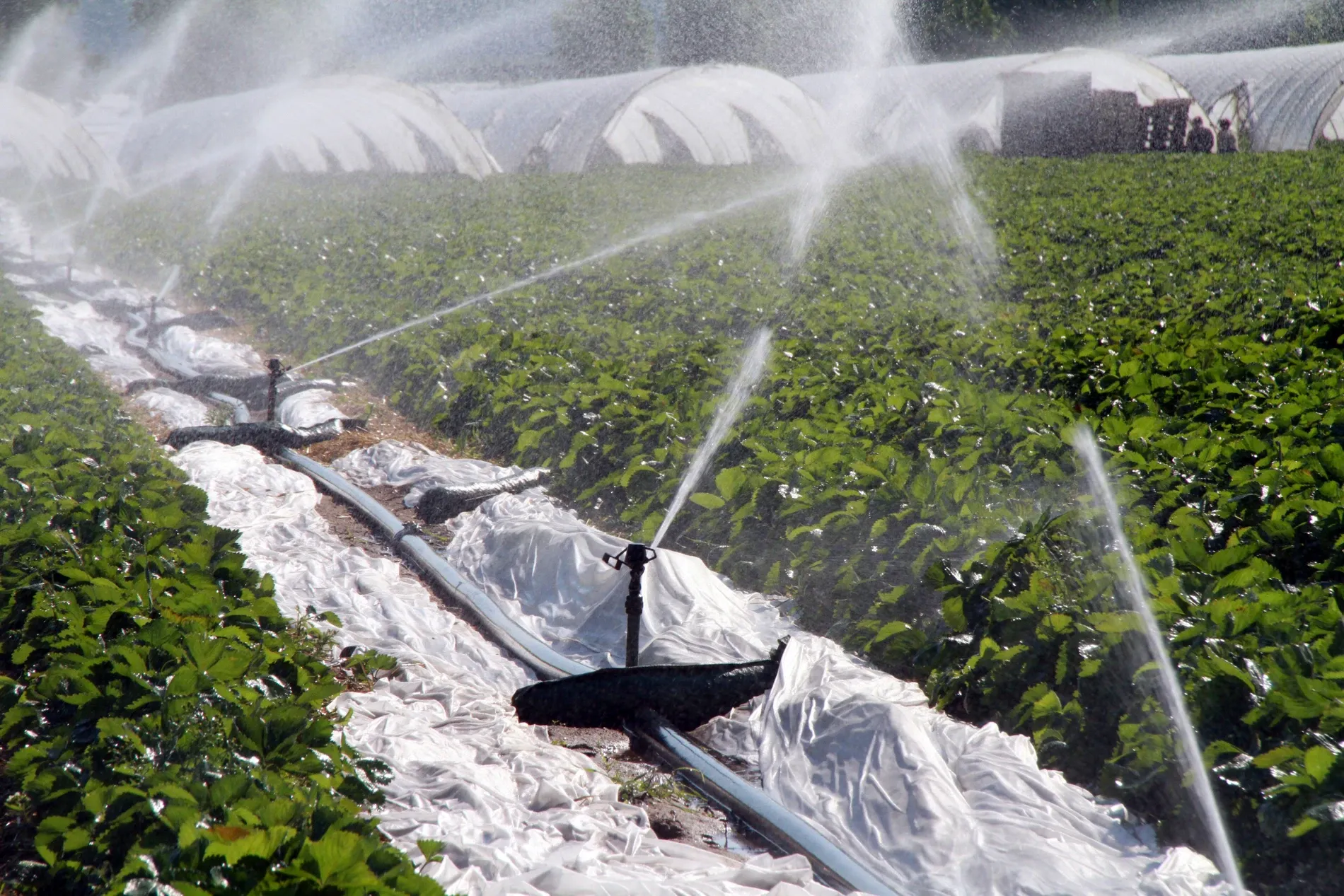

Recent news from the Münsterland region has sparked considerable attention: a strawberry farm based in Telgte is relocating parts of its production to Morocco, citing better access to water as the primary reason. It's no secret that Westfalen has been grappling with a prolonged drought, but many were taken aback by the notion that conditions could be more favorable in North Africa, a region often associated with the harsh Sirocco winds. Surprisingly, Agadir, for instance, receives an average of just 270 liters of rainfall per square meter annually, which is barely more than a third of the precipitation recorded in Telgte.
Markus Staden, who manages the operations at Kraege Beerenpflanzen GmbH & Co. KG, offers insight into this puzzling situation. He asserts that the natural conditions for cultivating this prized fruit in Germany are indeed excellent. This aligns with the plant's history, as European artists depicted strawberries in Gothic paintings long ago. In the 18th century, French and English botanists began to cultivate the modern garden strawberry by incorporating genetic material from North and South America. The strawberry thrives in mild, moist conditions on sandy soils. "For many fruit varieties, Germany relies heavily on imports from the south," Staden explains. "However, for strawberries, we could theoretically achieve a self-sufficiency rate of 100%."
Decline in Domestic Strawberry Farms
In reality, though, only about 50% of strawberries consumed in Germany are sourced from local farms, and this percentage is on the decline. Spain and Greece have become the primary countries from which Germany imports strawberries. According to industry sources from AMI, more than one in five of the nearly 2,000 strawberry farms that existed five years ago have shut down. In contrast, Staden's specialization lies not in selling fruits but in producing plants. This discipline, known as strawberry propagation, has seen Staden’s company as one of the last large-scale cultivators remaining in Germany, managing approximately 250 hectares of land. "In the next four weeks alone, we will deliver 20 million plants to our customers so they can ensure a sufficient strawberry harvest next year," he reveals.
In addition to his operations in Münsterland, Staden has leased 25 hectares in Morocco since 2016. He cites significantly lower labor costs as a key factor in this decision, along with the relative ease of finding workers willing to engage in the demanding fieldwork required for strawberry cultivation.
Innovative Solutions for Water Supply
As for the water supply, strawberry plants are particularly sensitive to drought and require consistent watering. Even amateur gardeners would hesitate to rely solely on rainfall, and professional growers certainly cannot afford to take such chances. "In Germany, obtaining permission for a well is a complex and time-consuming process," Staden explains. "In Morocco, however, the government is heavily investing in agricultural development, building reservoirs and desalination plants, which is beneficial for us." Staden reassures that he does not plan to relocate his entire operation, but he is more likely to expand in North Africa than in Westfalen.
Poland, located closer than Morocco, has also become a favored destination for other German strawberry propagators. Constantin Kaack from Bargteheide in Schleswig-Holstein has shifted his focus to fruit production at home while exclusively growing new plants on leased plots in Poland. He emphasizes that the issue in Schleswig-Holstein is not a lack of water, even in this hot summer, but rather the availability of contiguous land. He also expresses a desire for more flexibility regarding wages, stating, "I could hire people who are not as quick, but the minimum wage prevents that."
This sentiment is echoed in a recent open letter sent by the Association of Fruit Growers to all members of the Bundestag, highlighting the need for concessions on wage reductions and relaxed employment regulations for seasonal workers. The letter underscores that domestic fruit cultivation is not an automatic success. Fortunately, it seems that reservoirs and desalination plants may not yet be necessary for strawberries to thrive in Germany.
As reported by faz.net.