
Understanding Europe's Migration Dilemma
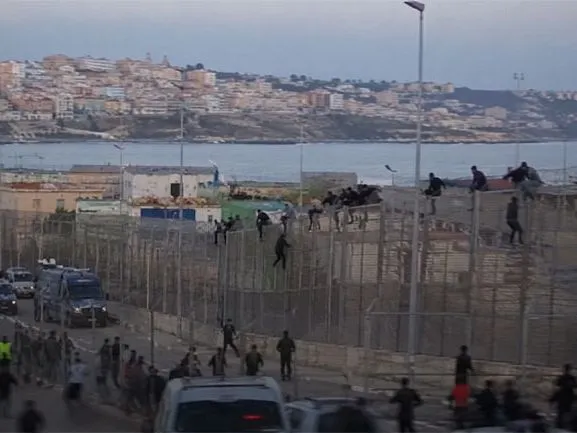
The recent events in Ceuta at the end of July 2026 have exposed a critical vulnerability in Europe’s approach to migration and border security. The influx of tens of thousands of individuals from Morocco is not merely a migration crisis but a reflection of Europe's perilous reliance on Moroccan cooperation for maintaining its political stability and border security. This reliance has granted Morocco substantial leverage, allowing it to manipulate migration flows as a means of exerting political pressure on Europe. Such incidents are becoming alarmingly recurrent; for instance, a similar crisis occurred in May 2021 when nearly 10,000 people crossed into Ceuta, prompting a diplomatic confrontation between Spain and Morocco. The European Parliament swiftly condemned Morocco's tactics, highlighting its use of border controls and migration as tools of political coercion against a member state of the European Union.
Fast forward five years, and we witness a more extensive and orchestrated migration mobilization. Investigations reveal that the July 2026 events were not spontaneous but rather a meticulously organized operation facilitated by social media, complete with recruitment channels and anonymous coordinators. This alarming revelation underscores a fundamental shift in the dynamics of migration, where Europe must confront the uncomfortable truth that its security apparatus may be operating at the mercy of a partner whose reliability is in question.
Political Leverage and Strategic Implications
The fundamental issue at hand is the extent of Morocco's power to manipulate migration as a political instrument. This dynamic is not new; Morocco has historically utilized large-scale mobilization as leverage, dating back to the Green March in 1975, which pressured Spain regarding Western Sahara. Today, migration serves as a similar tool for Morocco, facilitated by European funding aimed at border control and the curtailment of human trafficking. However, this arrangement creates a precarious situation where the very entity tasked with preventing crises gains the upper hand in political negotiations, raising the stakes for Europe. Moreover, Morocco's intelligence capabilities concerning terrorism, drug trafficking, and organized crime further enhance its bargaining position. The country’s insights into criminal networks operating within European territories make it an indispensable partner for Europe, blurring the lines between technical cooperation and political influence.
The emergence of scandals such as the Moroccogate case, which unveiled attempts by Moroccan entities to influence European Parliament members through corrupt practices, adds another layer of complexity to this relationship. Additionally, the Pegasus affair, involving allegations of espionage against European figures, amplifies concerns over Europe's institutional security. As these interconnected issues unfold, Europe must recognize the strategic implications of its dependency on Morocco. The use of migration as a weapon can incite social unrest, empower extremist factions, and destabilize the Schengen area, all while providing a platform for external actors to exploit divisions within Europe.
Ultimately, Europe must navigate its relationship with Morocco carefully. Cooperation is essential, but it should not come at the expense of European citizens' security and interests. The European Court of Justice has established that Western Sahara possesses a distinct status, yet European institutions continue to maintain relations with Morocco, creating a contradiction that undermines the rule of law Europe professes to uphold. As Europe evaluates the cost of its longstanding partnership with Morocco, it must grapple with the fundamental question: is this a balanced relationship, or does it teeter on the edge of dependence? If the latter is true, then the crisis in Ceuta could serve as a pivotal moment for reassessing and recalibrating Europe's approach to migration and international partnerships.
As reported by independentaustralia.net.