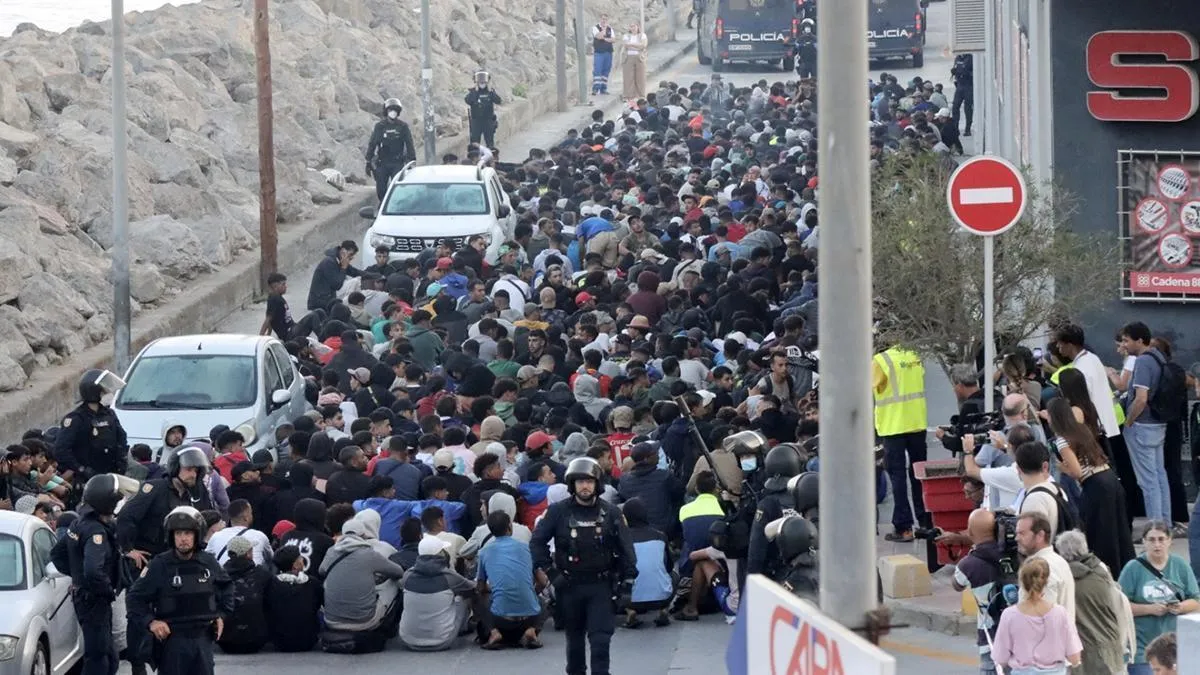

Mass Migration Crisis Sparks Political Debate
On July 30, a staggering number of over 70,000 migrants attempted to enter Ceuta, either by swimming or traversing the border pier on foot from Morocco. This unprecedented influx tragically resulted in the deaths of around a hundred individuals during their perilous journey. The overwhelming surge of migrants has not only strained emergency resources but has also reignited political discussions regarding the management of the border between Spain and Morocco. The situation highlights the ongoing challenges faced by authorities in addressing migration while ensuring the safety and well-being of all individuals involved.
Political Reactions and Responses to Violence
The political landscape surrounding the migrant crisis was further complicated by a violent incident involving Ceuta politician Julia Ferreras from the Ceuta Ya! party. The attack on Ferreras has drawn condemnation from both left and right-wing parties, with accusations directed at the Popular Party (PP) and Vox for allegedly fueling a climate of hatred within the autonomous city. In response to the violence, Spanish Prime Minister Pedro Sánchez emphasized that indifference towards the normalization of hatred is unacceptable, asserting the importance of maintaining democratic values in society.
Moreover, the situation for unaccompanied foreign minors in Melilla continues to escalate, with the current number exceeding 360, far surpassing the maximum capacity of 84 set by the emergency migration declaration. Local authorities have expressed a need for assistance, as the rising number of minors entering the region, primarily by swimming, has become a pressing concern due to favorable weather conditions.
In a related development, the President of Ceuta, Juan Jesús Vivas, reported a shift in the stance of Youth and Childhood Minister Sira Rego regarding the fate of these minors. Initially advocating for family reunification in Morocco, Rego has now indicated that many of these children may prefer to remain in Spain, a statement that Vivas interpreted as a significant policy change.
The Universidad de Granada has also taken proactive measures by reinforcing security protocols at its Ceuta campus, ensuring the safety of its students in light of the ongoing tensions. Meanwhile, the local government in Melilla has urged calm among residents regarding border pressures, asserting that there have been no alerts for further migrant entries despite the continuous monitoring of social media calls.
Finally, child welfare organizations are advocating for immediate action to transfer vulnerable unaccompanied minors from Ceuta to safer accommodations, citing alarming conditions where many children remain unrecognized and without access to basic necessities. The ongoing situation calls for urgent responses from regional governments to address the humanitarian crisis unfolding at the borders.
As reported by elperiodico.com.