
Spain's U20 Team Set to Play in Ceuta
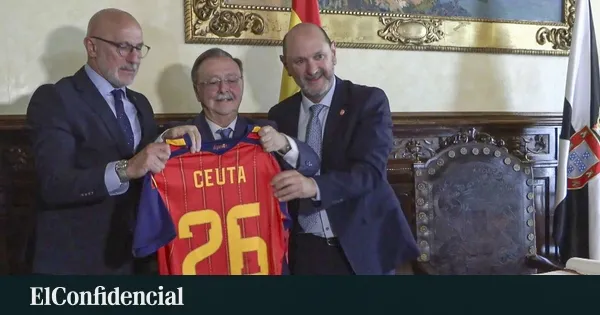
As previously reported, the president of the Real Federación Española de Fútbol (RFEF), Rafael Louzán, alongside national coach Luis de la Fuente, recently visited the Autonomous City of Ceuta. Their objective was to explore the possibility of hosting a match for the world champion national team in this location, although the capacity of the Municipal Stadium Alfonso Murube, which accommodates only 6,500 spectators, posed limitations. Despite these constraints, Louzán suggested the idea of perhaps bringing the U20 team to Ceuta, contingent upon it not offending Morocco.
In keeping with Louzán's commitment to Ceuta's president, Juan Jesús Vivas, the RFEF announced that on September 30, the Spanish U20 team will face Mexico in a match commemorating their previous draw in the U20 World Cup held in Chile a year ago. This announcement was made during De la Fuente's first squad selection after the World Cup and was framed as a gesture of support from the RFEF to the people of Ceuta during these challenging times.
Security Concerns Raised by Authorities
However, shortly after the announcement, officials at the Ciudad del Fútbol in Las Rozas were taken aback when they received a communication from the General Commissioner of Citizen Security. The correspondence, dated Friday at 3:28 PM, advised against holding the international match in Ceuta due to "exceptional circumstances" and recommended that the RFEF urgently consider an alternative venue. This unexpected advisory sparked indignation among RFEF officials, who felt that the decision was unwarranted, especially given Ceuta's ongoing participation in the Segunda División league.
The document expressed concerns about the potential for a significantly higher turnout than usual for U20 matches, necessitating a different security plan and possibly increased police resources. With the stadium's limited capacity, the argument for heightened security seems questionable. Furthermore, the mention of a "social conflict context that entails a climate of public tension" appears contradictory, especially considering that the Interior Minister, Fernando Grande-Marlaska, has previously referred to the situation as one of "subjective insecurity." This raises questions among RFEF officials about the validity of the security claims made against hosting the match.
Moreover, the letter from the security authorities indicated that the Alfonso Murube Stadium currently lacks an Organizational Control Unit (UCO) with CCTV capabilities, which is surprising given its status as a venue for professional competitions. This raises further questions about the feasibility of hosting any high-risk matches at the stadium in the future. The final remarks in the communication suggested that the designation of venues for sporting events requiring extraordinary security measures should involve prior coordination with relevant authorities, which the RFEF found to be condescending.
This development has fueled speculation that the reluctance to host a match in Ceuta may be influenced by a desire to avoid discomforting Morocco, particularly in light of the broader context of the upcoming 2030 World Cup, which is set to take place in Morocco, Spain, and Portugal. The RFEF perceives this as another step by the Sánchez government to facilitate the World Cup final being held in Rabat.
As reported by elconfidencial.com.