
Human Resource Readiness in the Fes-Meknes Health Sector
As the implementation of the territorial health groups system approaches completion, a number of questions have arisen regarding the preparedness of human resources within healthcare institutions in the Fes-Meknes region. Sources indicate that there are concerns over the readiness of health professionals, particularly in light of reports suggesting that several union members and employees are transitioning to other institutions such as ISPITS and the Blood Agency. This shift occurs simultaneously with a wave of retirements and resignations among healthcare professionals, including doctors, nurses, and technicians, who are either retiring or opting for early retirement.
These developments come at a crucial time, as the territorial health groups are expected to bring about a structural transformation in the organization and management of healthcare services at the regional level. Consequently, the issue of human resources stands out as one of the most significant challenges that could impact the success of this new system. Reliable data from within the healthcare sector in the region has revealed that recent weeks have seen movements of various union members, both leaders and rank-and-file, to other institutions, including nursing and health technology institutes and the Blood Agency.
This trend raises questions about the consistency of these actions with prior union rhetoric regarding employee guarantees amidst the transition to the territorial health groups system, particularly concerning the preservation of acquired rights, job security, wage centrality, and prior advantages related to public service. Critics of the current situation argue that the departure of some advocates for this new system to other institutions may spark discussions regarding the actual trust in the implementation of the territorial health groups, especially since unions have previously affirmed that the transition would not affect the professional and social rights of healthcare workers.
Ongoing Challenges and Government Promises
Moreover, there is a pressing need for official data that clarifies the nature and reasons behind these transitions, and whether they are indeed linked to apprehensions about the new system or stem from other professional and administrative factors. The situation is further complicated by the fact that there are reports of healthcare professionals, particularly doctors, nurses, and health technicians, leaving the workforce through retirement and resignation. This poses a genuine challenge to the healthcare system, particularly in light of the necessity to ensure an adequate supply of human resources to maintain service continuity within hospitals and health centers, while also supporting the reforms associated with the territorial health groups.
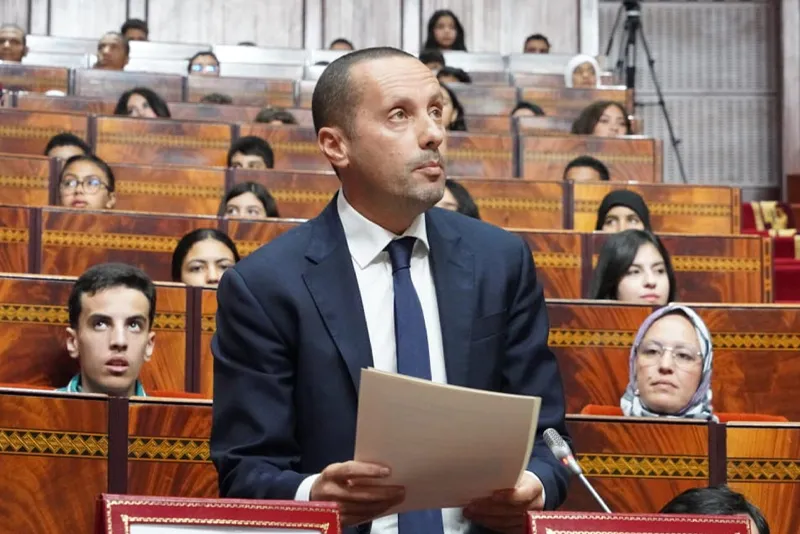
According to available information, the number of general practitioners and specialists in Morocco is approximately 9,200, contrasted with roughly 32,000 nurses, while the country's population hovers around 40 million. This stark disparity emphasizes the critical challenge of providing and equitably distributing human resources across regions, which is one of the most significant aspects of healthcare reform. Amidst this ongoing discussion, a promise previously declared by the Minister of Health and Social Protection, Amin Tehroui, has resurfaced regarding the reinforcement of public hospitals with specialist doctors. The minister stated in a response to the House of Representatives that starting from August 2026, 530 specialist doctors would be appointed and distributed immediately after their graduation, with the aim of enhancing healthcare services in public hospitals and eliminating the delays that sometimes extend up to two years between graduation and appointment.
The minister clarified that this initiative is part of structural reforms in the training and management system for specialist doctors, highlighting the adoption of a new system based on contracts with the state for all new entrants to the specialty. Additionally, new specialist doctors will be required to serve a mandatory period within public health institutions for four years for the cohorts joining in 2026 and 2027, and three years starting in 2028. This year alone, approximately 2,000 positions for resident doctors have been opened under the new system, with these cohorts expected to join public health institutions starting in 2030. However, discussions regarding the enhancement of human resources bring forth a practical question within healthcare institutions: What is the current status of the appointment and distribution process for specialist doctors who were scheduled to join hospitals starting in August 2026?
If the declared objective is to overcome the previously experienced delays of up to two years between graduation and appointment, any further delay in this process could potentially replicate the same issue, particularly in regions suffering from significant shortages in specific specialties. The circulating information also raises questions about the entities responsible for the delays in these appointments and whether there are administrative or technical reasons behind them. Additionally, there are concerns regarding the potential use of upcoming appointments as an electoral tool, a claim that also requires clear data and evidence before making any definitive assertions.
Critics of the implementation of the territorial health groups argue that the experience previously carried out in some northern regions was sufficient to highlight several practical issues related to human resources, professional guarantees, and management. In contrast, the government asserts that the reform of the territorial health groups aims to unify and coordinate the management of human resources and health services at the regional level, linking training and clinical internships to the actual needs of each region. The Minister of Health has confirmed that the territorial health groups will play a crucial role for the first time in organizing, supervising, and distributing resident doctors and training paths, thereby aligning the training provided with the national health map and regional health maps. Amidst the official narrative presenting territorial health groups as a lever for reorganizing the healthcare system and the criticisms surrounding their implementation, human resources remain the most sensitive link in this equation. No institutional reform can achieve its objectives without sufficient doctors, nurses, technicians, and administrative staff distributed fairly across regions, alongside providing clear working conditions and professional guarantees.
As reported by maacom.ma.