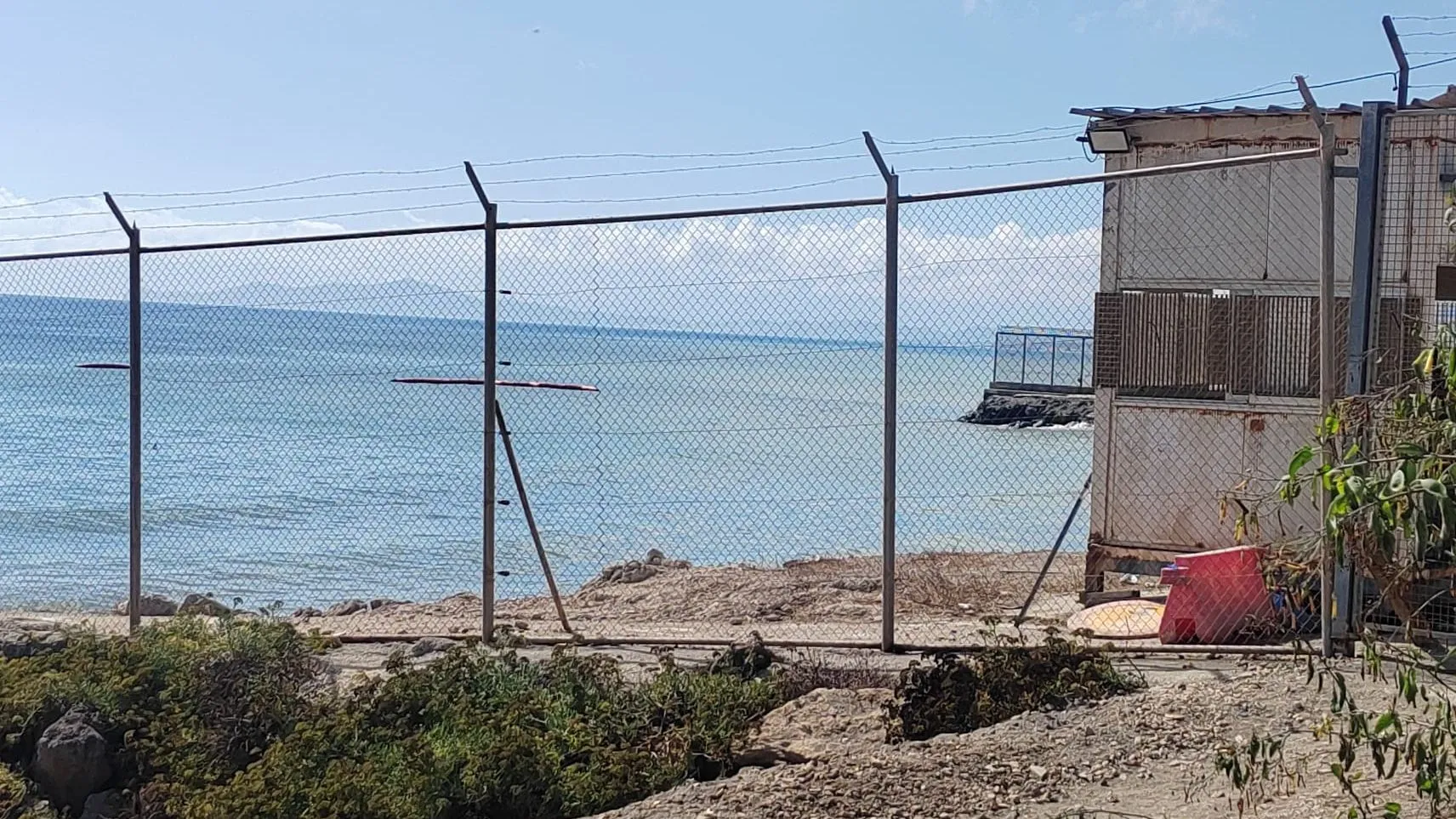

Current Status of Ceuta's Floating Barrier
On August 1, a pneumatic barrier was installed at the El Tarajal jetty to manage the surge of migrants entering Ceuta from Morocco. However, reports from TVE indicate that this barrier is now significantly deteriorated, with several buoys rendered inoperative. In response, the Ministry of the Interior has announced plans to initiate the installation of a "permanent buoyancy system" to replace the temporary floating barrier.
The original barrier stretched approximately 500 meters and stood between 30 to 70 centimeters above the sea surface, featuring a submerged section one meter deep to prevent migrants from swimming into Spanish territory. Additionally, the structure was supported by a primary line of anchored buoys.
Government sources confirmed to RTVE that the pneumatic barrier has sustained damage but maintains its functionality, as the upper float has been affected by rough weather conditions. They assured that the net remains anchored to the seabed and is intact. Repairs are expected to commence on Wednesday, weather permitting.
Anticipated Challenges and Future Infrastructure Plans
According to Alejandro Ramírez, the first vice president of Ceuta, the damage to the barrier was "predictable" based on previous experiences with similar installations designed to manage jellyfish influxes on Ceuta's beaches. He noted that such barriers often end up near El Tarajal during storms, emphasizing that they anticipated the current would likely displace the barrier, although the conditions were not as severe as initially feared.
Ramírez has called for transparency regarding the infrastructure measures announced by the government, expressing concerns about the lack of clarity on what these measures entail, their specifics, and their projected timeline for execution.
In light of the current situation, the Ministry of the Interior has confirmed that procedures have begun for the construction of an extended section of the El Tarajal jetty, aimed at reinforcing the border with Morocco. This initiative will feature a permanent buoyancy system to replace the temporary barrier previously installed in response to the mass entry of migrants, which was influenced by social media calls following a Supreme Court ruling that prevented the return of migrants who had entered by swimming.
The project will be executed in two phases: the first phase involves extending the jetty 15 meters into the sea, divided into three modular sections supported by piles and topped with an "anti-climb" mesh enclosure with inverted curved spikes. The second phase will see a further extension of the jetty by an additional 100 meters via a vertical dyke. This entire endeavor is projected to cost around 7 million euros, while a separate floating buoyancy system designed to create a high-resistance containment net extending to the seabed is expected to have an estimated cost of 2 million euros.
As reported by rtve.es.