
The Migration Situation in Ceuta: A Brief Overview
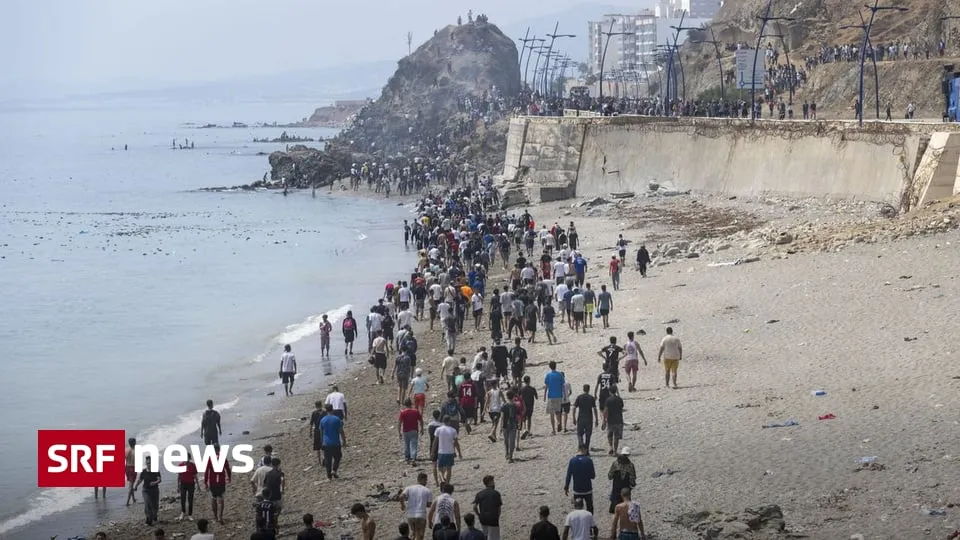
The Spanish enclave of Ceuta, located in North Africa, has recently experienced a significant migration crisis, which, according to the Spanish government, is now nearly resolved following the influx of at least 50,000 individuals. Spanish Foreign Minister José Manuel Albares announced on social media platform X that nearly all those who arrived in Ceuta have since returned to Morocco. This influx was recorded within a mere 24 hours, with estimates provided by the Madrid government indicating a staggering number of arrivals. Regional President Juan Jesús Vivas went so far as to claim the figure could be as high as 60,000. Among these migrants, a substantial number were minors and children, alongside some elderly individuals.
Amidst this crisis, Albares reassured that the integrity of the Schengen Area remains intact, stating that it is impossible to access the Spanish mainland without proper identification. He addressed the confusion surrounding the crisis, which seemed to be driven by various interests, without specifically naming any government. Previously, Italy had declared its intention to temporarily suspend the Schengen Agreement regarding free movement for Spain.
Government Response and Humanitarian Impact
EU Migration Commissioner Magnus Brunner shared on social media that Albares informed him during a phone call that virtually all individuals who entered Ceuta have returned, asserting that not a single person has crossed into the EU mainland. Continuous communication is being maintained, and EU member state experts plan to convene on Saturday to discuss the unfolding situation, as stated by a spokesperson for the Irish presidency. Furthermore, a meeting of EU ambassadors is scheduled for Monday to evaluate developments and facilitate coordination.
This unusual surge in migration triggered a serious crisis, with Prime Minister Pedro Sánchez characterizing it as an 'attack' and a violation of Spain's territorial integrity during his visit to Ceuta. For the first time since 2021, the Madrid government has deployed military forces in the enclave to assist with border security. Ceuta itself is home to fewer than 85,000 residents living within an area of just 18.5 square kilometers. Pedro Mariscal from the local food bank reported that his organization is struggling to meet the needs of all new arrivals.
Tragically, at least 57 individuals have lost their lives during this crisis. Many deaths occurred as migrants attempted to swim from Morocco to Ceuta, according to reports from the state broadcaster RTVE, citing a spokesperson from the Interior Ministry in Madrid. Rachid Sbihi, head of a local labor association representing Guardia Civil officers, mentioned that while most drowned, some fatalities resulted from a mass panic as people tried to overcome a breakwater fence at Tarajal beach.
As reported by srf.ch.