Since last year, a controversial decision that has faced criticism even from Spain's central government has been steadily gaining traction across various regions of Spain. Following the earlier decisions made by Madrid in July 2025 and Murcia in September of the same year, Andalusia is poised to eliminate the Arabic Language and Moroccan Culture Programme (PLACM) from its educational framework. Once the regional government officially announces its withdrawal from this initiative, the optional classes associated with the program will cease to be offered in public schools throughout the region starting in the 2027–2028 academic year.
Reports from Spanish media indicate that close to 100 schools will be impacted by this decision, particularly in Almería, which is home to one of Spain's largest Moroccan communities. This shift is indicative of the increasing influence wielded by the coalition between the conservative People's Party (PP) and the far-right VOX, both of which have increasingly scrutinized the program that operates under a bilateral agreement between Spain and Morocco. With the new regional coalition government taking office on July 2, they have also decided to terminate the program in Granada and Cádiz, as per a "stability" agreement established between Andalusian regional president Juanma Moreno and VOX regional leader Manuel Gavira.
This agreement obligates Andalusia to withdraw from the national program that finances the supplementary classes, justifying this move by emphasizing the necessity of preserving Spain's "customs and traditions" within the educational system. Furthermore, the agreement seeks to thwart any initiatives perceived as instances of "foreign interference" or attempts to "dilute" Spanish identity. Despite assertions that the program promotes communalism or imposes a financial burden on the region, Andalusia's Minister for Educational Development and Vocational Training, María del Carmen Castillo, noted in 2025 that "the teaching staff of the PLACM program is entirely managed and funded by the Kingdom of Morocco."
In a conversation with Yabiladi, Sabah Yacoubi Channig, vice-president of the Association of Moroccan Workers and Immigrants (ATIM), expressed her "deep indignation and profound concern" regarding the Andalusian regional government's decision to abolish the PLACM. She condemned the measure as one that significantly impacts thousands of families of Moroccan descent who live, work, and contribute to the social, cultural, and economic fabric of Andalusia.
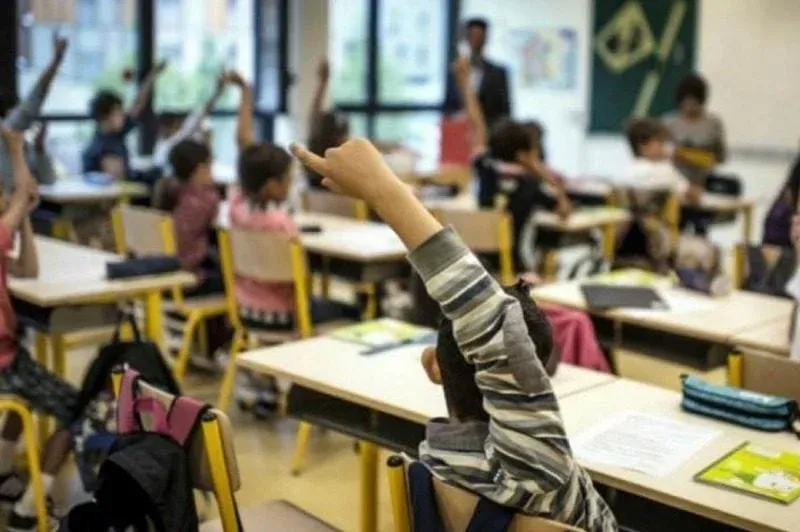
Yacoubi articulated that this decision marks "a major setback for coexistence, equal opportunities, and respect for linguistic and cultural diversity—values that are fundamental to a democratic society." Contrary to being a form of foreign intrusion, the PLACM aims to assist students of Moroccan heritage enrolled in Spanish schools in acquiring Arabic language skills and gaining insights into Moroccan culture. The classes are optional, take place outside regular school hours, and are conducted by educators appointed by Moroccan authorities, in collaboration with Spain's Ministry of Education.
In this context, Yacoubi termed the attempts to discredit the program by invoking allegations of indoctrination or foreign influence as "alarming," noting that the PLACM has functioned without issues for decades, under the oversight of Spanish educational authorities and in strict adherence to legal standards. She argued that "criminalizing such a well-established educational program only serves to propagate fear, misinformation, and prejudice." Moreover, she highlighted that Spain's education system already accommodates the teaching of various religions, including Catholicism, Evangelical Christianity, Judaism, and Islam, under existing laws and cooperation agreements established by the Spanish state. "To defend certain rights while challenging others is a blatant contradiction," she emphasized.
According to the regional education department, 38 schools in Almería currently participate in the PLACM, constituting "nearly 40% of the total in Andalusia." Throughout the region, 1,800 students across 95 schools benefited from the program during the 2024–2025 academic year. This figure contrasts with 1,741 students in 79 schools during the 2023–2024 academic year, 1,958 students in 90 schools in 2022–2023, 1,312 students in 76 schools in 2021–2022, and 1,525 students in 80 schools in 2020–2021.
The PLACM has been operational in Spain since 1985, following a cultural cooperation agreement signed with Morocco in 1980. A joint committee of experts from both countries was established in 1992 to oversee the program, which was further bolstered through a strategic partnership agreement signed in 2012, reaffirming their commitment to cultural and educational collaboration.
As reported by en.yabiladi.com.