Confronting Wars and Forced Migrations: A Call for Humanity
In an era marked by conflicts, forced migrations, and increasingly stringent immigration policies, the moral imperative of humanity appears to be fading away. In this thought-provoking piece, Abdellatif El Azizi, the editor-in-chief of Courrier de l’Atlas, scrutinizes our relationship with the 'other' through the lenses of religious, philosophical, and political frameworks. The concept of 'rasha' emerges as a pivotal term in this discourse, derived from the Judaic sacred texts, which denotes not just a transgressor of the Torah's commandments, but someone who struggles to discern the boundaries between good and evil. This reflection is essential, especially as media narratives often portray individuals consumed by the conviction of their beliefs—whether it be religious, ideological, or otherwise—leading to the vilification of those who are different, such as Palestinians suffering violence in their ancestral lands or Africans exploited for labor in a declining Europe.
Moreover, these narratives highlight a pressing humanitarian crisis that has morphed into a political issue. The recent statements from an American president celebrating the ideals of the United States on Independence Day starkly contrast with the grim reality of the nation, which holds the unfortunate record for the highest number of deaths per square kilometer worldwide. Such contradictions are evident when law enforcement, incited by extremist views, resorts to violence against vulnerable Mexican migrants, or when political leaders like Donald Trump escalate tensions with countries like Iran, while others commend military actions that perpetuate violence.
The relentless cycle of death, despair, and displacement affects millions of individuals who are forced to embark on precarious journeys to an unwelcoming Europe or an America that has turned its back on them. This animosity no longer hides behind slogans; it manifests in the very halls of governance, such as the European Parliament, where right-wing and far-right politicians chanted "Send them back!" in support of legislation that intensifies the expulsion of foreigners. Recent laws have introduced draconian measures allowing detention for up to two years, the establishment of 'return hubs' in third countries, and a hardening of immigration policies modeled after U.S. Immigration and Customs Enforcement (ICE) tactics.
The Call for Humanity by Pope Leo XIV and Philosophers
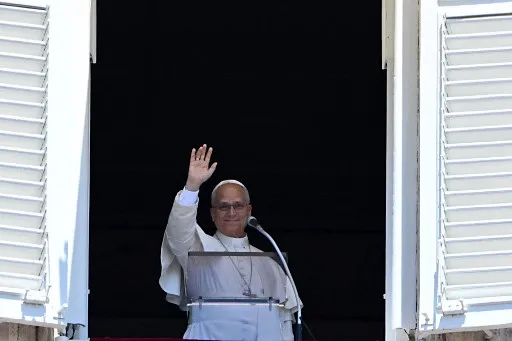
In a powerful response to the hypocrisy surrounding the 250th anniversary celebrations of the United States, Pope Leo XIV chose to visit Lampedusa, a symbol of the migration crisis in Italy and Europe. He condemned those who exploit the migrant crisis for political gain, emphasizing that the deaths occurring at sea are the results of both actions taken and those left unaddressed, stemming from a global economic system that fosters poverty and exclusion, as well as a climate of fear that breeds prejudice and contempt.
Philosopher Emmanuel Levinas echoes this sentiment, asserting that a meaningful world is one where the 'Other' exists, transforming our experiences into something significant. He posits that it is only through the lens of the 'Other' that our world gains purpose. Furthermore, the Quran reinforces this notion by stating that humanity was created from a single male and female, and that diversity in nations and tribes is intended for mutual understanding, where the most honorable among us is the most righteous. This verse serves as a reminder that human equality and brotherhood do not deny cultural and linguistic diversity; rather, they celebrate it as a source of richness. The differences among us should not lead to division but rather inspire curiosity, dialogue, and mutual enrichment. The Creator's only accepted distinction is that which pertains to moral integrity.
As reported by lecourrierdelatlas.com.