
The Life and Legacy of Hamid Triki
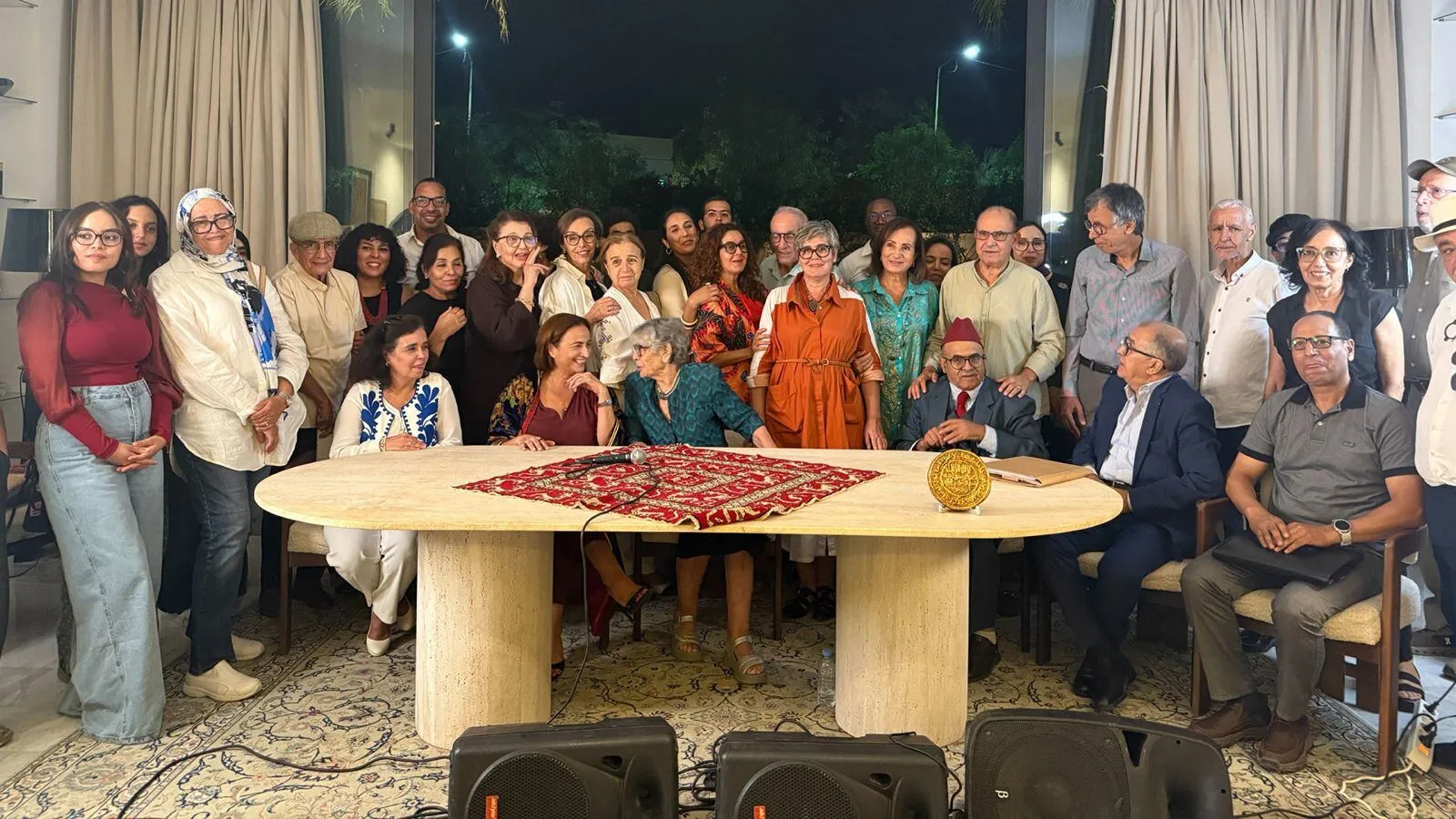
Hamid Triki, the esteemed historian and academic, passed away on July 30, 2026, at the age of 82. His death prompted an outpouring of tributes, particularly from members of the Moroccan Memory Coalition, including the Memory Association of Safi. Nearly two months after his passing, the Literary Salon of Laila Binebine hosted a commemorative gathering in Marrakech, bringing together scholars and close associates to reflect on Triki's illustrious career and literary contributions.
During the event, speakers emphasized the international scope of Hamid Triki's career, which evolved over several decades spent in various foreign universities, establishing him as a recognized expert sought after by institutions dedicated to heritage and history. His collaboration with notable organizations such as the Arab World Institute in Paris and the Aga Khan Foundation for Architecture in Geneva underscored his significant impact on the field. His remarkable journey was honored with two prestigious distinctions: the Grand Medal of Arts, Sciences, and Letters from the Academy of Paris and the Atlas Prize awarded by the French Embassy in Rabat for his notable work on the Medersa of Marrakech.
Contributions to Moroccan History and Culture
Triki's literary oeuvre, comprising over twelve scientific publications, has been described as a bridge connecting academic knowledge with the exploration of historical sites. He approached the history of cities not merely as collections of urban landscapes but as living entities imbued with memory. Among the key titles referenced were his works on Marrakech, titled "Marrakech, History and Monuments," and a book dedicated to his hometown, "The Hill of Potters: The History of a City and its Pottery."
Another critical focus during the gathering was Hamid Triki's dedication to Safi, which was portrayed as one of the most personal aspects of his journey. For a decade, he served as the honorary president of the Memory Association of Safi, overseeing a project aimed at documenting the city’s history spanning over a millennium. This extensive research endeavor, which involved meticulous verification and revision over three years, culminated in a traveling exhibition that reached various generations of visitors.
Speakers also highlighted his efforts in cataloging the city's historical monuments and developing tourist signage, alongside a project aimed at mobilizing academic experts for the preservation of the Castle of the Sea. Furthermore, a project dedicated to the spiritual routes of the city sought to include Safi's monuments in the World Heritage inventory and advance this nomination to UNESCO.
These elements resonate with information made public at the time of his passing: Hamid Triki had coordinated several scientific partnerships, notably with the University of Évora in Portugal, focusing on the preservation of the historical monument Qasr Al Bahr in Safi. He had also championed the inclusion of Safi pottery on UNESCO's List of Intangible Cultural Heritage.
Beyond his scientific and institutional work, numerous speakers highlighted the human side of the late historian, noting his consistent kindness, captivating humor, and ability to balance the rigor of academic research with a light-hearted approach to dialogue. One speaker recounted his passion for art, stating that he rarely missed an exhibition opening unless prevented by travel, mission, or illness.
As a founding member of the Dar El Bacha Museum in Marrakech, Hamid Triki left a lasting impression on many collaborators. One participant shared her experience of working alongside him since 1998, when he invited her to contribute a text on the women of the Almohad dynasty, describing it as the beginning of a renewed relationship with the country’s history. She also mentioned an unfinished project—a glossary of darija vocabulary passed down orally—that she hoped to pursue with the support of residents and youth from the medina of Marrakech, in honor of Triki's legacy.
Family members and in-laws of the historian attended this gathering, alongside researchers and cultural institution representatives, to pay homage to a man whose work remains, for many, a vital link between Morocco and the world.
As reported by fr.le360.ma.