A Comprehensive Look at Mohamed Melehi's Artistic Legacy
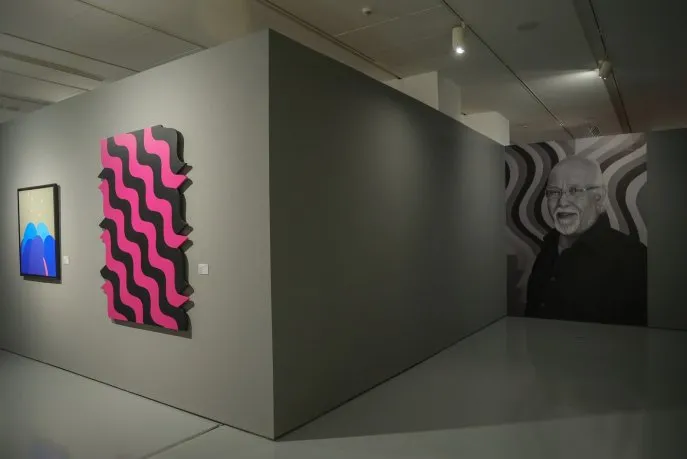
The retrospective exhibition dedicated to Mohamed Melehi, a pivotal figure in Moroccan modern art, has been inaugurated at the Mohammed VI Museum of Modern and Contemporary Art in Rabat. This significant event was attended by the Prime Minister, Aziz Akhannouch, and will remain open to the public until August 31, 2026. The exhibition traces nearly seventy years of Melehi's artistic journey, highlighting his evolution from the 1950s up until his passing in 2020. Through a carefully curated selection of key artworks, archives, and a chronological narrative, visitors are invited to explore the various phases of Melehi's career—an odyssey marked by a relentless pursuit of form, color, and the interplay between tradition and modernity.
The Casablanca School and Melehi's Impact
During the inauguration, Prime Minister Akhannouch emphasized the importance of making the heritage of significant Moroccan artists accessible to the public. He acknowledged the role of the foundation in fostering cultural vibrancy and supporting contemporary creation. Mehdi Qotbi, president of the National Museums Foundation, noted the cultural dynamics that have emerged in recent years, especially following the development of museum infrastructures, such as the opening of the Mohammed VI Museum.
Melehi's contributions are particularly vital to the Casablanca School, a movement that began in the 1960s and significantly influenced the renewal of artistic practices and the teaching of fine arts in Morocco. As both an artist and educator, Melehi played a central role in integrating art into public spaces and redefining aesthetic references. His works are characterized by a distinctive use of geometric forms and a profound exploration of color, reflecting a unique formal inquiry.
The exhibition also highlights his transformative influence on art education at the Casablanca School of Fine Arts, as well as his involvement in projects that merge art, architecture, and urban space. Beyond his visual artwork, the retrospective sheds light on the intellectual dimension of Melehi's career. According to Youssef Melehi, this exhibition serves as a tribute to an artist whose work embodies both aesthetic and humanistic values. The narrative presented emphasizes the diversity of the artist's contributions, including monumental works, educational engagement, and initiatives aimed at bringing art closer to the public. This commitment to embedding artistic creation within everyday life is a thread that runs through his oeuvre.
The retrospective also contextualizes the emergence of a modernist art scene in Morocco, particularly from the 1960s to the 1980s, a period during which Melehi contributed to establishing an artistic identity open to various influences while remaining deeply rooted in its cultural environment.
As reported by quid.ma.