World Bank's Comprehensive Report on Morocco's Private Sector
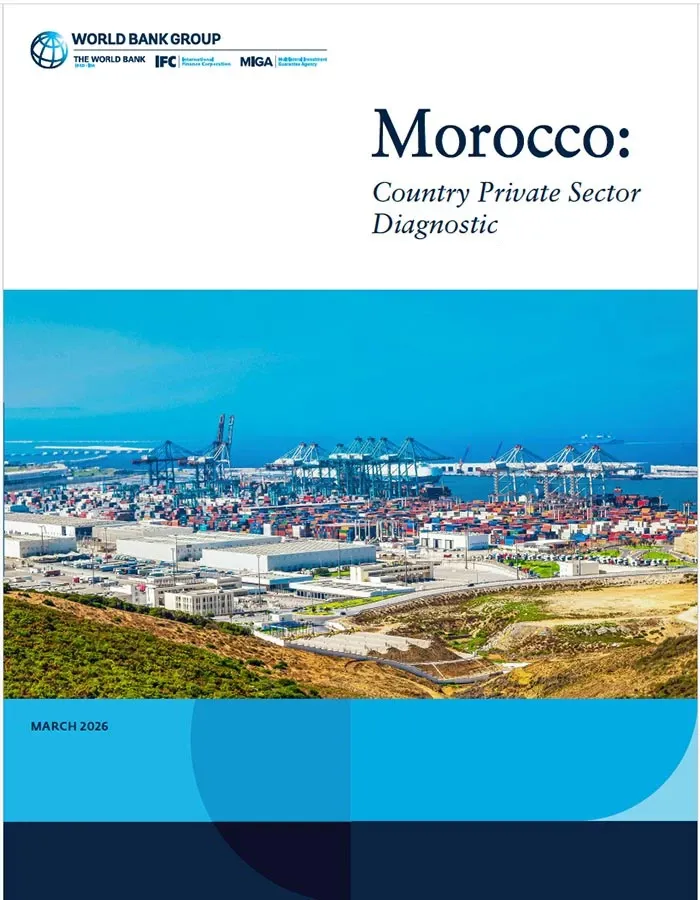
On April 28, 2026, the World Bank released a pivotal report titled "Private Sector Country Diagnostic" focusing on Morocco. This report aims to uncover unexploited private investment opportunities while identifying related challenges that hinder growth. The insights provided in this document are crucial for stimulating private investment in Morocco, ultimately fostering inclusive growth and generating higher-quality employment.
The report outlines that Morocco is at a critical juncture in its economic transformation, emphasizing the significant role of the private sector. It begins by diagnosing the national business context through the lens of the private sector, revealing a dual structure characterized by a small number of large formal enterprises alongside a predominantly informal sector. This informal segment accounts for over 77% of total employment and roughly one-third of the national GDP, particularly in retail, services, construction, and agriculture.
Identifying Key Sectors for Growth and Investment
In its analysis, the report highlights four economic subsectors where public policy measures could effectively create commercially viable opportunities for private investors: decentralized solar energy, low-carbon textiles, argan oil, and aquaculture. It's important to note that while these sectors are emphasized, the report does not exhaustively cover all potential areas for investment or growth.
Furthermore, the document identifies systemic barriers to the business climate that affect these sectors. It points out that they face lengthy and complex administrative procedures, delays in implementing supportive legislation, and fragmented institutional coordination. These challenges are compounded by skill deficits that restrict companies' abilities to upgrade and adopt new technologies across various sectors. Additionally, deficiencies in technology adoption and digital infrastructure limit businesses' capacity to innovate and remain competitive.
By implementing targeted reforms to eliminate these constraints, Morocco could unlock investments across multiple value chains, enhance resource efficiency, and facilitate the creation of better-quality jobs in both urban and rural settings. The report estimates that concrete public measures in the identified subsectors could mobilize substantial private investment, potentially reaching up to $7.4 billion and creating over 166,000 new jobs in the medium term (approximately five to ten years).
For a deeper understanding, readers are encouraged to consult the complete report and interact with our chatbot for more information.
As reported by medias24.com.