US and Tunisian Troops Unite for African Lion Military Exercises
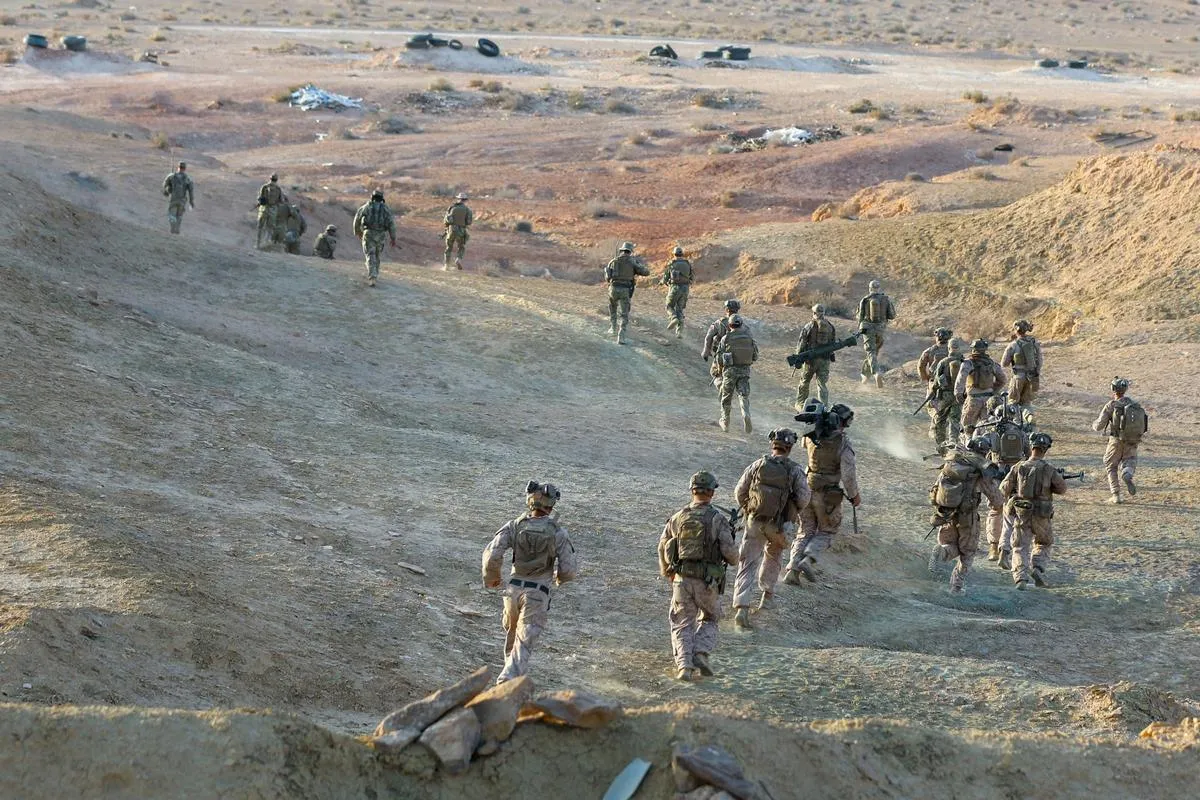
The African Lion military exercises, which commenced this week off the coast of the Canary Islands, underscore Morocco's pivotal role in the United States' defense and security strategy across Africa. Since Donald Trump's return to power, the collaboration between Washington and Rabat has significantly intensified, culminating in these large-scale military maneuvers. This year's edition prioritizes technological innovation, serving as a platform for training programs aimed at African military officers. This initiative reflects the US's commitment to enhancing the capabilities of West African nations to counter escalating threats emerging from the Sahel region, extending to the Atlantic coast, utilizing advanced technologies such as drones, communication systems, and artificial intelligence in defense applications.
A Milestone in Military Collaboration and Technological Advancement
Participating in African Lion 2026 are over 10,000 military personnel from 20 different countries. Although the exercises will take place across Morocco, Tunisia, Senegal, and Ghana, it is in Morocco where technological advancements will be most evident, particularly as the US military is heavily invested in training Moroccan forces. The US Armed Forces confirmed that the exercises are set to occur in various locations including Agadir, Tan-Tan, Taroudant, Kenitra, and Benguerir, steering clear of previous controversies surrounding operations in Western Sahara. Tan-Tan, located in southern Morocco near the Sahrawi border, is among the selected sites for these exercises.
As a precursor to the African Lion exercises, the governments of Rabat and Washington recently signed a 'defense cooperation roadmap' in Washington, outlining collaboration for the decade spanning 2026 to 2036. A key focus of this agreement is the modernization of Moroccan Armed Forces, which have emerged as the largest purchaser of US arms in Africa. Morocco has significantly increased its defense spending, procuring military equipment not only from the US but also from Israel, which has become a crucial partner in enhancing the nation's defense capabilities.
This agreement has led to Morocco being designated as the host for a drone training center for military personnel from across Africa. The Trump administration established this alliance with Morocco to facilitate training in drone technology, which is becoming increasingly vital in modern warfare and is widely adopted in defense strategies. Recently, the Spanish Army acquired an advanced anti-drone system named Aracne for over 30 million euros from the Indra and EM&E Group partnership, with the Canary Islands identified as a target area for employing this system to counter potential threats posed by drones.
In addition to establishing Morocco as a drone training hub, the US is also testing advanced communication systems and conducting cutting-edge research in artificial intelligence for military applications in the Maghreb region. Prior to the official commencement of African Lion, members of the US military executed the first interoperability test for secure encrypted communications and tactical data links with an African nation. This involved the Link 16 system, which is also utilized by NATO as a secure communication means between combat aircraft and ground operations.
This year marks the 22nd iteration of the African Lion exercises. Since their inception in 2004, these maneuvers have evolved into the continent's premier military exercise, increasingly bolstering defense lines near the Canary Islands. The growing US strategy in North Africa emphasizes the significance of these islands, not only for Spanish national security but also in the broader international strategy to address shared threats as NATO's southern flank.
Initially, the African Lion exercises began as a bilateral training initiative between the US Marines and the Moroccan army. Over the years, the scope of these exercises has expanded to include various African nations and has been conducted in multiple venues, including Tunisia, Senegal, and Ghana. The number of participating armies has grown to around 20, encompassing African nations as well as European countries and NATO members such as the UK, Italy, and the Netherlands, along with Israel, a close ally of the US and a more recent partner of Morocco. Spain's participation in these exercises has been inconsistent; after several years of absence, Spanish troops took part in the 2025 exercises in Tunisia. However, the recent distancing of the Spanish government from Israel due to the ongoing conflict in Gaza and now in Iran has once again led to Spain's withdrawal from these exercises, where Israel plays a prominent role.
As reported by laprovincia.es.