The U.S. administration is actively engaged in diplomatic efforts, in coordination with the United Nations, to resolve the long-standing Maghreb conflict before the end of the current year. This initiative is based on the application of UN Security Council Resolution 2797, which grants the Western Sahara region self-governance under Moroccan sovereignty, while also dismantling the Tindouf camps and allowing their inhabitants to return to their homeland. Recent insights from informed American sources indicate that resolving this decades-long dispute has become a strategic priority in Washington, linked not only to Maghreb interests but also directly to U.S. national security across three interwoven regions: the Middle East, Africa, and the southern Mediterranean. These sources emphasize that the continuation of the conflict creates a fertile environment for the expansion of Iranian influence throughout the region.
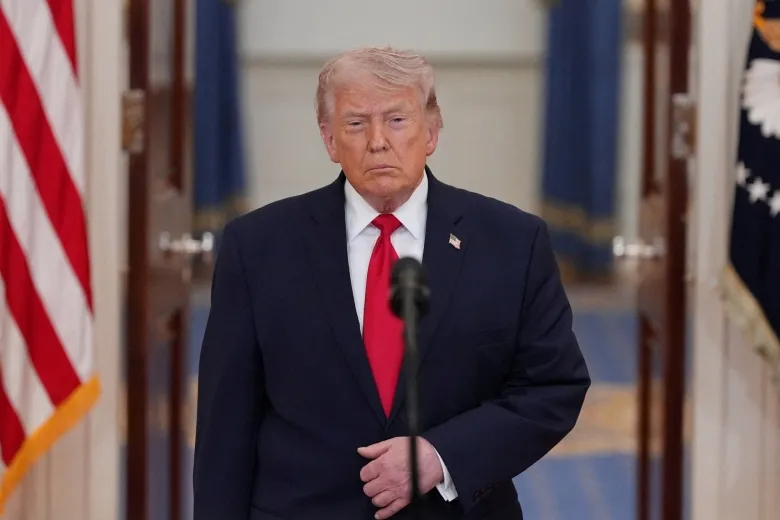
Interestingly, the sources also highlighted a notable synchronization between the commencement of negotiations between Lebanese and Israeli delegations, facilitated by President Trump, and the sessions of the UN Security Council addressing the Western Sahara issue. The Security Council held two closed sessions on April 24 and 30, focusing on ending the conflict, dismantling the camps, and disarming the "Polisario Front," which American parties accuse of receiving training and weapons through channels linked to Hezbollah. However, these accusations have not yet been substantiated with verified evidence.
Despite the varying details and contexts of the Middle Eastern and North African issues, they intersect within a new strategic security framework that Washington is rapidly establishing. This framework is grounded in a central principle: limiting engagement and negotiations to legitimate states and governments while excluding non-state actors—whether they are armed factions with religious affiliations or politically motivated movements operating outside internationally recognized institutional frameworks—from major settlement equations. In this context, Iran is perceived as a supporter of Hezbollah, implying that the Lebanese arena has become a pawn in a broader regional equation that does not necessarily serve pure Lebanese interests.
Regarding the Western Sahara issue, there have been analytical questions about the nature of the relationship between Tehran and the "Polisario Front," especially in light of historical tensions between Iran and Morocco, particularly following the Iranian revolution. Ultimately, it appears that Washington prefers to engage directly with Morocco and Algeria as the primary parties to this protracted conflict, which intertwines Cold War remnants with regional power dynamics between two competing neighbors. This approach reflects an American conviction that any lasting settlement can only occur through the directly involved parties, free from the agendas of external powers.
European capitals recognize that stabilizing Lebanon and resolving the Maghreb conflict would weaken Iranian influence across the Middle East and North Africa. Paris contends that strengthening the legitimate state in Lebanon and initiating reconstruction projects, along with restoring the economic, political, and tourist roles of the Cedar country to pre-1983 levels, would render the Middle East safer, more stable, and prosperous. In the Maghreb, settling the Western Sahara issue reignites hopes for reviving the historic integration project cherished by successive generations.
Sources indicate that reaching a resolution to the long-standing conflict in North Africa, which has persisted for half a century without resolution, could alleviate burdens on the U.S. administration concerning more complex regional issues, particularly in reducing Hezbollah's field influence and facilitating a more independent Lebanese role in the new Middle East framework that Washington is outlining.
In this regard, Republican Senator Ted Cruz has warned that the expansion of Iranian relationships with armed factions in the Sahel and North Africa could potentially transform the region into a breeding ground for armed models similar to the Houthis in Yemen. Cruz believes that strategically defeating Iran necessitates dismantling its regional extensions and neutralizing traditional resistance states in its vicinity, including Algeria.
Recent developments in the Sahel indicate the intertwined stakes in this geography; Northern Mali has recently witnessed violent confrontations between Malian army forces and a militia coalition that includes the separatist Azawad Movement and elements from the Group for the Support of Islam and Muslims, resulting in hundreds of casualties and allowing these factions to seize control of towns and villages in the north, following the withdrawal of Russian Wagner forces from the area.
This conflict cannot be isolated from its broader context; the region has become a stage for proxy struggles involving multiple international and regional powers, all eyeing mineral wealth, energy sources, and strategic trade routes. This reality links security in the Sahel integrally to broader equations extending from Europe’s Mediterranean shores seeking to secure energy and migration routes, to Washington's aim of reshaping influence across the entire region.
As reported by majalla.com.