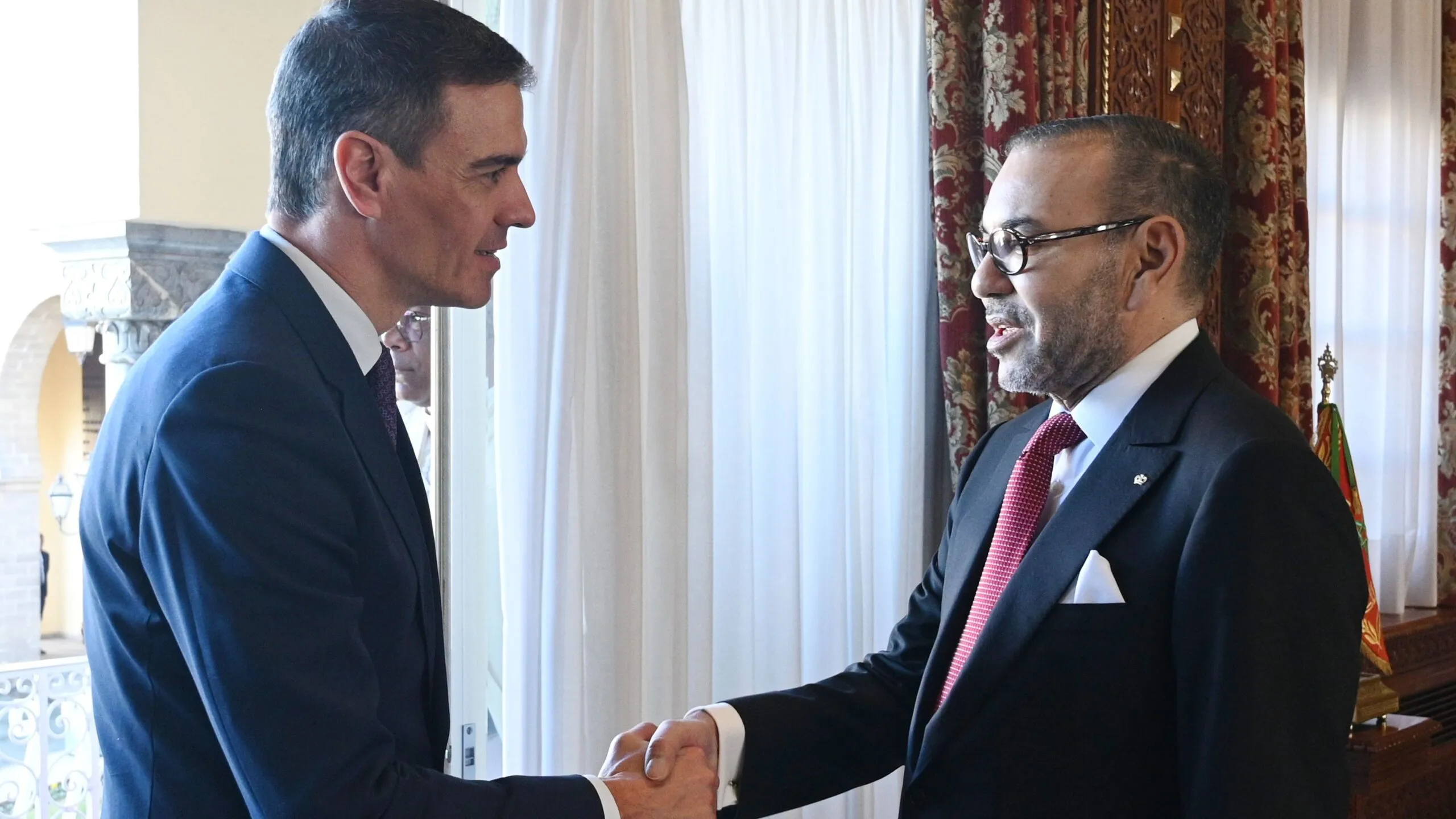
Geopolitical Tensions Between Spain and the United States
The relationship between Spain and the United States finds itself at one of its most precarious junctures in recent history, influenced significantly by the ongoing diplomatic tensions under the Pedro Sánchez administration and the previous Donald Trump administration. A recent report from the House Appropriations Committee has introduced a notable shift in this dynamic, explicitly referencing the autonomous cities of Ceuta and Melilla while suggesting they are located within Moroccan territory. This assertion is not merely a rhetorical flourish; the report calls upon Secretary of State Marco Rubio to facilitate a diplomatic agreement between Spain and Morocco concerning the "future status" of these enclaves, thus challenging the long-standing status quo that Spain has firmly upheld.
Crafted by Congressman Mario Díaz-Balart, this report represents a tangible alignment of Washington's stance with that of Rabat regarding Ceuta and Melilla, effectively questioning the current sovereignty held by Spain over these regions. The implications of this report are profound, as it opens the door to negotiations that the Spanish government has consistently rejected, thereby injecting a new layer of complexity into an already delicate geopolitical landscape.
Strategic Alliances and Historical Context
Furthermore, the report outlines that the United States allocates at least $40 million annually to Morocco through security cooperation programs, reinforcing the strategic alliance between the two nations. This development emerges amidst rising tensions between Madrid and Washington, exacerbated by Spain's refusal to increase its defense spending to 5% of GDP, its opposition to military intervention in Iran, and its critical stance towards Israel, a key ally of the United States. These factors have collectively strained bilateral relations, making the recent congressional report even more significant.
In the backdrop, Israel has currently ruled out any support for Morocco's claims over Ceuta and Melilla. The chargé d'affaires of the Israeli embassy in Spain recently asserted that these territorial aspirations are not pertinent to the present security context. In contrast, President Sánchez has firmly defended Spain's sovereignty over both cities, stating unequivocally in the Congress of Deputies that "Ceuta and Melilla are Spain, period," which aligns with the historical stance of the Spanish state.
Nonetheless, the evolving perspective from the U.S. Congress introduces an additional layer of pressure for the Sánchez administration, navigating an increasingly intricate international landscape. The report also underscores the longstanding relationship between the United States and Morocco, dating back to the friendship treaty signed in 1786, while also recalling the historical significance of Ceuta and Melilla as territories under Spanish sovereignty since the 15th and 17th centuries, respectively. Despite this historical context, Moroccan claims have persisted for centuries and have now re-emerged at the forefront of geopolitical discussions, bolstered by influential sectors within Washington.
As reported by elliberal.cat.