Exploring Morocco's Rich Cultural Heritage
On Saturday, July 27, 2026, a significant gathering unfolded as researchers illuminated the wealth and depth of Moroccan civilization through recent archaeological discoveries during the 20th edition of the "Twiza" festival. This event, themed "Morocco in Light of New Archaeological Discoveries," was organized by the Mediterranean Foundation for Amazigh Culture, attracting a diverse panel of specialists eager to discuss the latest scientific advancements in the field.
During the conference, speakers reviewed key findings from recent years, highlighting the new insights these discoveries provide regarding the various civilizations that have thrived in Morocco over the ages. The discussions underscored the scientific significance of these findings, as well as the diligent efforts made by the Ministry of Youth, Culture, and Communication alongside the National Institute of Archaeology and Heritage (INSAP). It was noted that technological advancements and the development of laboratories have propelled these research efforts to a level comparable to that of more advanced countries.
Significant Discoveries and Their Implications
Aïcha Bigoulimen, an archaeology researcher, emphasized that "our civilization dates back to prehistoric times," elaborating that "humanity has undergone several stages of evolution and qualitative leaps that laid the foundations for current progress across various domains." She referenced several discoveries from millennia ago, mentioning genetic analyses conducted on human remains found at Ifri N’Amr and Moussa, dating back to 5,400 BC, which revealed that the genetic origins of populations in Oued Beht trace back to those from the Tafoughalt cave in the Berkane region, dating back 15,000 years.
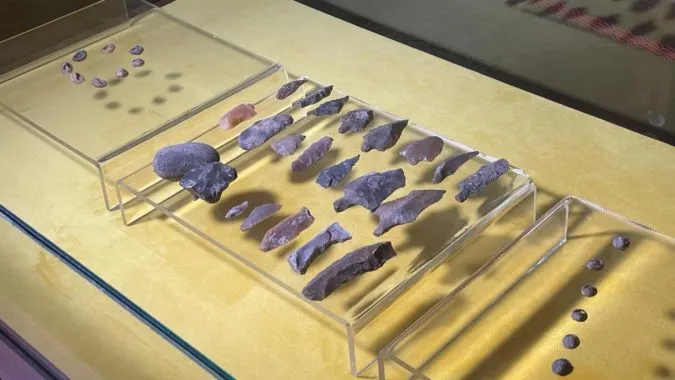
Furthermore, Bigoulimen pointed out that in-depth genetic and anthropological studies, conducted in collaboration with paleoanthropology specialists, have confirmed that these populations are the original inhabitants of North Africa. Youssef Bokbot, an archaeologist and professor at INSAP in Rabat, highlighted the significance of exceptional discoveries made in Morocco since 2017, which have attracted international media attention, particularly following the confirmation of Homo sapiens' presence in Morocco 315,000 years ago. In a statement to the MAP, Bokbot mentioned that discoveries continue to emerge almost every year, citing the unearthing of the oldest known jewelry in the Bizmoune cave in Essaouira and the oldest weaving tools, approximately 120,000 years old, found in the Témara region.
According to Bokbot, these advancements reaffirm Morocco's central role in the evolution of humanity and the production of civilization, challenging previous theories that regarded North African populations as primitive and incapable of creating forms of civilization. Genetic researcher Zine El Abidine Ouragh affirmed that genetic studies indicate "a continuity of genetic components in Morocco from Tafoughalt, around 15,000 years ago, to the present day." He added that this continuity and the fusion of successive cultures can be attributed to the Kingdom's strategic geographic location within the Mediterranean basin, positioning Morocco as a key player in the construction of human civilization.
As reported by maroc.ma.