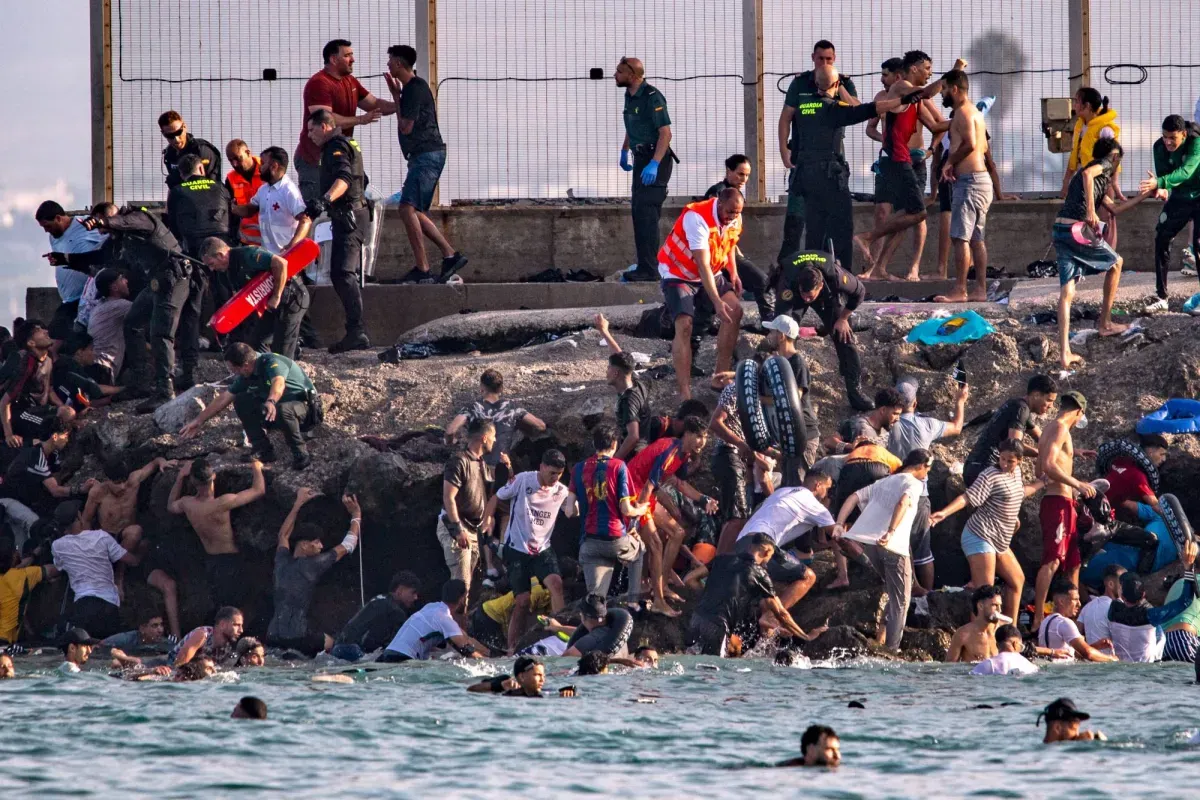
The Migration Situation in Ceuta
Recent reports indicate that approximately 49,000 individuals have managed to cross into the Spanish enclave of Ceuta, yet the migration crisis remains unresolved as of Friday. Despite Morocco's police reportedly taking measures to prevent individuals from reaching the border, there are still accounts of people making their way toward this contested area. This ongoing situation has triggered a wide range of reactions across Europe, particularly in Germany, where some voices express frustration over the influx of migrants. For some, the sentiment reflects a belief that no human being is illegal, advocating for these individuals to be allowed to stay. However, this perspective is met with resistance, with suggestions that these newcomers should be accommodated within their own nations.
The Broader Implications and Concerns
This crisis raises significant concerns about the demographic composition of the migrants, with many reports indicating that the majority are men. Critics argue that this influx could lead to societal issues, citing fears over potential violence and criminal behavior. Furthermore, the absence of women among the migrants has sparked worries regarding the safety and protection of children and girls within the community. Many individuals urge the public to understand the geographical context of Ceuta, which, while politically associated with Spain, is geographically located in Africa, underscoring the complexities of the situation.
Amidst the heated discussions, some argue that there is no valid basis for asylum claims and advocate for immediate action to repatriate migrants. They express frustration over the ongoing debates, asserting that the situation is being exacerbated by sensationalism and panic. Moreover, historical context is offered, suggesting that previous similar events have been utilized as geopolitical tools by nations, raising questions about the authenticity of the current migration wave.
As reported by instagram.com.