The Significance of Recent Events in Marrakech
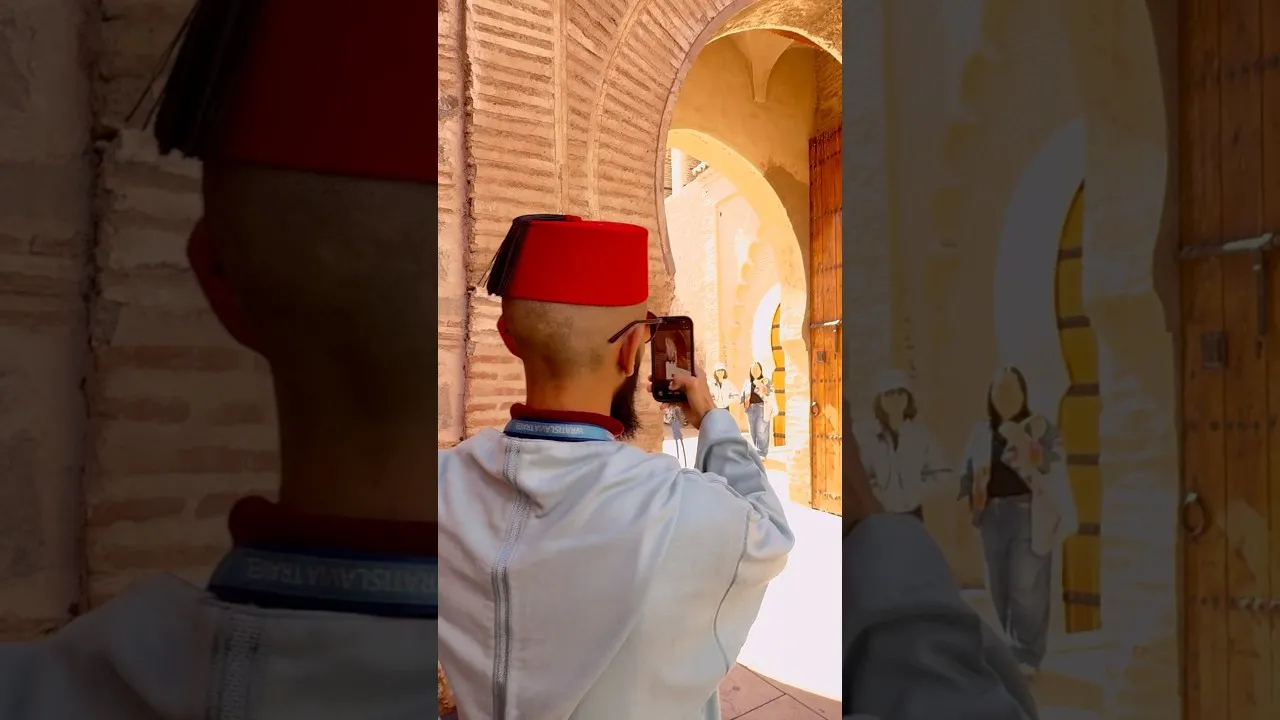
Recently, a video circulated on social media showing a group of individuals engaging in what appeared to be Jewish rituals near the historic walls of Marrakech. This incident has sparked widespread debate and raised profound questions that go beyond the mere act itself. It touches upon sensitive intersections of memory, history, religion, politics, and symbolic sovereignty amidst geopolitical changes. Morocco, particularly Marrakech and its other historical cities, has never been a closed space nor a place that excludes religious differences. On the contrary, Morocco has cultivated a unique model of dialogue and coexistence, having hosted diverse religious and cultural components over centuries within a well-defined social framework that balances freedom of belief with respect for local customs and institutional practices. This delicate balance has made pluralism a source of richness rather than chaos or exploitation.
The Implications of Religious Practices in Public Spaces
However, what transpired in Marrakech suggests a potentially misguided attempt to transfer a practice imbued with religious and symbolic significance from its natural context to a public space, disregarding the historical implications associated with the location and the societal norms that have been established in Morocco. This raises a critical issue, not about religion itself or the rights of followers of any faith to practice their beliefs, but rather regarding the manner and place of such practices and the implicit messages they may convey, especially in a region fraught with tensions. The historic walls of Marrakech are not just silent architectural landmarks; they embody a collective memory shaped over centuries through human, political, and cultural interactions. Therefore, any behavior performed in their proximity cannot be separated from its symbolic implications or from the collective consciousness that is vigilant about anything that touches upon its history and identity. Furthermore, this incident transcends the surface-level occurrence to pose a deeper question about potential attempts to reshape the symbolic space in Morocco or introduce practices with ambiguous connotations that could be interpreted as part of a broader normalization of cultural and symbolic relations with issues that continue to evoke deep-seated wounds in Arab and Islamic sentiments, particularly the Palestinian cause. Hence, it is essential to approach such events with a sense of responsibility, avoiding exaggeration or simplification. Conducting a thorough investigation into the circumstances surrounding the incident and identifying its nature and underlying motives is not merely an administrative procedure—it is a fundamental step in safeguarding societal balances and preserving core values. Additionally, recalling the broader context, including the political and symbolic sensitivities involved, necessitates a collective vigilance that upholds the values of tolerance while also preventing any misinterpretation or misuse of this tolerance and coexistence.
Marrakech, with its rich historical and cultural depth, does not need to prove its openness; however, this very openness requires clarity in its boundaries, protection of its memory, and respect for the meanings embedded in its spaces. Coexistence does not equate to diluting specificities, nor does freedom imply a lack of regulations. Ultimately, the most perilous aspect of such incidents may not be what actually occurred, but rather what they could establish if left unexamined or without appropriate framing. Thus, the real challenge lies in the ability to protect the Moroccan model, which balances openness with identity, and pluralism with symbolic sovereignty, without falling into the traps of provocation or subjugation.
As reported by pjd.ma.