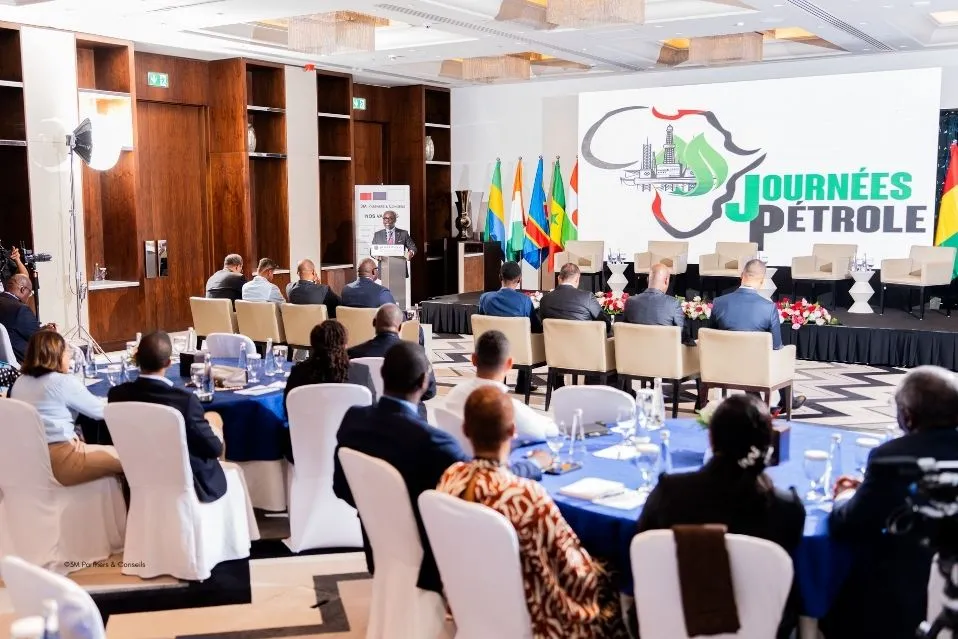
Shifting the Paradigm: Attractiveness in African Hydrocarbons
The narrative surrounding African hydrocarbons has evolved beyond mere exploration and production; it has now pivoted towards the essential theme of attractiveness. Scheduled to take place from May 20 to 23, 2026, the fourth edition of the Oil Days will convene states, investors, experts, and operators in Casablanca to address a pressing question: under what conditions can Africa's resources continue to attract sustainable, credible investments that create value?
For a long time, the logic seemed straightforward: resources would eventually draw in capital. However, this cycle has reached its limits. The global market has grown more demanding, capital has become more selective, and decision-making has become increasingly rigorous. In this new landscape, geological potential is no longer sufficient on its own. What matters now is the quality of the framework surrounding these resources. This includes institutional stability, clarity in taxation, reliability of data, infrastructure performance, and the ability of states to inspire long-term trust. This fundamental shift is precisely what will be debated at the upcoming Oil Days, under the theme "Building Attractiveness: Strategies and Conditions for the Development of African Hydrocarbons."
Moving Beyond Contracts: The New Focus on Investment Conditions
The previous editions of the Oil Days primarily centered around Production Sharing Contracts, their negotiation, monitoring, and control. However, the 2026 edition aims to delve deeper into the investment landscape even before contracts are signed. The critical question now is: what makes a country investable? A well-structured contract does not eliminate the risks associated with an unpredictable environment. Similarly, a competitive tax regime cannot solely compensate for weak governance, and significant reserves do not guarantee a steady flow of capital if a government fails to convey clear signals regarding stability, transparency, and execution capability. "For a long time, the African debate focused on contracts, which was necessary. But today, the real question is upstream: what instills confidence in investors without undermining state interests?" summarizes Gacyen Mouely, Managing Partner at 3M-Partners & Conseils. In essence, the challenge for Africa is no longer just about having resources; it is about creating the conditions under which these resources are perceived as credible by those who finance, develop, evaluate, or insure projects.
The program for the 2026 edition will revolve around six key themes that reflect the sophistication of the African debate: "reforms and governance," "data, digitalization and innovation," "fiscal attractiveness and economic profitability," "local content and expertise," "valorizing natural gas," and "hydrocarbons and energy transition." This thematic selection indicates a shift from merely discussing production to focusing on the quality of the framework that enables production to be competitive and sustainable. It also underscores that African states can no longer simply oppose sovereignty to attractiveness, profitability to public interest, or hydrocarbons to transition. Instead, they must balance these elements effectively.
Interestingly, the choice of Casablanca as the venue for this significant event may seem counterintuitive to those who still limit discussions to oil production. However, it becomes coherent when addressing the notion of attractiveness rigorously. Morocco serves as an inspiring model, showcasing how a country can build strong credibility without exclusively relying on oil revenues. With its political and institutional stability, clear legal framework, high-level infrastructure, strong regional and international connectivity, and a clear energy ambition, Morocco demonstrates that attractiveness is fundamentally an architecture of trust. As Gacyen Mouely puts it, "Morocco did not wait to become a major producer to gain credibility. It established a framework, a vision, infrastructure, and transparency. This is precisely the lesson that this edition aims to bring back to the forefront of the African debate."
The quality of a sectoral meeting is also measured by the caliber of participants it brings together. In this respect, the 2026 edition signifies a clear intention to elevate standards. The anticipated presence of S&P Global, the International Arbitration Chamber of Paris (CAIP), and the Africa Finance Corporation (AFC) underscores the relevance of the chosen theme. S&P Global will provide insights into both upstream and downstream activities in Africa, as well as the dynamics of natural gas valuation. The CAIP will address dispute resolution between states and operators, touching on a sensitive issue for many African countries. The AFC will discuss investment criteria for African oil and gas projects. These contributions highlight an essential truth: attractiveness is not merely a theoretical debate; it is measured through data, risk assessment, legal security, and financing decisions.
Launched in 2023, this initiative has already brought together nearly 300 senior executives from over 35 administrations, institutions, companies, and national firms across 12 African countries. Backed by a firm with more than 17 years of experience and nearly 1,800 completed missions, and led by Gacyen Mouely—who has over 28 years of experience, including 12 years at EY Gabon and over 16 years at 3M-Partners & Conseils—the depth of expertise behind this initiative significantly enhances its credibility. 3M-Partners & Conseils specializes in control and advisory services, focusing on audits of oil contracts and advising on contract negotiations and capacity building for administrative personnel. This robust background transforms the nature of the project, ensuring that hydrocarbons are treated not just as a communication topic but as critical components of negotiations, public arbitration, costs, institutions, risks, and economic trajectories.
The true significance of the Oil Days 2026 is not merely to add another event to the sector's agenda but to foster a more mature conversation about the role of hydrocarbons in African economies. For many African nations, hydrocarbons remain a central lever for financing, sovereignty, and industrialization. However, in a world where investments no longer automatically follow resources, the focus must shift to the environment that supports these resources. "In a world where investment does not mechanically follow resources, the real question becomes the environment constructed around these resources," stresses Gacyen Mouely.
In conclusion, the Oil Days in Casablanca represent a pivotal moment for the African hydrocarbon industry, not just to discuss resources, but to establish a credible, strategic, and attractive investment environment.
As reported by forbesafrique.com.