The Shift in Migration Dynamics in Morocco
As the number of migrants arriving from Sub-Saharan Africa continues to rise, many of these individuals are transitioning from mere transients to permanent residents. At the heart of this transformation lies the agricultural sector, which increasingly relies on migrant labor, primarily from French-speaking West African nations. This narrative marks a subtle yet significant change in the landscape of migration and labor in Morocco.
For decades, Morocco has been perceived as a transit country for migrants, particularly those from Sub-Saharan Africa, en route to Europe. However, this reality has begun to shift gradually, with an increasing number of migrants opting to stay in Morocco for extended periods, sometimes settling down permanently. Consequently, the agricultural sector has emerged as one of the most dependent industries on these migrants, the majority of whom hail from French-speaking West African countries. This gradual shift from Morocco being a mere transit point to a destination for migrants is largely attributed to a series of demographic changes within the country, which have, in turn, affected migration patterns on a broader scale.
On one hand, urban expansion has led to significant population movements towards cities in search of job opportunities, leaving a gap in rural sectors, particularly in agriculture. This gap has created new opportunities for migrants arriving from other nations. On the other hand, intensified border controls along maritime routes, enforced by Moroccan authorities in close coordination with European partners, have made it increasingly difficult to traverse dangerous seas to reach the European Union. As a result, a growing number of migrants find themselves compelled to remain in Morocco longer, striving to improve their living conditions by seeking job opportunities within the country.
Accurately gauging the true extent of this trend is challenging, as approximately three-quarters of migrants settling in Morocco work in informal jobs, amid ongoing hesitation from Moroccan authorities to regularize their legal status. Furthermore, official migration statistics do not reflect the actual numbers of undocumented migrants. Nevertheless, Reuters reports that farmers and officials from various rural regions across the country affirm that economic and social changes have led to a noticeable shift in the demographic composition of migration.
As reported by infomigrants.net.
The Agricultural Sector's Dependence on Migrant Labor
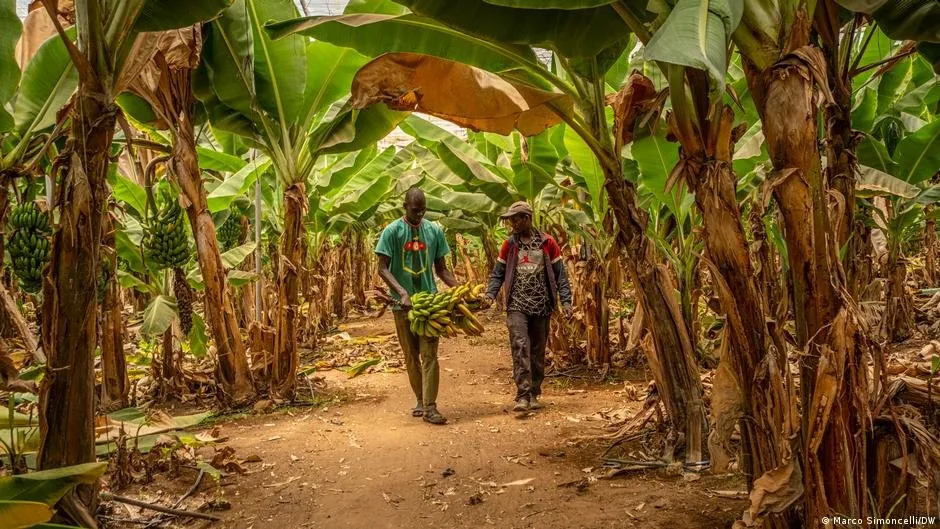
During a recent visit by Reuters to an agricultural facility near the coastal city of Agadir, the increasing reliance on migrant workers to fill labor gaps became evident. The greenhouses extend over an area of more than 24,000 hectares in the Souss-Massa region, situated about 50 kilometers south of Agadir. This area serves as the heartbeat of agricultural production in Morocco, accounting for more than 80 percent of the country's fruit and vegetable exports, thus holding significant economic weight.
Among the migrants who have found employment in this region is Abdellatif Aliou, a 23-year-old from Togo. His story reflects the experiences of many undocumented migrants stranded in Morocco. Aliou initially attempted to reach the European Union through one of Spain’s enclaves in the country's far north but was stopped by Spanish border guards and sent back to Moroccan territory. Upon his return, the authorities gathered Aliou with several other migrants and transported them by bus to a more remote area in southern Morocco, in an attempt to deter them from trying to cross into the EU again. This practice has drawn criticism from human rights organizations, which have labeled it "internal deportation," warning that it could hinder migrants' rights to seek asylum.
After arriving in the area, Aliou learned about job opportunities in the agricultural sector and decided to take the chance. He stated, "After finishing my shift at the tomato farm, working is better than begging on the streets.”
Another migrant, Alioune Diallo, a 48-year-old from Senegal, has chosen to settle in the region, having worked on the local farms for nearly two decades. Over this time, Diallo has closely observed the demographic changes in the area. Residing in the town of Ait Amer in the Souss-Massa region, he has witnessed the population quadruple to approximately 113,000 since the late 1990s, largely due to the influx of migrant labor. Currently, Diallo is forced to sleep outdoors while trying to save some money to meet basic needs, such as purchasing a phone to communicate with his family back home and acquiring sturdy shoes to protect his feet. Despite the hardships, he does not plan to leave the area anytime soon, expressing, "I need to earn some money to live and rest a little, and I will try to go to Europe later.”
In the past, Diallo had hoped to reach Europe, but his life has taken a different turn. He now has a daughter studying in a local school in Morocco. Over the years, this place has become his home, where individuals like him have settled down and chosen to stay. Furthermore, the migration of many Moroccans to urban areas since the beginning of this century has not stemmed from desire but has been forced by circumstances, as consecutive years of drought threatened to severely damage the agricultural sector in the country.
In cities like Tangier, Rabat, and Casablanca, which have recorded an annual growth rate of nearly one percent in recent years, many Moroccans have successfully built new lives, as opportunities to return to rural areas have faded. According to official statistics reported by Reuters, the agricultural sector has lost approximately 1.7 million jobs since 2000 due to drought, particularly in subsistence farming, and the number of Moroccans working in agriculture has halved over the past two decades.
As the climate conditions have improved after years of drought, a new challenge has emerged: finding agricultural laborers has become increasingly difficult. The rising demand for labor has led to increased wages, with many farmers complaining that Moroccan workers are now demanding higher pay. In contrast, migrants like Aliou work for significantly lower wages, earning less than one-fifth of what Moroccan workers receive. Abdulaziz Al-Maanawi, head of the producers' association in the Souss region, stated that the agricultural sector today heavily relies on migrant labor, adding that many farms would not survive without workers from Sub-Saharan Africa.
Overall, the ongoing changes in the migration landscape in Morocco highlight the complex interplay between economic necessity, demographic shifts, and the evolving nature of labor in the agricultural sector, showcasing the resilience and adaptability of both local and migrant communities.