Morocco's Strategic Maneuvers in U.S. Politics
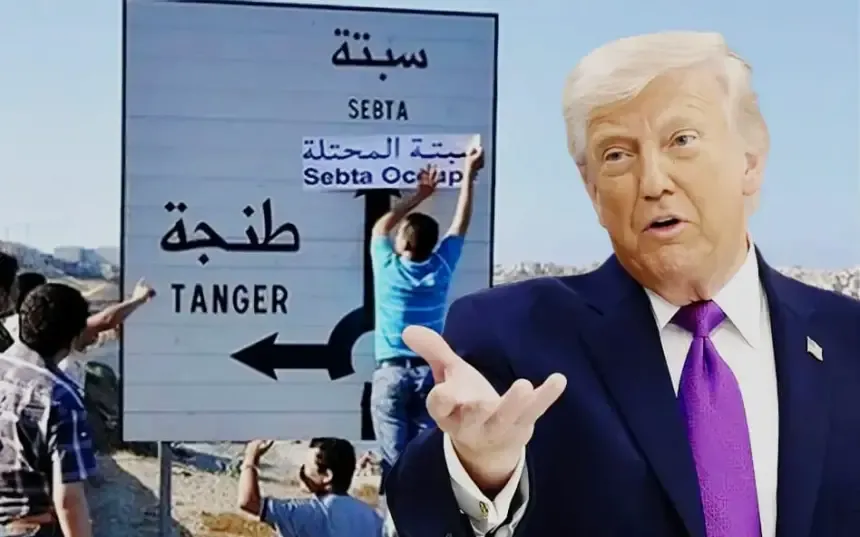
King Mohammed VI of Morocco has found a remarkably compliant Spanish leader in Pedro Sánchez, fostering concerns about Spain's territorial integrity as Morocco intensifies its lobbying efforts in the United States. Uncertain of the PSOE's electoral prospects despite ongoing manipulations of the voter census, Morocco is keen on leveraging its influence to further its territorial ambitions against Spain. This urgency is underscored by recent developments, including a report from the U.S. House of Representatives' Appropriations Committee, which controversially describes Ceuta and Melilla as "administered" by Spain yet situated in Moroccan territory. The report encourages Secretary of State Marco Rubio to facilitate negotiations between the two nations over these cities, marking a significant interference by a key U.S. institution in a critical issue concerning Spanish borders.
Although these committee reports lack legislative power, they play a crucial role in shaping the priorities of the U.S. administration, particularly regarding foreign policy and funding allocations. It is essential to dismantle several misconceptions regarding international relations that stem from overly optimistic views. Firstly, international law is not the primary driver of state relations; rather, national interest and the application of power—whether military, economic, or diplomatic—predominate. Secondly, the United States, in its role as a superpower, has assumed an imperial stance, rewarding or punishing allies, vassals, and adversaries alike. Lastly, the notion that Morocco is a conventional nation aspiring for European acceptance is misleading. In reality, Morocco is an expansionist state with a history of violating international treaties and employing its populace as a hybrid weapon, as evidenced by the perspectives of neighboring countries like Algeria and the Sahrawis.
The Historical Context of Lobbying Efforts
For over seventy years, Moroccan authorities have successfully established a lobbying presence in the United States akin to that of Israel, Saudi Arabia, and the United Arab Emirates. In contrast, Spain, which had nurtured its own lobbying efforts in the aftermath of World War II to break its isolation, allowed its influence to wane by the 1960s. This decline can be attributed to various factors, including the reluctance of leaders like Rajoy to invest the necessary time and resources, as well as the anti-American sentiments held by other administrations, notably those of Zapatero and Sánchez.
One prominent figure within the pro-Moroccan lobby is Republican politician Mario Díaz-Balart, who serves as the Vice Chair of the Appropriations Committee and Chair of the Subcommittee on National Security in the House of Representatives. With familial ties to the Cuban dictator Fidel Castro and a long-standing tenure in Congress since 2003, Díaz-Balart maintains a close relationship with Secretary Rubio and advocates for Morocco's annexation of Western Sahara. This lobbying effort is particularly concerning for Spain, as the general Spanish populace, and socialists in particular, often view foreign relations as burdensome and unproductive.
The last Spanish leader to effectively exploit international alliances and geographical advantages was José María Aznar. Since 2004, Spain's political class has largely relinquished its international dealings to Brussels, except when opportunistically sensing that anti-American rhetoric might sway voters. Sánchez, much like Zapatero before him, appears to be exacerbating tensions with the United States by engaging in actions that provoke dissatisfaction in Washington, particularly regarding issues in Gaza, Iran, and China.
Spanish socialists, including their diplomats, seem oblivious to the historical continuity of imperial foreign policy, which often remembers past grievances and seeks retribution. The diplomatic faux pas made by Zapatero towards President Bush II had no bearing on the subsequent presidency of Obama. The precarious situation in which Sánchez is placing Spain has prompted us to label a previous article "Trump's Kick to Sánchez and the Spanish People," highlighting the country's deteriorating military, diplomatic presence, and foreign alliances amidst a backdrop of economic instability and distrust within the European Union due to reckless policies like the current normalization of hundreds of thousands of immigrants.
Spain's transformation into a nation increasingly perceived as eccentric might not be detrimental if it were akin to Ireland or Slovenia. However, given Spain's strategic location along one of the world's major maritime routes, the interests of Washington, Israel, and NATO in ensuring the security of the Strait of Gibraltar cannot be overlooked. Presently, Morocco is the state providing that stability. To our knowledge, no protest has been lodged by Spain's ambassador to the United States, Ángeles Moreno Bau, with the State Department, nor have there been any reactions or statements from Sánchez, the Minister of Foreign Affairs, or local governments in Ceuta and Melilla. It raises questions about whether the Spanish Crown has leveraged its connections to address this diplomatic setback.
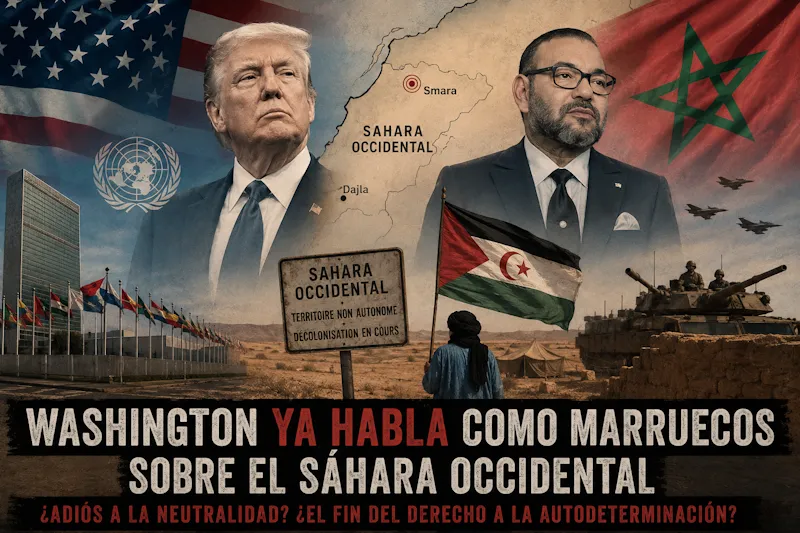
The repercussions of Sánchez's decision to acknowledge Morocco's annexation of Western Sahara are becoming apparent, as Spain grapples with the consequences of undermining the principle of border inviolability. As noted by Professor Carlos Ruiz Miguel, a leading expert on Morocco, endorsing the violation of international borders between Morocco and Western Sahara inevitably paves the way for challenges to the borders between Morocco and Spain. Actions have consequences, and the current geopolitical climate demands astute navigation to protect Spain's interests.
As reported by okdiario.com.