Abdel Wahab Doukkali: A Musical Icon Passes Away
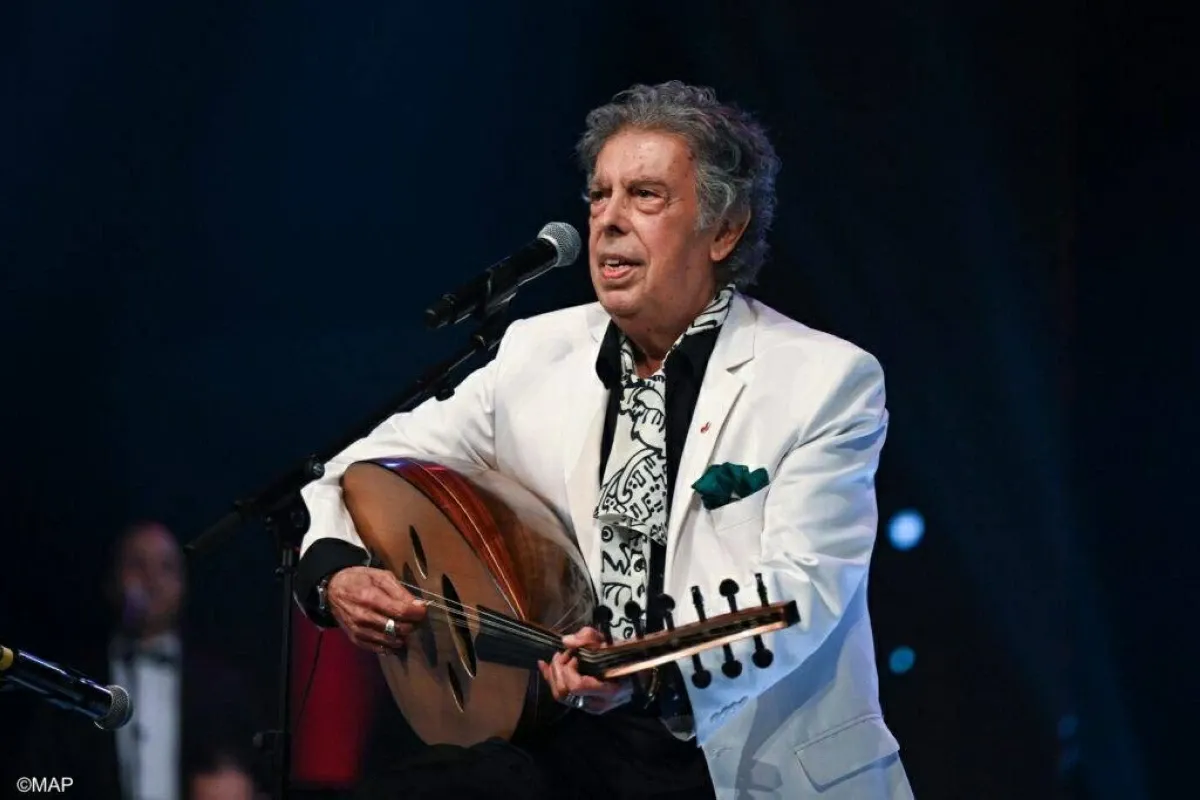
On May 8, 2026, the artistic community mourned the loss of the renowned Moroccan musician Abdel Wahab Doukkali, who passed away at the age of 85 after a long battle with health issues. Doukkali was not just a singer or composer; he was a cultural institution in the realm of contemporary Arab music, seamlessly blending traditional Moroccan sounds with Eastern melodies and modern Western influences. His profound contributions and timeless songs, including the beloved "Merṣul El Ḥubb," have secured him an indelible place in the hearts of music lovers across generations.
A Journey Through Music and Life
Born in 1941 in Fez, Morocco, Doukkali's artistic journey began in his youth, deeply influenced by the Andalusian musical traditions and authentic Moroccan heritage. He carved a unique musical identity during the 1960s and 70s, characterized by profound philosophical lyrics and dramatic performances. This innovative approach positioned him as one of the pioneers of modern Arabic music.
Among his extensive repertoire, "Merṣul El Ḥubb" stands out as a cultural phenomenon that transcended borders and resonated with audiences throughout the Arab world. His other works, such as "Kan Ya Ma Kan" and "Ana Wal Ghorba," continue to evoke emotional responses, solidifying his legacy in the annals of Arabic music history.
Doukkali's memoirs, titled "Something from My Life: A Trilogy of Love and Art," published years ago, offer an intimate glimpse into his personal and professional experiences. These memories reveal his childhood adventures in Fez and the pivotal moments that shaped his illustrious career. One particularly harrowing tale recounts a near-fatal incident during a performance in Helsinki, where a mishap involving a dagger caused a serious injury, highlighting the unpredictable nature of an artist's life.
His musical journey was not solely about songs; Doukkali also made his mark in theater. He began as a stage actor in the "Kawkab Theater Group," where he participated in performances that conveyed nationalistic messages against colonialism. His engagement with the arts during a politically charged time reflects the vital role music played in advocating for social change.
Seeking to broaden his horizons, Doukkali's ambitions led him to Cairo, the epicenter of Arab artistry. Here, he mingled with the industry's luminaries, which greatly enhanced his musical prowess and visibility. This move was crucial in propelling his career to new heights, allowing his music to reach listeners far beyond Morocco.
Throughout his career, Doukkali received numerous accolades, including the prestigious Golden Record for "Ana Wal Ghorba" and several grand prizes at Moroccan music festivals, establishing him as a formidable figure in the music scene. His final accolade came from Pope Benedict XVI, who bestowed upon him an honorary doctorate, symbolizing international recognition of his significant contributions to the world of music.
As reported by alkhaleej.ae.