The Renaming of the Tiznit-Dakhla Expressway
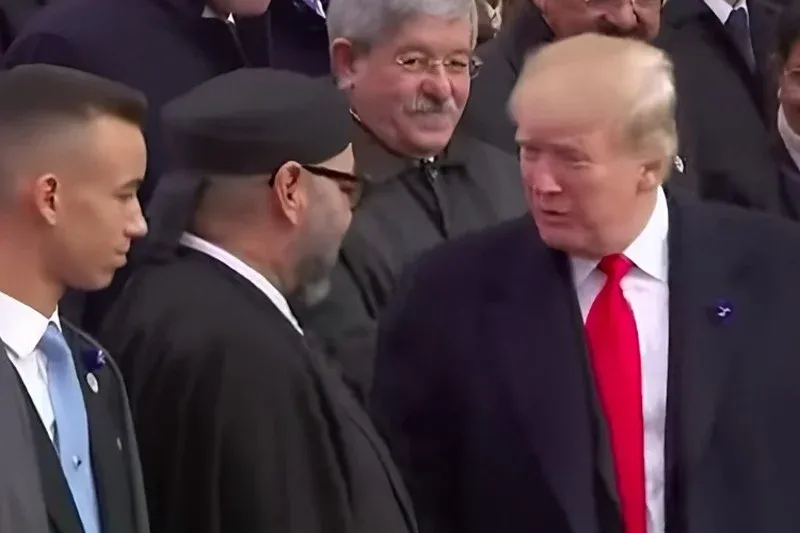
The expressway connecting Tiznit to Dakhla has recently been renamed the "Donald Trump Highway." This decision has attracted attention, prompting American President Donald Trump to express his gratitude towards King Mohammed VI of Morocco through a message shared on his Truth Social platform. In his statement, Trump referred to the renaming as a "great honor" and emphasized the significant symbolism attached to this vital infrastructure, which serves as a crucial link between the northern and southern regions of Morocco.
In his message, Trump stated, "Thank you to His Majesty King Mohammed VI, King of Morocco, for this great distinction. It is an immense honor! I hope to travel the entire length of this beautiful expressway one day, and I hope it will be very soon." Accompanying his message was a video that showcased the expressway as a major project aimed at connecting the country across a distance of 1,055 kilometers. The video highlighted the expressway's role in improving accessibility for the southern provinces, enhancing territorial connectivity, and contributing to the implementation of the royal initiative that aims to provide Sahel countries with access to the Atlantic coast.
Infrastructure and Economic Impact
This audiovisual document also delved into the historical depth of Moroccan-American relations, noting that Morocco was the first country to recognize the independence of the United States in 1777. It underscored that the Treaty of Peace and Friendship established between the two nations represents the longest uninterrupted diplomatic relationship in American history. The "Donald Trump Highway" is thus portrayed not only as a symbol of friendship between Rabat and Washington but also as a corridor of development, peace, and openness towards Africa and international markets.
Beyond its symbolic significance, this infrastructure stands out as one of the most important road projects undertaken in Morocco. Built to international standards, the expressway represents a global investment estimated between 9 and 10 billion dirhams. Its gradual opening culminated in the commissioning of the final segment on January 10, 2025, facilitating a continuous connection between Tiznit and Dakhla through Guelmim, Laâyoune, and key cities in the southern provinces.
The project aligns with the New Development Model for the southern provinces launched in 2015 to commemorate the 40th anniversary of the Green March. Its ambition is to modernize transport infrastructure to enhance exchanges between the north and south of the kingdom, improve the economic attractiveness of the region, and support significant development initiatives in the Saharan provinces.
The expressway features 16 major engineering works designed according to international technical standards. These infrastructures have demonstrated their resilience during the heavy rainfall recently recorded in the southern provinces. Notably, the project includes the longest bridge in Morocco, regarded as one of the most emblematic achievements of this roadway.
To support economic activities, several modern rest areas have been established along the route, along with spaces dedicated to unloading and marketing seafood products, a strategic sector for the economy of the southern Atlantic provinces. The roadway is structured around three main sections: the first connects Laâyoune to Dakhla over nearly 500 kilometers, facilitated by the reinforcement and widening of National Route No. 1; the second spans 436 kilometers between Guelmim and Laâyoune, requiring an investment of approximately 5 billion dirhams due to the construction of numerous bridges crossing major riverbeds in the region. Finally, the third segment, linking Tiznit to Guelmim over 114 kilometers, was completed by the end of 2024 and officially opened to traffic in January 2025.
This infrastructure significantly enhances the transportation of goods, reduces travel times, and facilitates access to the Saharan territories. With modern horizontal and vertical signage and improved traffic flow, it also contributes to increased road safety and a reduction in the number of accidents. Designed as a strategic development lever, the Tiznit-Dakhla expressway is set to support the emergence of major structural projects in the southern provinces, including the future Dakhla Atlantic port, while reinforcing Morocco's position as a logistical platform connecting Africa, Europe, and international markets.
As reported by fr.hespress.com.