
Enhancing Support for Moroccan Migrants in Tarragona
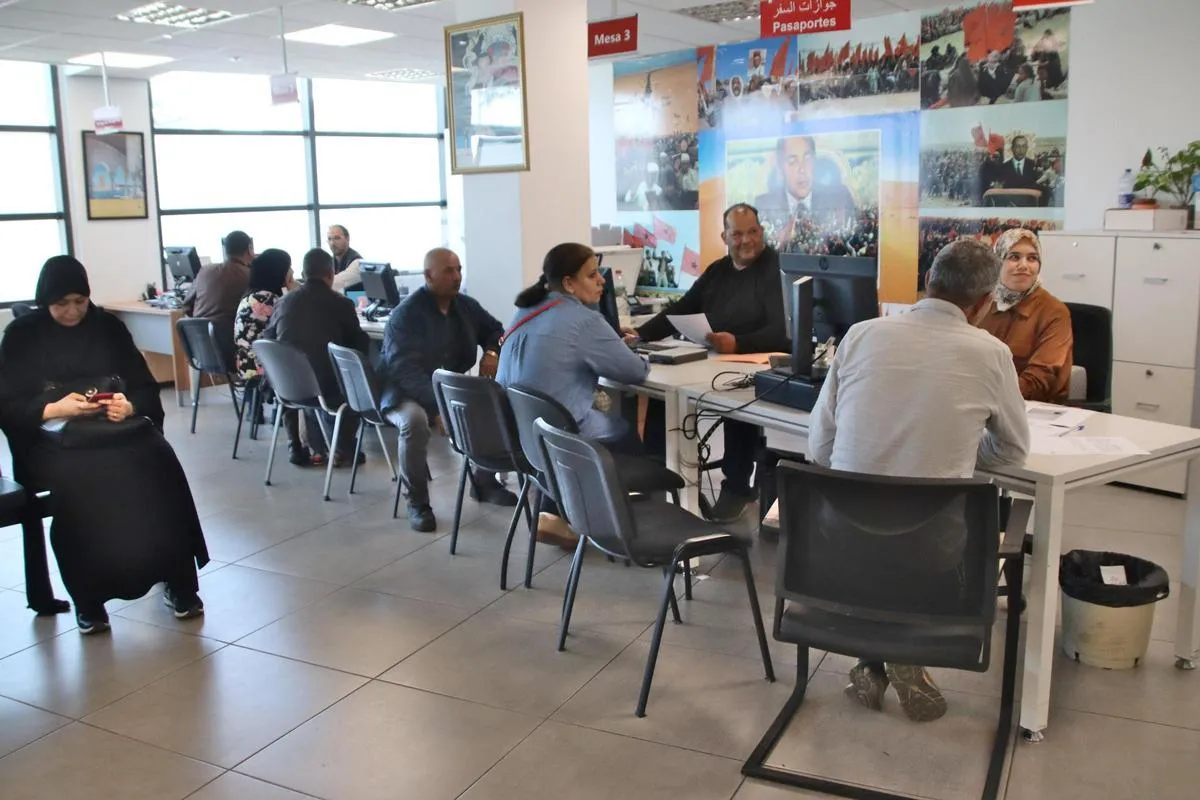
The Moroccan consulate in Tarragona has recently expanded its team by adding three new personnel to assist migrants seeking documentation as part of the extraordinary regularization process initiated by the Spanish government. Since the launch of this initiative last week, there has been a noticeable increase in requests, particularly for criminal background certificates and renewals of Moroccan identity cards and passports. This consulate services the regions of Tarragona, Lleida, and all of Aragón, catering to approximately 160,000 individuals, although residents from other areas are also welcome to seek assistance. Consul Ikram Chahine emphasized the importance of this process, stating that it allows people who have been living their lives in Spain to start contributing to the Social Security system, which ultimately benefits everyone involved.
Efficiency in Document Processing Amid Increased Demand
With the commencement of the regularization process, there were long queues at the consulate's entrance; however, these have since subsided. Chahine indicated that many individuals have opted to approach municipal social services to obtain the necessary vulnerability certificates, which are also required for the application. Despite this reduction in foot traffic, she anticipates that the workload will remain steady, as applicants may need additional documents, such as consular certificates of concordance, to resolve discrepancies in their identification documents. The consulate operates with a staff of 24 individuals, positioning it as a medium-sized consulate among those in Spain.
One of the most frequently requested documents is the criminal background certificate, which is crucial for the regularization process. To obtain this certificate, Moroccan residents must book an appointment online. After the request is submitted, the consulate forwards the information to the Moroccan Ministry of Interior, which issues the certificate. This document is then apostilled and sent via diplomatic pouch to the Tarragona offices, a process that typically takes between seven to ten days, which Chahine considers a remarkably short timeframe. The cost for applicants is just 2.83 euros.
It's noteworthy that unlike Spain, which has a single type of criminal background certificate, Morocco issues two: one from the courts that details legally adjudicated cases, and a police certificate. The Spanish government has mandated the latter for the regularization process. Chahine noted that previously, this police certificate was rarely requested, but the surge in demand has prompted a review and adaptation of the system to enhance efficiency. A meeting in Madrid with the Ministry of Foreign Affairs and various high-ranking officials was convened to explore viable solutions, reflecting the exceptional nature of this unprecedented procedure.
Previously, obtaining the required documentation posed significant challenges for migrants, often leading them to incur costs exceeding 50 euros and endure lengthy wait times and uncertainty, as applications had to be sent back to Morocco for processing. Chahine expressed confidence that the current deadline for completing the process, set for June 30, is sufficient, and while there may be concerns regarding administrative bottlenecks, she highlighted that past experiences with similar processes have resulted in extensions, which could also be a possibility this time around.
In light of reports of scams and inflated fees from certain lawyers assisting with the application process, Chahine advised individuals to consider handling their applications independently whenever possible. If anyone encounters difficulties, seeking help from a specialized professional can be beneficial, though she noted uncertainty regarding their fees. Most importantly, she cautioned against relying on intermediaries who may exploit vulnerable applicants.
Chahine welcomed the regularization process, emphasizing that it not only legitimizes the status of individuals who are already integrated into the community but also ensures their security and access to the labor market. She pointed out that the Moroccan community has been the leading foreign contributor to Social Security in Spain over the past four to five years, asserting that immigrants account for 10% of Spain's GDP and play a vital role in the social and cultural landscape of the country.
As reported by elperiodico.com.


