Advancements in the High-Speed Rail Project
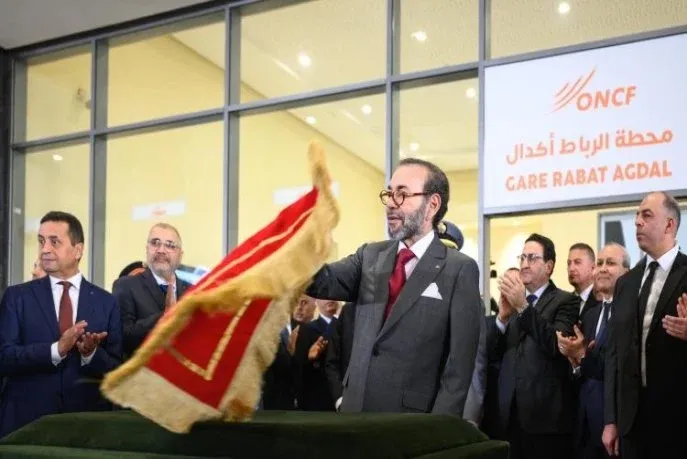
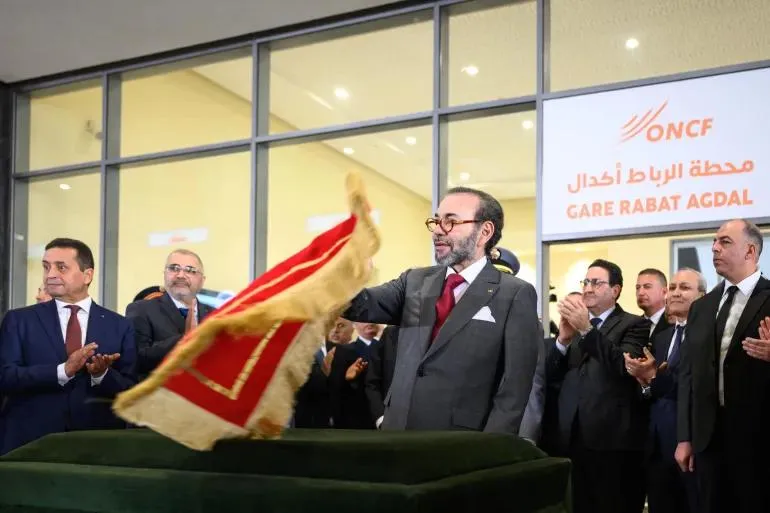
One year after King Mohammed VI launched the ambitious high-speed train project connecting Kenitra and Marrakech, the National Office of Railways (ONCF) has reported remarkable progress across various components of this strategic initiative. The office announced in an official statement that the acquisition of properties has been completed, with nearly full liberation of the land, indicating a sustained field dynamic and effective mobilization of all stakeholders involved in the project.
Regarding construction work, civil engineering operations are accelerating across different sections of the project. Significant advancements have been made in earthworks, with approximately 20 million cubic meters of filling and excavation completed. Notably, there has been a substantial increase in the construction of major engineering structures, including the establishment of 15 large bridges and three tunnels at Casablanca Airport, Zenata, and Ain Atiq, totaling nearly 1.5 kilometers in length. Additionally, work has commenced on 92 supplementary engineering structures designated for rail and road bridges.
Rail and Infrastructure Developments
In terms of railway equipment, construction is progressing according to the established timeline, with about 2.5 million tons of gravel and 800,000 tons of sleepers provided to date. Furthermore, more than 100,000 tons of rails and 220 track-switching devices have been supplied, keeping pace with the project's development. Concurrently, work has begun on operational lines across several segments, with rapid railway laying continuing as preparations for the launch of signaling systems are underway.
As for passenger stations, architectural designs have been finalized, and the first phase of construction is set to commence in early 2026, with all station works expected to begin by July. This project is part of a massive investment program aimed at significantly transforming the national railway system, with a total financial commitment of 96 billion dirhams. This includes the construction of the high-speed line along the Kenitra-Marrakech axis, which has an allocated budget of 53 billion dirhams for infrastructure and equipment. Additionally, the acquisition of 168 trains involves an investment of nearly 29 billion dirhams, alongside 14 billion dirhams designated for upgrading the existing network to ensure the continued quality of its services.
As reported by marrakech7.com.