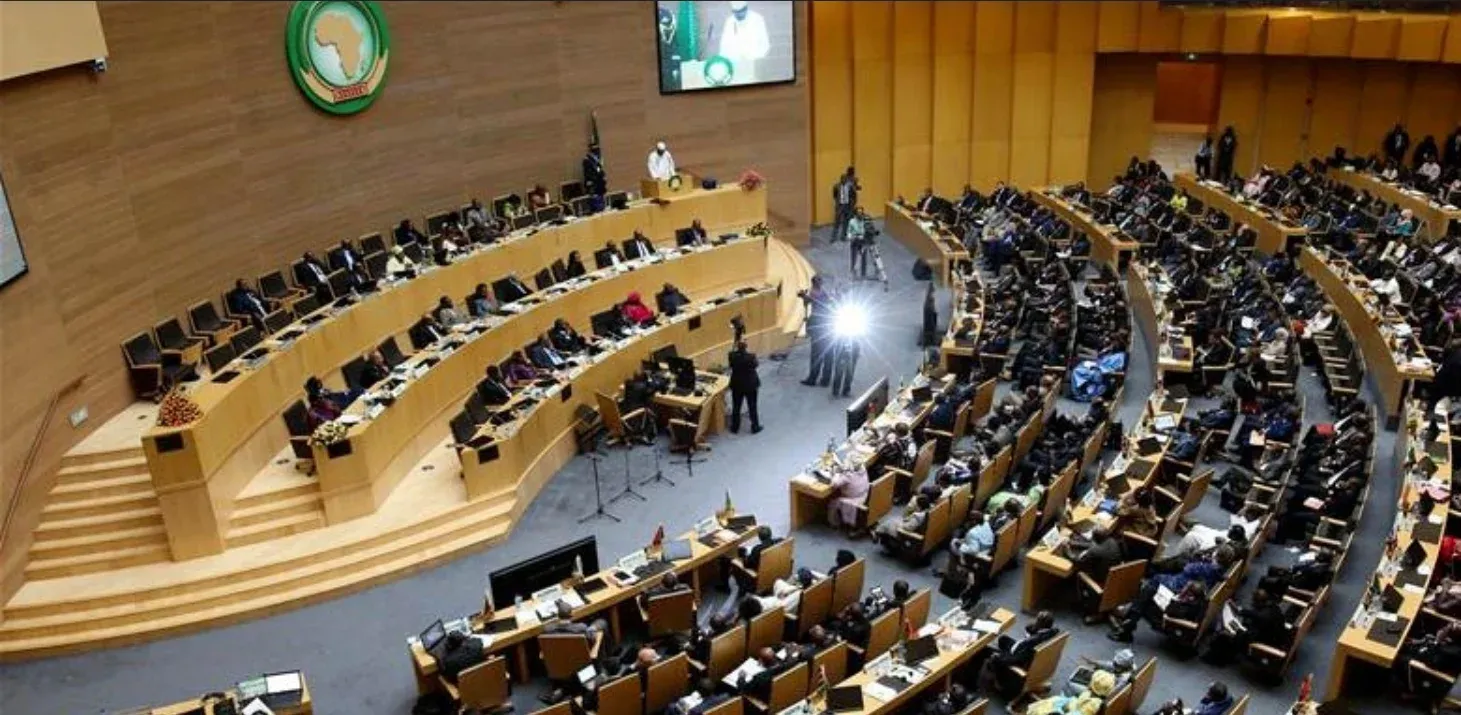
The recent session of the Pan-African Parliament has underscored the active involvement of the Sahrawi Republic within Africa, marking a notable political setback for Morocco. On May 2, 2026, the current situation concerning Western Sahara reveals a political signal that warrants careful consideration. The extraordinary session of the Pan-African Parliament, held in Midrand, South Africa, from April 28 to April 30, served not only to redistribute institutional roles but also to illuminate a reality often overlooked by European media: the robust engagement of the Sahrawi Republic in the African political landscape.
This exceptional session aimed to reorganize internal bodies and appoint leaders within regional groups. During this process, the North African group, which includes both Morocco and the Sahrawi Republic, conducted a pivotal vote for the position of rapporteur for the provisional table. The outcome was striking: the Sahrawi candidate triumphed with 17 votes against the 12 garnered by the Moroccan candidate. This result surprised many due to the significant margin and occurred in a context where Rabat has endeavored to solidify its influence in recent years.
The results from this session, particularly the election of representatives across various positions, including the victory of the Sahrawi candidate as rapporteur over the Moroccan contender, represent a significant political reversal for Rabat. Beyond the mere arithmetic of votes, this outcome indicates that Morocco's strategies in the African sphere do not always secure the support it aims to project in its international discourse. This result is particularly meaningful as it unfolds within the North African group, an area where Morocco has sought to enhance its influence. The defeat in this context holds both symbolic weight and highlights the existence of more complex balances within the African Union.
Simultaneously, the dynamics of the African institutional framework reveal a persistent contradiction. While Morocco maintains a narrative of exclusive sovereignty over Western Sahara, within the African Union it shares spaces, votes, and processes with the Sahrawi Arab Democratic Republic, which continues to exercise significant political presence in these structures. What transpired in the African Parliament is not a trivial detail.
As witnessed, the Sahrawi candidate secured victory over the Moroccan candidate by 17 votes to 12, within the North African group and in a crucial vote inside the continent's main parliamentary body. This is not merely an isolated episode; it signals the limits of a strategy that fails to establish itself fully across all international arenas.
In light of this scenario, the international framework continues to show prolonged paralysis. Western Sahara remains listed as a non-self-governing territory by the United Nations, still awaiting a decolonization process. Both the International Court of Justice and the European Court of Justice have reaffirmed the absence of Moroccan sovereignty over the territory and the necessity to respect the principle of self-determination.
However, as noted by former United Nations envoys such as James Baker and Christopher Ross, the issue does not lie in the lack of a legal framework but rather in the absence of political will to implement it. Thus, the interpretation of this day is clear: while the conflict remains stalled at the international level, a political reality is consolidating within Africa, where the Sahrawi Republic maintains presence, influence, and recognition. Recent results indicate that Morocco's strategy faces more visible limits than often projected.
As reported by noteolvidesdelsaharaoccidental.org.