Escalating Protests by Gdeim Izik Group in Moroccan Prisons
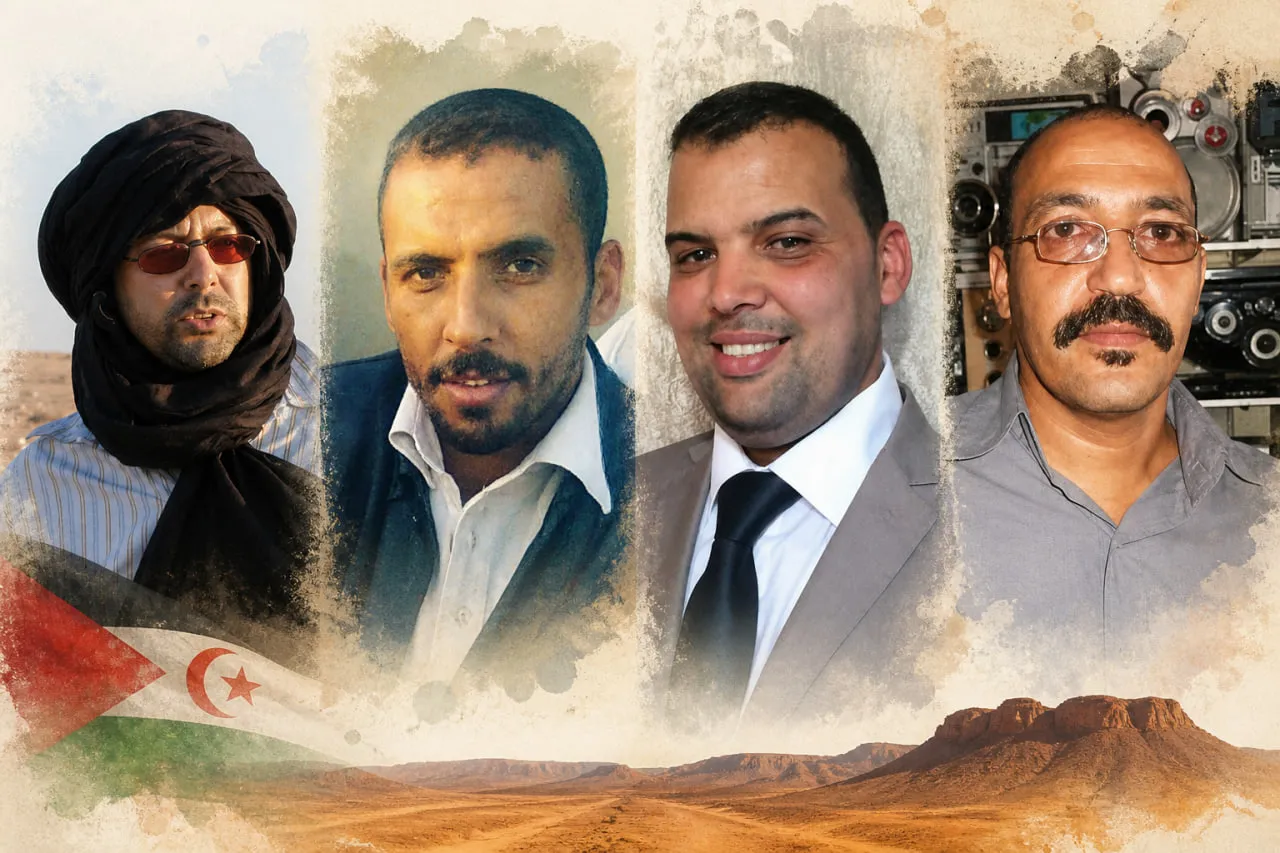
The protests among Saharawi political prisoners in Moroccan jails are gaining momentum, marked by new hunger strikes that underscore one critical demand: compliance with the United Nations Working Group on Arbitrary Detention's ruling, which in 2023 called for the release of the Gdeim Izik group. The League for the Protection of Sahrawi Prisoners in Moroccan Prisons (LPPS) has raised alarms regarding an upsurge in mobilizations across various correctional facilities, as well as the deteriorating health conditions of several inmates.
In Bouzakarn local prison, Saharawi political prisoners Abdallahi Ahmed Al-Hafed Toubali and Mohamed Khuna Eddih Babit initiated a 48-hour warning hunger strike on April 30. Both members of the Gdeim Izik group demand the implementation of the UN resolution that deems their detention arbitrary and illegal and calls for their release. According to the LPPS, the protest also highlights the "psychological and physical harm" stemming from years of incarceration and the systematic racial discrimination experienced within the prison system.
Urgent Calls for International Intervention
Similarly, Saharawi political prisoner Naama Asfari, who is detained in the central prison of Kenitra, joined the 48-hour warning hunger strike starting April 30 and announced plans to commence an indefinite hunger strike on May 10 if his demands are not met. His decision reflects the “systematic silence and indifference” of the Moroccan state towards the UN ruling, which remains unimplemented three years later. The indefinite hunger strike is intended to confront the injustices and illegality surrounding the detainment of the Gdeim Izik group, and to rekindle international attention on their plight.
These protests unfold against a backdrop of increasing concern regarding the health conditions of Saharawi political prisoners. On April 23, the LPPS reported that the administration of Ait Melloul 2 prison was denying Saharawi political prisoner Brahim Dadi Ismaili access to prescribed medical treatment, specifically the use of knee braces necessary to prevent further aggravation of his knee and ankle injuries. According to information relayed by his family, this refusal follows prior denials of rehabilitation sessions, which they describe as deliberate medical negligence.
The Saharawi organization directly holds the Moroccan prison authorities and the occupying state accountable for the physical integrity of the prisoners and condemns a systematic policy of rights violations that affects all Saharawi political prisoners. In this context, it emphasizes that hunger strikes are not isolated incidents but rather part of a broader strategy of resistance against repression, arbitrary imprisonment, and the non-compliance with international resolutions.
The Gdeim Izik group, to which several of the striking prisoners belong, was condemned following the dismantling of the protest camp set up outside El Aaiún in 2010, which many in the Saharawi movement view as a precursor to the uprisings in North Africa. Years later, international bodies such as the United Nations have questioned the legality of those judicial processes, yet their resolutions have yet to be implemented.
The LPPS insists on the urgent need for international community intervention to ensure the release of Saharawi political prisoners, respect for their fundamental rights, and an end to repression in occupied Western Sahara.
As reported by arainfo.org.