Rif National Party's Open Letter to Spain
The Rif National Party (PNR) has released a letter addressed to the Spanish people, which delves into historical, political, and identity issues pertinent to the Rif region. This document initiates a dialogue between the two peoples, aiming to engage without intermediaries or official channels. The PNR emphasizes that the timing of this letter is significant, coinciding with the centenary of various historical events connected to the Rif. The party asserts that it speaks on behalf of the Rifian people on the international stage, advocating for the recognition of a distinct political and historical identity in the region.
While the shared excerpt of the letter predominantly discusses the historical aspects of the Rif, it is also situated within the ongoing debate surrounding Ceuta and Melilla—two autonomous Spanish cities located in North Africa. These cities have been the subject of discussions among some Moroccan and Rifian nationalist sectors, particularly concerning their geographical and political status. The release of this letter comes at a time when relations between Spain and Morocco are particularly sensitive, marked by episodes of diplomatic tension, migration debates, and concerns regarding the sovereignty of these autonomous cities.
Historical Context and the Future of Ceuta and Melilla
Ceuta and Melilla hold a unique position in the current Spanish-Moroccan diplomatic dialogue. The PNR aims to clarify its stance in line with the principles established by the founder of the First Republic of Rif, Mohammed ben Abd el-Krim el-Khattabi. This historical figure held esteemed judicial positions in the Melilla judicial system and led the Arab section of the local newspaper, El Telegrama del Rif. The First Republic of Rif (1921-1926) represented a modern political project, bordered by the Mediterranean Sea to the north, Algeria to the east, the Atlantic Ocean to the west, and the Middle Atlas mountain range to the south.
The history of Ceuta and Melilla is intricate, characterized by a significant Iberian presence since the 15th century, long before the establishment of contemporary Morocco in 1956. Consequently, these cities were neither claimed nor included in Moroccan territory at that time. Notably, in the summer of 1921, Melilla was surrounded by Rifian troops, although an attack was avoided in adherence to Abd el-Krim's explicit orders. The PNR positions itself as the heir to Abd el-Krim's political legacy and firmly maintains this historical interpretation of events. However, it seeks to transcend mere territorial claims, viewing Ceuta and Melilla today as authentic bridges connecting the Rifian and Spanish peoples, both geographically and culturally.
Each year, thousands of Rifians cross these borders for work, shopping, education, or family visits. A substantial portion of the Rifian diaspora in Europe frequently travels across these routes, utilizing Spanish companies such as Iberia, Baleària, and Trasmediterránea to return to their homeland. These cities serve as intersections of shared histories and daily interactions that have persisted for centuries.
The PNR’s tone aims to distinguish its narrative from the official Moroccan discourse, focusing on the historical identity of the Rif. The organization insists on creating a space for reflection on the shared memory between Spaniards and Rifians while distancing itself from Morocco. It clarifies its position regarding Ceuta and Melilla as different from both the official stance of the Moroccan Kingdom and potential oversimplifications that may be applied to their narrative.
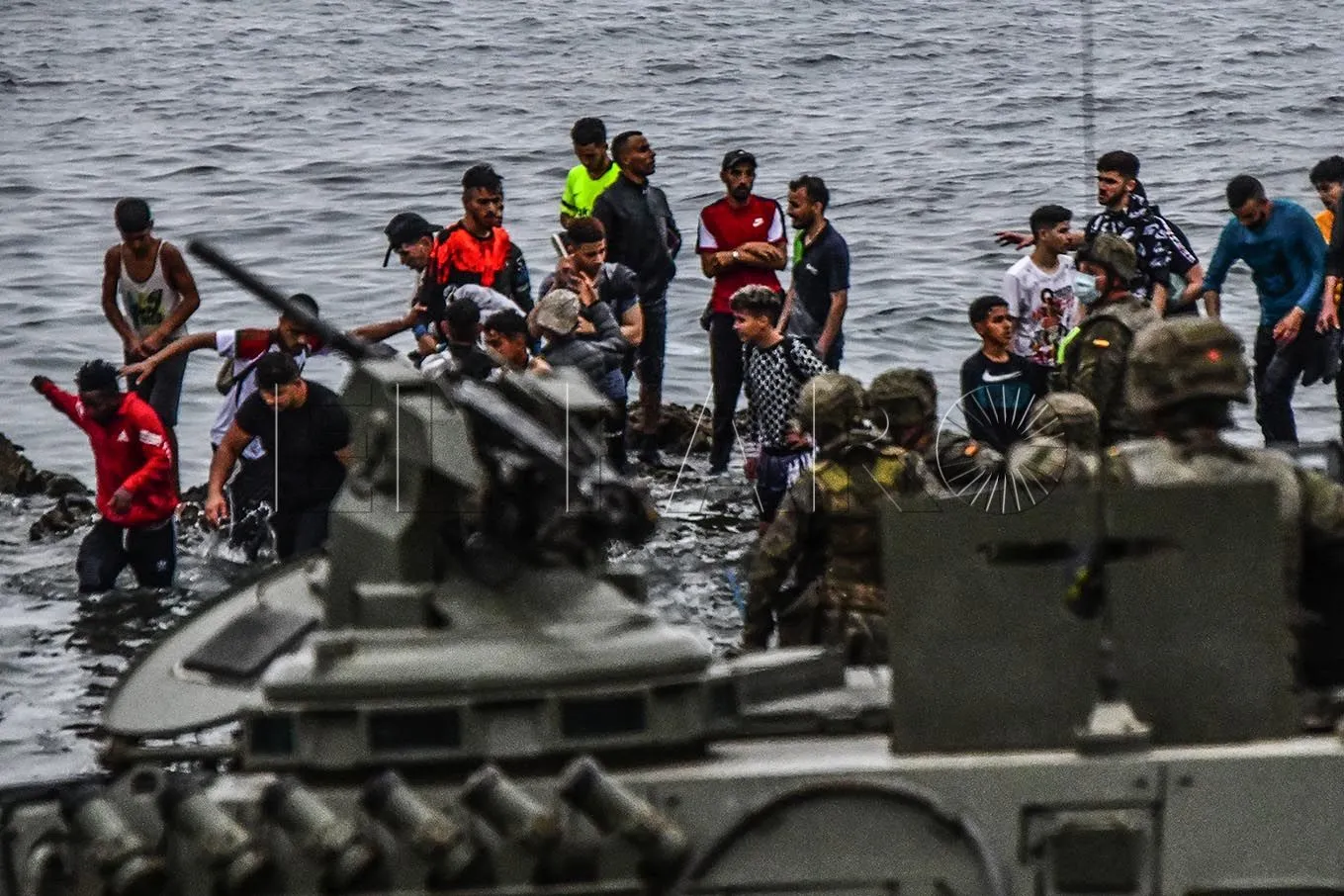
The events that transpired in Ceuta in May 2021 should not be forgotten, where over eight thousand individuals crossed into Spanish territory within forty-eight hours due to the Moroccan Kingdom relaxing its border controls as a diplomatic retaliation against Spain for what they deemed an unacceptable humanitarian decision. Among those affected were Rifian children separated from their parents, women, and entire families sent to the border as political pawns. The PNR vehemently condemns this practice, publicly committing to never using migratory flows as a diplomatic weapon in future relations with Spain. This commitment echoes the political legacy of Abd el-Krim, who, during five years of the Rif War, never exploited civilian populations as instruments in his struggle.
Concluding the letter, the PNR directly appeals to Spanish society, urging the necessity to listen to the voice of the Rifian people and to address historical and political issues that, according to the organization, have been silenced for decades. Through this initiative, the Rif National Party seeks to gain international visibility and extend its political discourse beyond North Africa, particularly among the Rifian communities established in Europe.
As reported by elfarodeceuta.es.