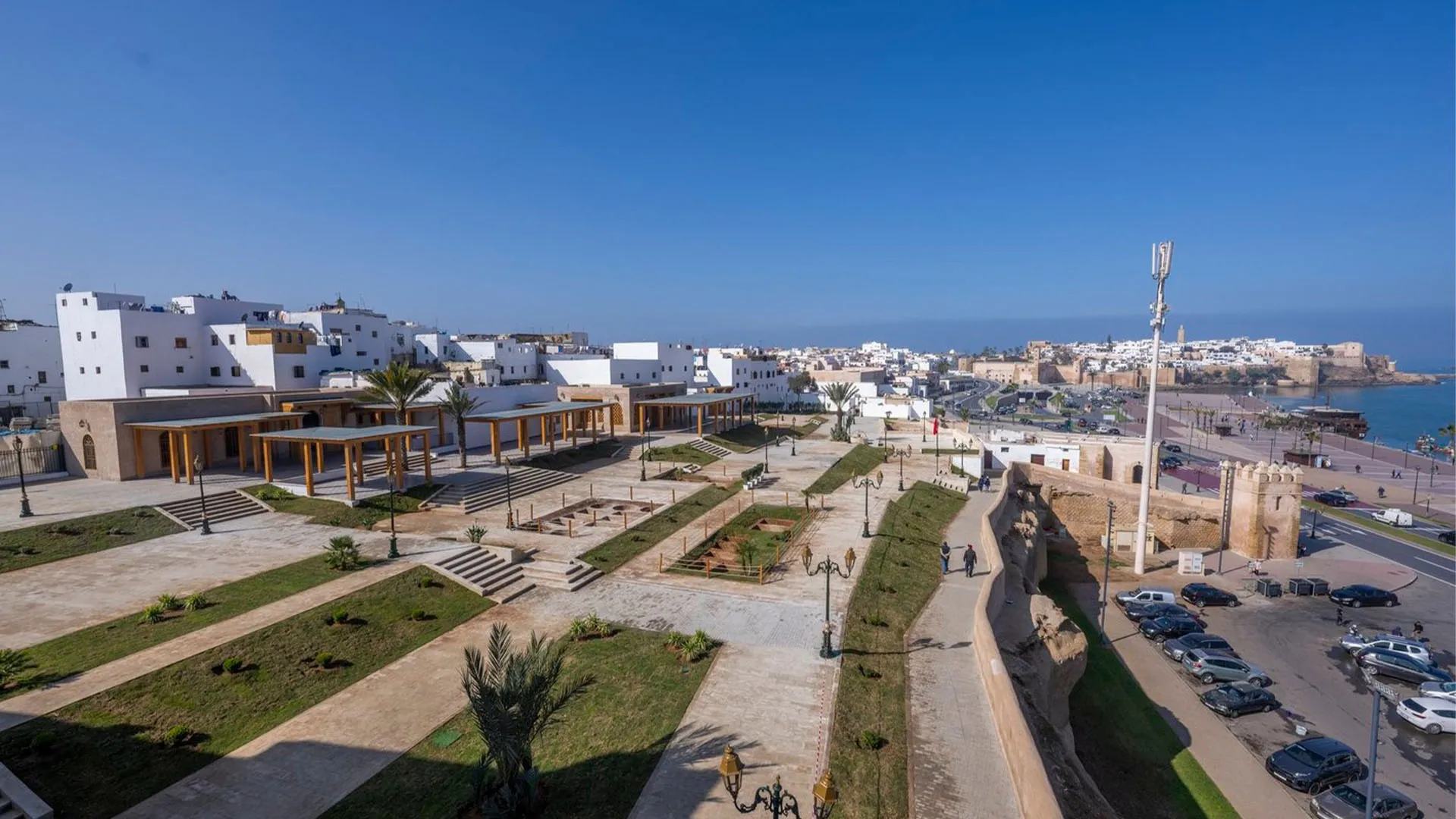
Diour Dbagh: A Heritage Site Reimagined
Once the domain of skilled tanners, the tanneries of Rabat, known as Diour Dbagh, have undergone a remarkable transformation into a vibrant tourist attraction nestled in the capital's heart. Rich with centuries of history, this site now joins the ranks of Rabat's architectural gems, inviting visitors to explore the human footprints that still linger in its walls. So, what can one expect to discover here today?
A new must-visit destination has emerged in the tourist circuit of Rabat—Diour Dbagh. This emblematic site, located in the northeastern part of the medina, adjacent to the towering cliffs that rise 12 to 17 meters above the Bouregreg estuary and the medina of Salé, has been revitalized following extensive restoration efforts. It stands as an exceptional heritage site that preserves the legacy of master tanners who worked there long before the 20th century, molding the hides that would become symbols of Moroccan craftsmanship.
In the early 20th century, the tanneries were relocated to the new city to curb the spread of unpleasant odors throughout the medina. Over the years, the area gradually deteriorated into a precarious living space marked by slums and a lack of organization, which detracted from its identity and heritage value until 2006, when the local population was relocated.
A Long-Awaited Restoration Project Comes to Fruition
Since then, the site remained in ruins, with its redevelopment project stalled for years due to financial and logistical challenges, as explained by Mehdi Benchekroun, President of the Regional Tourism Council of Rabat-Salé-Kénitra (CRT), during an exceptional reception dedicated to presenting the site to media and tourism stakeholders. In 2022, a requalification project was launched as part of a comprehensive rehabilitation program aimed at preserving the heritage of Rabat, allowing Diour Dbagh to enter a new era and join the capital's tourist circuit. This project was overseen by a multidisciplinary team coordinated by two heritage architects, Mohamed Nehall and Mohammed Amrani Abourouh, who have successfully completed various heritage projects, including the riverside facade of Rabat.
The restoration process began with the disinfection of the site, which had become a dumping ground since its abandonment. Tons of debris were removed, utilizing logistics tailored to the location's specific characteristics, as veteran archaeologist and historian Mohamed Es-Semmar elaborated. He noted, "We conducted archaeological excavations before embarking on a restoration effort that adhered to the highest standards in preserving the site's iconic elements, particularly the basins, to maintain its intrinsic spirit."
This restoration is not merely a physical renovation; it is a powerful cultural and heritage act that respects the site's authenticity and historical significance. The operation pays homage to the ancestral craftsmanship linked to leather goods, breathing new life into the essence of the place shaped by generations of tanners.
The site has also been equipped with new amenities and relaxation areas, including a traditional café and two restaurants, where visitors can enjoy delicious meals while basking in the surroundings, especially at sunset. Additionally, a plaza blending vegetation and masonry has been created, harmonizing with the site's topography to preserve its natural terraces and open perspectives toward the river.
This unique environment offers a multifaceted experience—visual, cultural, and emotional—where visitors are immediately immersed in the history and authenticity of Rabat, according to the CRT president's vision. Visitors to this open-air tannery can marvel at the traces left by artisans and the ebb and flow of boats against the stunning backdrop of the Bouregreg River and the Marina of Rabat and Salé.
Beyond its tourist appeal, the site has been reimagined as a premier cultural and event space. This initiative aligns with Rabat's positioning as a business tourism destination, aspiring to become a credible alternative to Marrakech and Casablanca. With modern facilities and a spacious terrace, the venue provides an ideal setting for hosting high-value professional events, leveraging its exceptional heritage, contemporary infrastructure, and genuine hospitality, concludes Mehdi Benchekroun.
Furthermore, the development of Rabat's hotel sector, the enhancement of its facilities, and improved accessibility, notably through the high-speed Al Boraq train line, bolster its attractiveness for the MICE segment (Meetings, Incentives, Conferencing, Exhibitions). Beyond its inherent advantages, Rabat benefits from a strategic regional connectivity with Salé, Kénitra, and the hinterland up to Fès, allowing for diverse experiences that blend culture, heritage, nature, and discovery.
As reported by lopinion.ma.