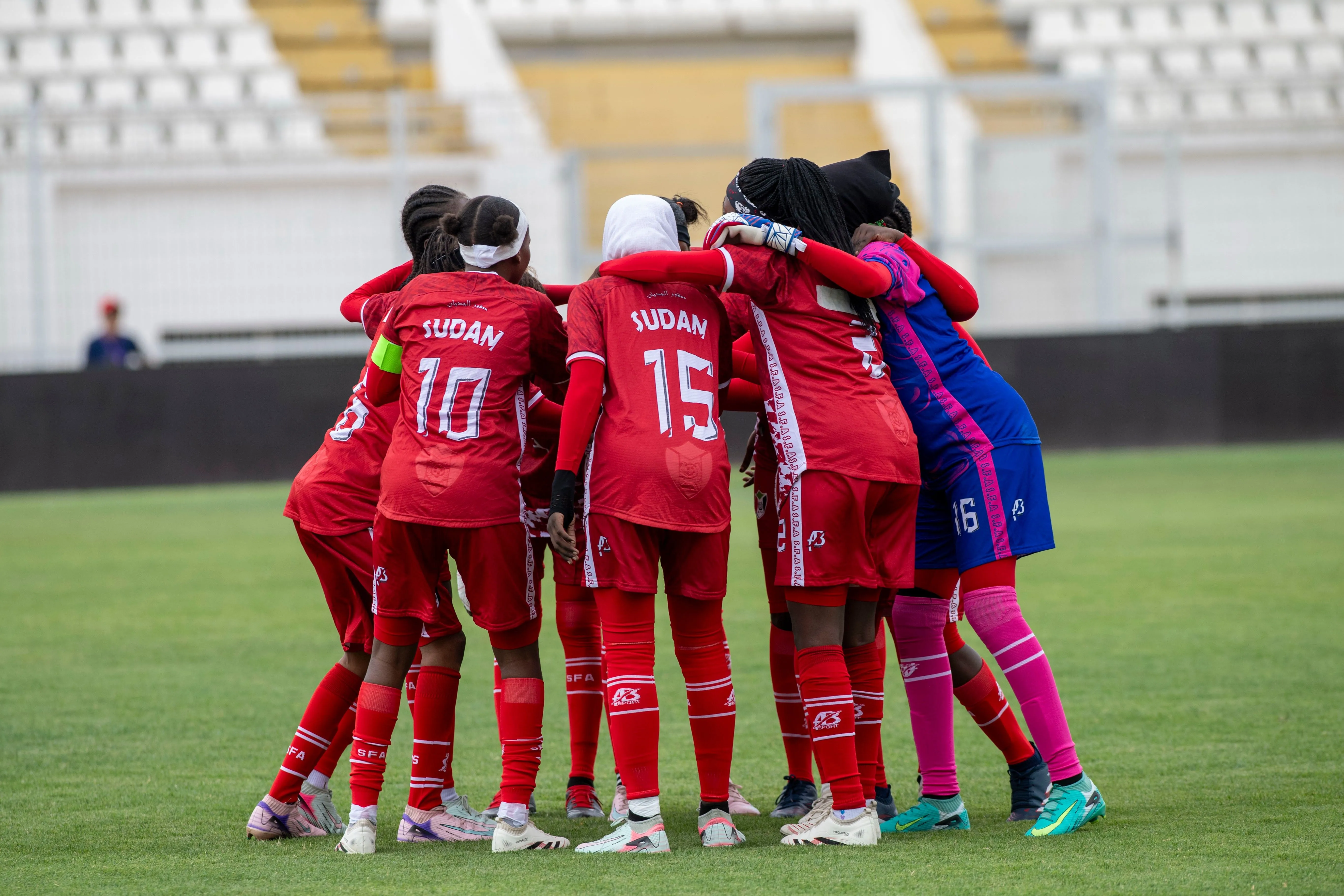
The vibrant red jerseys of Sudan’s under-17 women’s national soccer team stood out against the lush green pitch of Larbi Zaouli Stadium in Casablanca, Morocco, signaling a remarkable moment in sports history. Comprising mainly teenage girls, some of whom had fled the ravages of war, this team represented Sudan's first foray into international women's soccer since the outbreak of civil war, a period during which the participation of women in sports has faced significant opposition. The emotional weight of their appearance was palpable as the team took to the field, embodying a spirit of resilience and determination despite their inexperience and the challenges they had faced.
Nura Mohamed, the 17-year-old captain of the team, expressed her aspirations following the match, stating, "My goal is to lift up soccer in my country. It’s a beautiful, unique feeling because, at the end of the day, I just love playing.” The team traveled to Morocco for qualifying matches ahead of the 2028 Los Angeles Olympics, however, they faced significant challenges in their debut. Competing against the more seasoned team from Comoros, Sudan’s young athletes suffered heavy defeats, conceding a staggering 30 goals across two matches. In the aftermath of their losses, the sight of many players in tears resonated deeply with the small crowd of supporters who had come to cheer them on.
With a lack of experience and preparation, the Sudanese team was at a distinct disadvantage. They had only begun training a few weeks prior to the matches, and their youthful squad was hastily assembled to prevent the forfeiture of their qualifying position due to the absence of an established senior women's team. Veteran Sudanese coach Burhan Tia acknowledged the magnitude of the challenge, noting, "The difference between us and the others is huge. We cannot yet compete at the highest level." The stark contrast in experience was evident, as many players struggled with basic soccer tactics, often looking to their coach for guidance during the matches.
The backdrop of Sudan’s civil war, which has been described by the United Nations as the world's most severe humanitarian crisis, loomed large over this young team. Since the conflict erupted in 2023, a power struggle between the military and paramilitary forces has resulted in catastrophic human loss and displacement, with over 14 million individuals affected. The war has led to the suspension of all sports activities, including the women’s soccer league, which had only recently been established following the 2019 revolution that sought to enhance women’s rights in the country. Unfortunately, the revolutionary progress was met with backlash from conservative factions, questioning the appropriateness of women participating in sports.
Despite these obstacles, Sudan’s soccer federation has made strides to support women's soccer, working on infrastructure projects to ensure the sport's future in a more stable environment. Coach Tia faced unique challenges in assembling a team, scouting for players from schools and academies in both Sudan and neighboring Egypt, and overcoming the difficulties posed by the war. Many potential players had lost their identification documents, hindering their eligibility under international regulations. The war has also severely disrupted transportation, complicating travel and training logistics.
While the players faced significant institutional and social hurdles, they also encountered a wave of online abuse. Critics took to social media to deride their performance and belittle their aspirations, echoing sentiments that reflect deeper societal issues regarding gender roles in Sudan. Nevertheless, the presence of the team on the international stage signals a defiance against these traditional norms, showcasing their determination to redefine women's participation in sports.
As they continue to navigate the complexities of their situation, the young players remain focused on their love for soccer, finding solace and strength in the game. Back in Casablanca, amidst the political turmoil and challenging circumstances, what remained was a group of spirited teenagers chasing a ball, embodying hope and courage for the future of women’s soccer in Sudan.
As reported by wral.com.