Conservation Efforts for Endangered Vultures
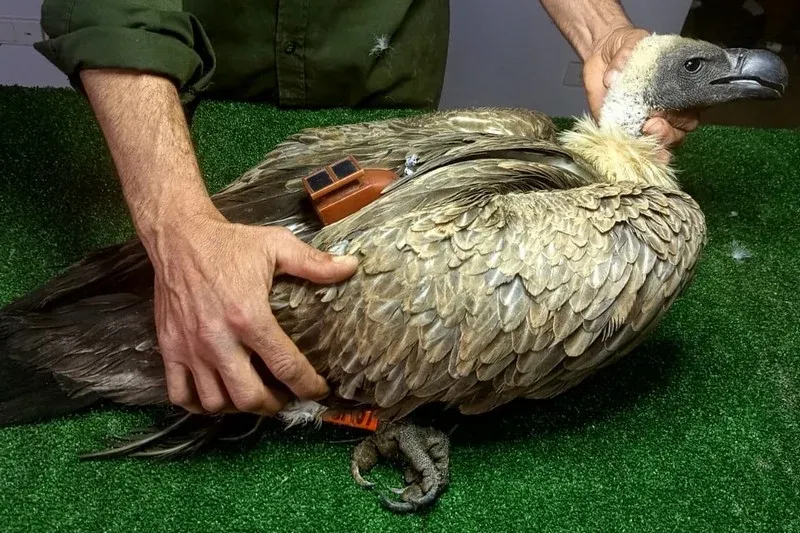
Recently, the Vulture Rehabilitation Center located in Mount Musa has undertaken a significant initiative in collaboration with the Vulture Conservation Foundation based in Switzerland. This project involved equipping two endangered African vultures, known as the White-backed Vulture, with advanced tracking devices. According to a detailed report from the Vulture Conservation Foundation, these two birds have already left Morocco on their journey to Spain, with one of them successfully crossing the Strait of Gibraltar and now soaring over the Spanish mainland near a wind energy production facility.
The tracking devices are crucial for monitoring the migratory paths of these vultures, as they follow the same routes taken by various vulture species such as the Griffon and the Rüppell, which migrate annually from Africa to Europe. The report emphasizes the significance of this journey for the vulture community; only a handful of White-backed Vultures have been fitted with tracking devices in Morocco, and even fewer have reached Europe. The data collected from these devices will provide invaluable insights into their behavior and migration patterns.
Challenges Facing the White-backed Vulture
The White-backed Vulture (Gyps africanus) is classified as globally endangered due to a drastic decline in its breeding rates. The report highlights that this species has faced a staggering population decrease of between 63% and 89% over three generations, primarily due to various threats such as poisoning, habitat loss, and hunting driven by superstition. The WCF has stressed the importance of monitoring the movements of this endangered species, especially as they migrate along the same routes as their counterparts from Africa to Europe. Such surveillance will yield critical information about their habits, behaviors, and the risks they face, thereby directing conservation efforts effectively.
The WCF notes that since 2014, approximately one individual of the White-backed Vulture reaches Morocco annually, typically when it is two to three years old. This migration pattern indicates a growing trend of African birds, including the White-backed Vulture, becoming more prevalent in North Africa and Southern Europe. This initiative not only highlights the ongoing efforts to conserve these majestic birds but also underscores the collaborative approach needed to ensure their survival in the face of escalating threats.
As reported by hespress.com.