Significant Milestones Achieved in the Kénitra-Marrakech High-Speed Rail Project
One year following the royal endorsement of the Kénitra-Marrakech high-speed rail project, the National Office of Railways (ONCF) has provided a comprehensive progress report. This ambitious initiative is set to revolutionize transportation in Morocco, backed by a substantial 96 billion dirhams investment plan, highlighting its significance as a key driver of regional competitiveness and transformation in transport infrastructure.
The Kénitra-Marrakech high-speed rail line, which will stretch 430 kilometers, is at the heart of this massive endeavor, receiving an allocation of 53 billion dirhams solely for its infrastructure and equipment. In addition, 29 billion dirhams are being invested in the procurement of 168 new trains, while another 14 billion dirhams are earmarked for the maintenance and modernization of the existing rail network. These financial allocations underscore the project’s scale and the ONCF's commitment to enhancing Morocco's rail capabilities.
Operationally, the project has shown remarkable progress, with land acquisition nearly completed, indicating effective coordination among all stakeholders involved. Civil engineering works have accelerated across all sections of the project, with approximately 20 million cubic meters of excavation already completed. Significant advancements have also been made in constructing critical infrastructure, including 15 major bridges and three tunnels, totaling 1.5 kilometers, situated near Casablanca’s airport, Zenata, and Aïn Atiq. Additionally, construction is underway for 92 other railway and roadway structures.
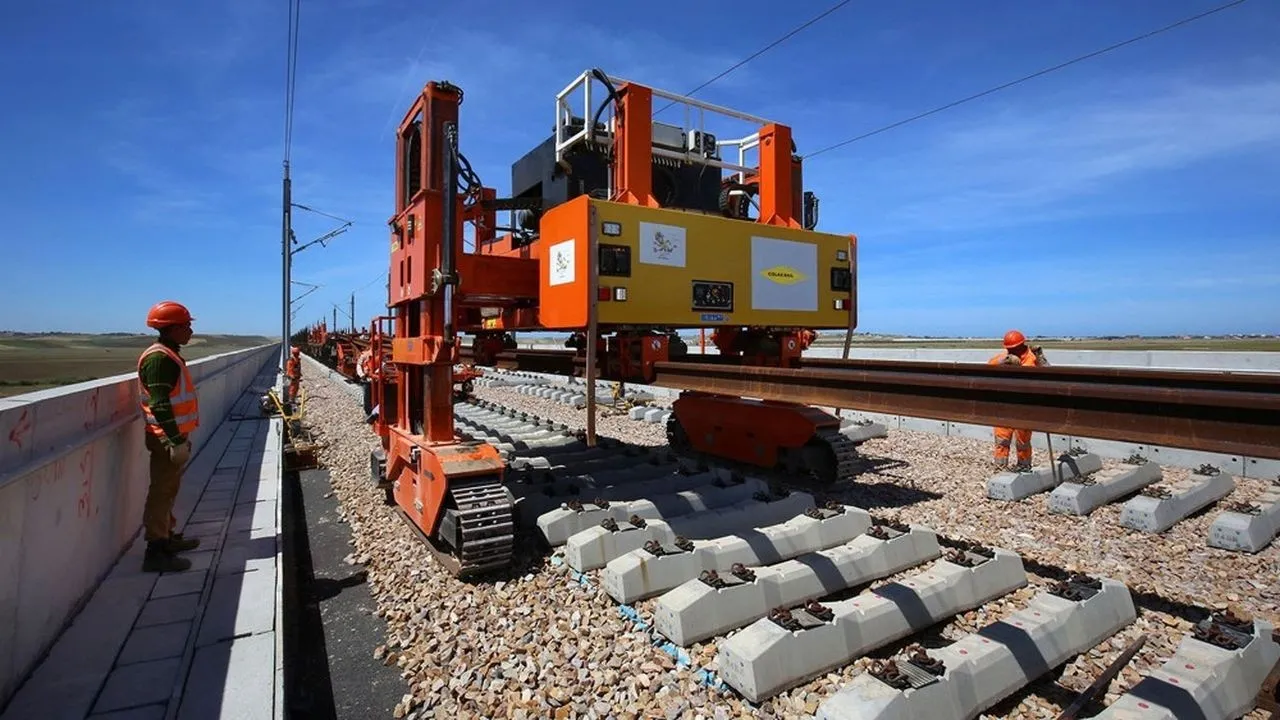
The supply chain is actively supporting the project’s timeline, with around 2.5 million tons of ballast, 800,000 tons of sleepers, and over 100,000 tons of rails mobilized, along with 220 track switches that are crucial for network structuring. Beyond its technical dimensions, the project has a profound economic impact, with approximately 150 companies engaged in its execution, two-thirds of which are local enterprises. This engagement not only showcases a commitment to harnessing local expertise but also aims to strengthen the Moroccan industrial ecosystem.
Moreover, enhancements are concurrently being made on existing rail lines to ensure seamless integration with the new high-speed line, and preparations for signaling systems are aligning with the project’s timeline. Architectural studies for the new stations have been completed, with the first construction activities commencing in early 2026, and extensive work is anticipated to ramp up by July of the same year.
As reported by lopinion.ma.