Advancements in Phosphoric Acid Production from Phosphate Rock
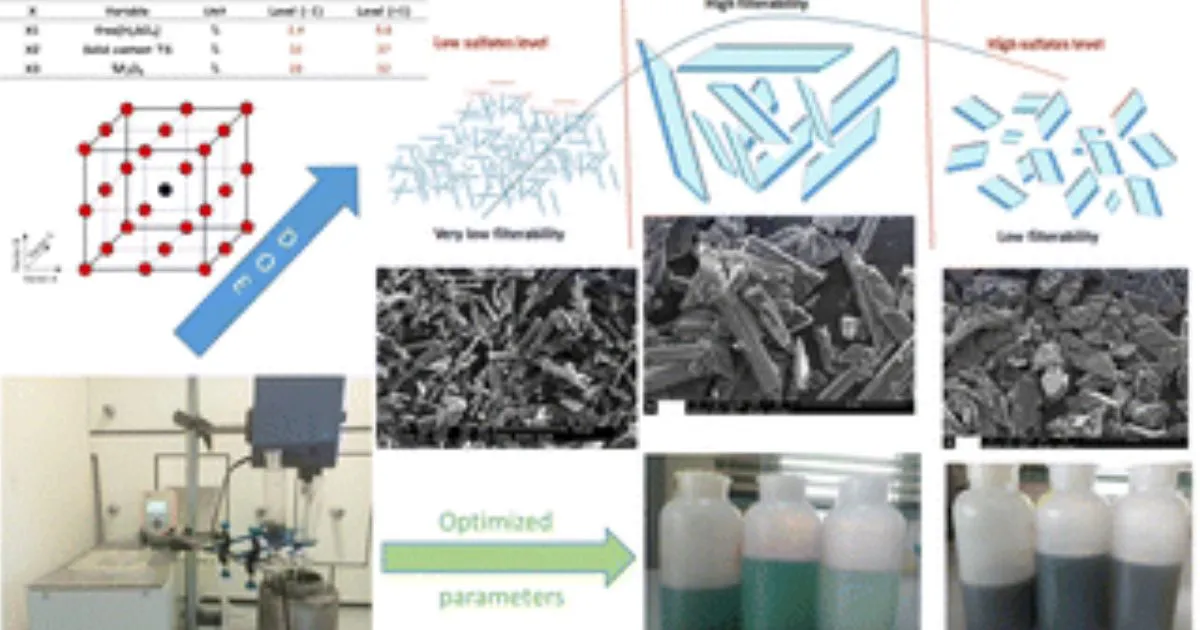
In a groundbreaking study, researchers at the Laboratory of Applied Chemistry and Environment, part of the Faculty of Science and Technology at University Hassan 1 in Settat, Morocco, have made significant strides in optimizing the production process of high-concentration phosphoric acid from low to medium grade phosphate rock. This research is pivotal for industries that rely on phosphoric acid, as it aims to enhance production efficiency by evaluating crucial operational parameters such as particle size, agitation speed, temperature, and reactant feed rates.
The experimental trials conducted showcased that using a particle size ranging from 40 to 250 μm combined with an agitation speed of 800 rpm at a temperature of 98 °C led to a phosphoric acid mass fraction of 0.4246. These findings are particularly noteworthy as they underline the importance of precise control over these variables in the chemical production process. Initially, the thermodynamic modeling applied through the electrolyte-NRTL framework exhibited a deviation of 3.92% from the actual experimental data. However, the implementation of a custom kinetics-based model, executed in Python, yielded remarkable improvements in predictive accuracy, reducing the deviation to a mere 0.46%. This advancement is attributed to the model’s ability to factor in both the dissociation of fluorapatite and the crystallization of hemihydrate.
A Dual Approach for Enhanced Production Efficiency
The integration of experimental data with advanced simulation tools has established a robust framework for optimizing the production of phosphoric acid. This dual approach not only aids in real-time reactor tuning but also facilitates effective management of fluctuations in phosphate rock quality. By combining flowsheet simulation for plant sizing with kinetic modeling, the researchers have created a comprehensive strategy that ensures the integrity of process design and the precision of chemical performance. This innovative methodology offers a scalable solution for improving yield and purity in industrial settings, marking a significant step forward for the chemical industry.
The researchers have declared that there are no known competing financial interests or personal relationships that could have influenced the outcomes reported in this study. This transparency ensures the credibility of their findings and sets a standard for future research in the field.
As reported by scijournals.onlinelibrary.wiley.com.