U.S. Military Engages in Extensive Search for Missing Soldiers off Moroccan Coast
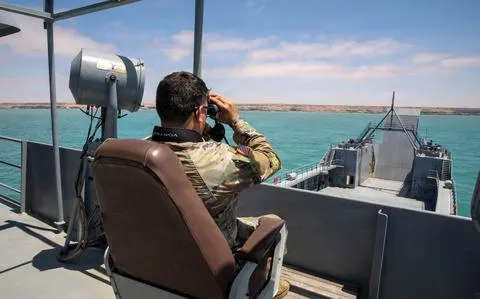
In a somber turn of events, a contingent of U.S. military personnel is stationed in Morocco to continue the search for two soldiers who went missing on May 2, 2026, near a coastal cliff during a significant training exercise. This operation, which is currently unfolding off the coast of Tan-Tan, has seen a vast search area of over 4,600 square miles being combed by search teams, as reported by Col. Alex C. Tignor, a spokesperson for the Army’s Southern European Task Force, Africa. The relentless search effort is expanding rapidly, with teams able to cover an additional 1,200 square miles each day, thanks to advanced ocean current modeling techniques.
The search operation was initiated in collaboration with Moroccan authorities, France, and other allied partners after the soldiers were reported missing at the Cap Draa Training Area, situated along Morocco’s southwestern coastline, where the Sahara Desert meets the Atlantic Ocean. The two missing soldiers were reportedly off-duty at the time of the incident and were part of a larger international force participating in the African Lion exercise, which is the largest annual training event organized by U.S. Africa Command. This extensive exercise involves thousands of military personnel from various nations and is led by the Southern European Task Force, Africa, with activities taking place in multiple African countries including Tunisia, Ghana, and Senegal.
Utilizing Technology in Real-Time Search and Rescue Operations
As the training exercise transitioned into a real-world search and rescue operation, U.S. troops leveraged cutting-edge technologies that were part of the drills. Notably, artificial intelligence played a critical role in processing large volumes of search data gathered from military sensors deployed on drones, boats, and even jet skis. According to Tignor, a combined joint task force brought together air, land, and sea assets, integrating AI and unmanned systems from more than ten different vendors to enhance the effectiveness of the search efforts. This technological integration has proven invaluable, as Army Lt. Col. Ramone Leonguerrero explained, stating that every joint asset at their disposal is being utilized in the operation.
Details surrounding the disappearance of the soldiers and the initial rescue attempts have emerged slowly, often through anonymous sources, leading to some inconsistencies in the reports. It has been suggested that at least one of the soldiers fell from a cliff during a sunset hike, prompting nearby hikers to attempt a human chain to rescue him. Unfortunately, this effort failed as one or two would-be rescuers either fell into the ocean due to a wave or jumped in to assist. It remains unclear whether both missing soldiers were engaged in the rescue attempt or if one was the initial victim. The coordinated search effort includes not only U.S. and Moroccan helicopters and surveillance drones but also French and Moroccan navy frigates, alongside dedicated Moroccan mountaineers and divers.
The search involves a diverse array of military units, including the Air Force, Marine Corps, and Army, with contributions from Special Forces and the Vicenza-based 173rd Airborne Brigade, as well as several Moroccan units. The military has not disclosed the specific unit of the missing service members while the search and investigation remain ongoing. Approximately 5,000 military personnel from over 40 countries, including NATO allies, were anticipated to participate in the Moroccan phase of the exercise. Despite the official conclusion of the exercise, Col. Tignor confirmed that a remaining contingent will continue to oversee command-and-control operations for the search, expressing profound gratitude towards their Moroccan partners for their unwavering support and efforts in this challenging situation.
As reported by stripes.com.