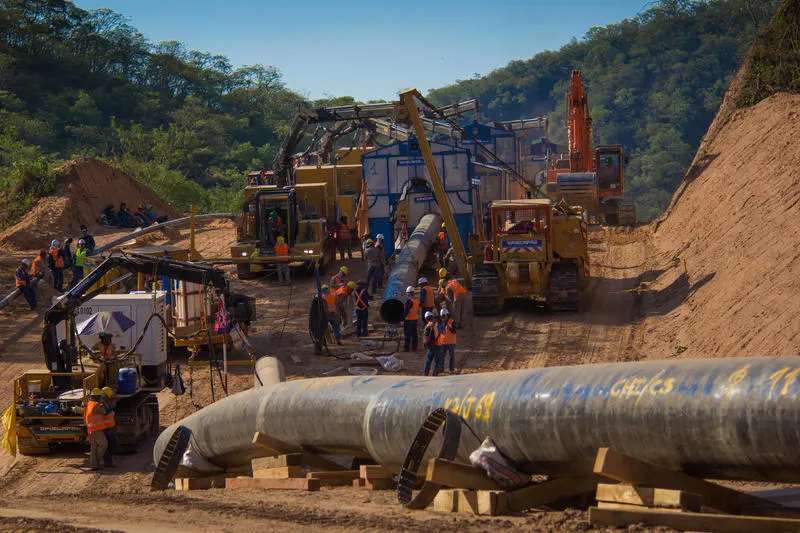
The ambitious Nigeria-Morocco Gas Pipeline project is garnering renewed interest as it aims to establish a vital energy corridor that connects West Africa with European markets by the year 2031. This initiative, driven by Nigeria's extensive gas reserves, is designed to traverse 13 countries along the Atlantic coast, with emerging gas producers such as Senegal and Mauritania anticipated to play crucial supporting roles in supplying this energy route. Given the recent global energy crisis triggered by the blockade of the Strait of Hormuz, which has seen energy prices soar by over 40% in numerous countries, European nations are increasingly prioritizing the exploration of alternative energy sources.
In a significant move, Morocco's state energy company, ONHYM, has commenced a comprehensive fundraising campaign aimed at securing the necessary multi-billion dollar investment for the Nigeria-Morocco Gas Pipeline. The pipeline, which is set to pass through a diverse array of African nations including Nigeria, Senegal, and Mauritania, represents a decade-long aspiration to create a direct energy link from West Africa to Morocco and subsequently to Europe. This vision was first officially presented in 2016 during a state visit by King Mohammed VI of Morocco to the late President Muhammadu Buhari in Abuja, leading to the initiation of a feasibility study by the Nigerian National Petroleum Corporation (NNPC) and Moroccan officials, which projected a staggering cost of around $25 billion.
However, the enormous financial outlay required has led some critics to label the project as an unattainable dream. The pipeline must stretch nearly 7,000 kilometers before integrating with existing infrastructure in Spain, making such skepticism somewhat valid. Nevertheless, the potential benefits of the project are substantial; its successful completion could enable Europe to drastically lessen its energy reliance on Russia and mitigate the impact of price volatility stemming from crises in the Middle East. Importantly, the groundwork for this project is already in place, with Nigeria and Morocco having signed an agreement in 2018 to advance the Front-End Engineering Design (FEED) phase.
Although the pipeline aims to transport 30 billion cubic meters of gas annually, a quantity that currently surpasses Nigeria's export capacity, the proposed timeline provides a strategic advantage. With Moroccan officials estimating that the first gas supplies will not be available until 2031, Nigeria has a critical window of over five years to enhance its infrastructure and ensure that it can not only meet but potentially exceed global market demands. This proactive approach could position Nigeria as a key player in the global energy landscape.
As reported by africa.businessinsider.com.